

Overview
Agadir stands on Morocco’s Atlantic coast as a city reborn from tragedy. Destroyed by an earthquake in 1960, it was rebuilt with a modern, European‑inspired design that gives it a distinctive atmosphere among Moroccan destinations. Wide boulevards, seaside promenades and contemporary architecture define its look, while the surrounding hills and beaches preserve a natural balance between urban life and coastal calm. Today, Agadir is Morocco’s largest beach resort, known for its clean layout, relaxed rhythm and cosmopolitan feel that contrasts with the country’s older imperial cities.
Best time to visit
The best time to visit Agadir is from March to November, when warm temperatures and clear skies make the coast ideal for swimming and outdoor activities. Spring and autumn offer mild weather and fewer crowds, while summer brings lively beach life and long sunny days. Winter is cooler but still pleasant, with soft light and calm seas that suit quiet walks and cultural visits.
Getting around
Agadir is easy to navigate thanks to its modern grid layout and wide avenues. Walking along the beachfront promenade is one of the best ways to experience the city’s rhythm. Taxis are plentiful and affordable, and local buses connect the main districts. For exploring nearby areas such as Taghazout or Paradise Valley, renting a car provides flexibility and scenic routes through coastal and mountain landscapes.
Safety and local etiquette
Agadir is safe and welcoming, with a relaxed atmosphere shaped by tourism and local hospitality. Basic precautions apply as in any city, especially around busy markets and beaches. Respect for local customs is appreciated — modest clothing in non‑tourist areas and polite interaction with residents. The city’s tone is friendly and open, reflecting Morocco’s coastal character.
Food and water
Agadir’s cuisine blends Moroccan tradition with international influences. Fresh seafood dominates menus, alongside tagines, couscous and grilled meats. The city’s restaurants range from beachfront cafés to refined dining spots. Tap water is generally safe, though bottled water is common for visitors. Local markets offer fruits, spices and sweets that capture the region’s flavour.
Day trips and excursions
Agadir is perfectly positioned for coastal and mountain excursions. Northward lies Taghazout, a surf village with a laid‑back vibe. Inland, Paradise Valley offers palm‑lined pools and rocky scenery. The Anti‑Atlas mountains reveal Berber villages and panoramic views. Southward, Sidi Ifni and Mirleft provide quiet beaches and dramatic cliffs. Each excursion complements Agadir’s modern seaside identity with natural and cultural depth.
Essence of Agadir
The essence of Agadir lies in its harmony between renewal and relaxation. Rebuilt from the ground up, it embodies resilience and modernity while keeping the warmth of Moroccan life. Waves meet boulevards, sunlight fills open spaces and the city breathes a calm, coastal rhythm. Agadir is both a gateway to Morocco’s Atlantic beauty and a symbol of its ability to reinvent itself — serene, contemporary and full of light.
With a modern and European feel, it is now the biggest tourist resort in Morocco.
Highlights in Agadir:
- The magnificent Agadir Beach stretches for several kilometres and offers golden sand, excellent facilities, and stunning Atlantic views.
- The historic Agadir Oufella Kasbah overlooks the city from a hilltop and provides spectacular panoramic views of the coastline and harbour.
- The modern Marina d’Agadir features restaurants, cafés, shops, and luxury yachts in an attractive waterfront setting.
- The lively Souk El Had is one of Morocco’s largest markets, offering local crafts, spices, clothing, and traditional products.
- The beautiful Souss-Massa National Park is home to rare wildlife species and diverse coastal ecosystems.
- The nearby surfing village of Taghazout is one of the most famous surfing destinations in Morocco.
Visitors can also enjoy golf courses, spa resorts, camel rides, boat excursions, traditional hammams, beachfront promenades, and spectacular Atlantic sunsets.


- Agadir is located on Morocco’s Atlantic coast.
- Arabic and Amazigh are the official languages, while French is widely spoken.
- The currency is the Moroccan Dirham (MAD).
- Credit and debit cards are accepted in most hotels and larger establishments.
- Bottled water is generally recommended.
- Agadir was extensively rebuilt after the 1960 earthquake.
- The city is Morocco’s leading beach resort destination.
- Agadir enjoys over 300 days of sunshine per year.
- The marina and beachfront promenade are major attractions.
- Surfing is popular along the nearby coastline.
- Agadir Airport provides international connections.
- Light clothing and sun protection are strongly recommended.
- The city offers a more modern atmosphere than Morocco’s imperial cities.
Agadir has a Mediterranean climate with strong Atlantic influences, characterised by warm summers, mild winters, and abundant sunshine throughout the year.
- Spring (March to May) – pleasant temperatures and excellent conditions for sightseeing and beach activities.
- Summer (June to August) – warm weather moderated by Atlantic breezes.
- Autumn (September to November) – comfortable temperatures and ideal travel conditions.
- Winter (December to February) – mild weather and plenty of sunshine.
The most popular period to visit is from March to June and from September to November, when weather conditions are generally ideal for beaches, surfing, sightseeing, outdoor activities, and enjoying the relaxed coastal atmosphere that makes Agadir one of Morocco’s most attractive holiday destinations.
Today:

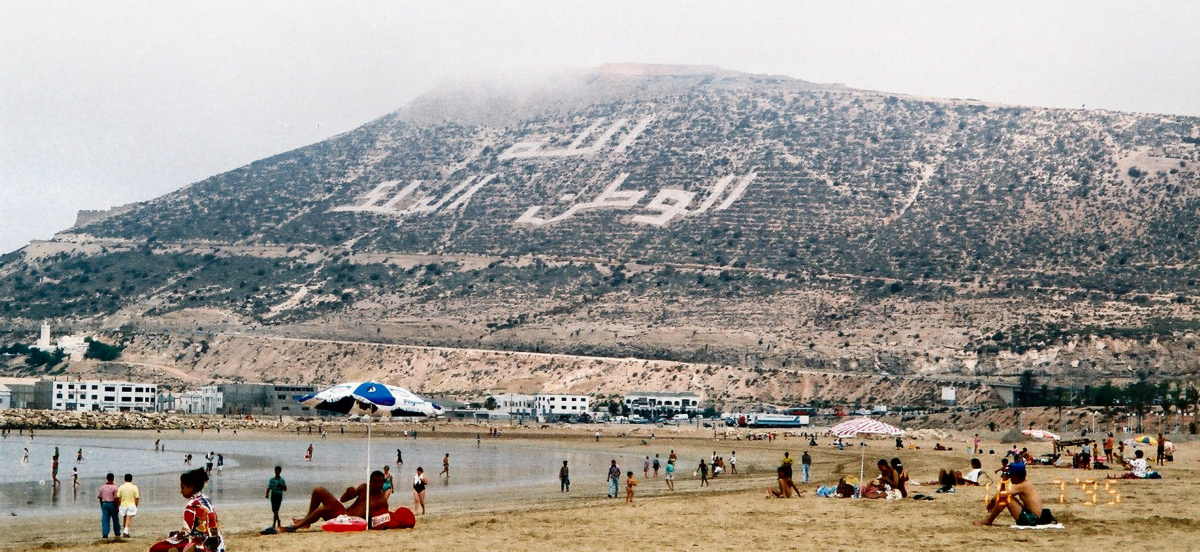
Visiting Agadir as a good experience. Recovering from a violent earthquake, it is a new town, and maybe the best beach of Morocco.
The waters are warmer than we should expect from the Atlantic Ocean, and the sand stripe is large enough to allow dozens of football games at the same time. And how they play…
It was a great week living the best of Agadir, before leaving up north in an excellent trip that allowed us to review Casablanca, Fes, Meknes and Rabat, and to visit for the first time Essaouira, El Jadida and Marrakech with a quick lunch in Safi.
Beach
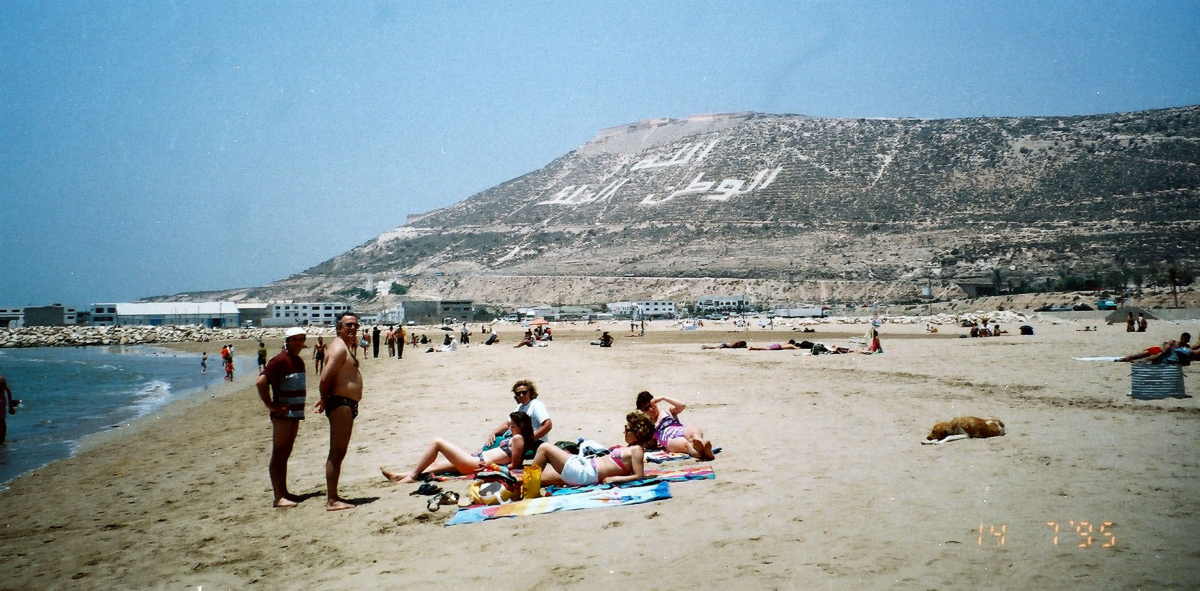
Agadir has a very good beach. A wide and long strip of thin white sand, a regular and low surf, no hidden rocks, the only drawback was the persistent fog.
Is it common, or just our bad luck? Anyway, we didn’t complain, because staying in the beach was safer than under the burning sun.
Sun tanning was slow, but swimming or playing sports, it was great!
Zoo
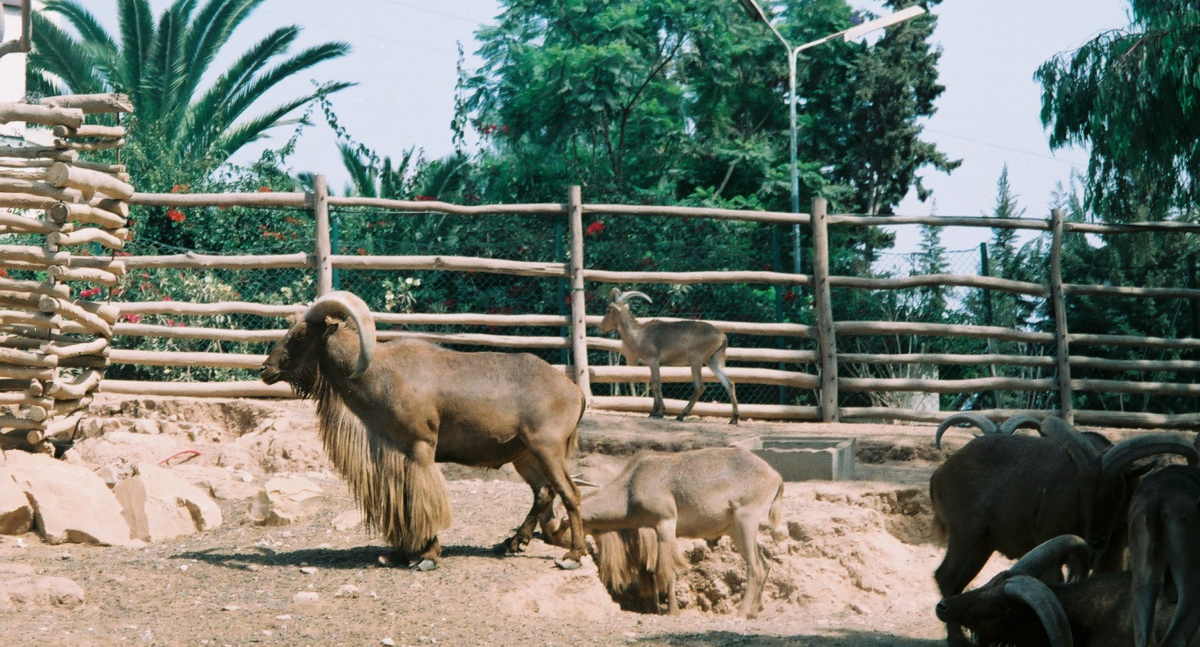
In a modern town, betting in tourism you need diversity to occupy the visitors.
The city is not very rich in that area but, if you travel with kids, a small and poor zoo near the beach is always a different solution for a less attractive to swim afternoon.

Sleep in Agadir – 2 excellent options
Warnings in Agadir – 3 fine ideas
If you want to easily publish your own experiences, after registering you may use the form below. It will be added after revision. You may use text, photos till 20Mb or video. For a more complex publication click here.
Publishing form
You need to be logged in to view this page
Your trip will be perfect with the help of our partners
For a great experience:
For your safety:

For your comfort:
For cheap flights:
For local displacements:
 English
 Português