

Overview
Essaouira is one of Morocco’s most atmospheric coastal cities, a place where Atlantic winds meet whitewashed walls, blue shutters and a medina shaped by centuries of maritime history. Its fortified ramparts, built by European engineers in the eighteenth century, overlook powerful waves that define the city’s rhythm. Inside the walls, narrow streets, artisan workshops and quiet squares create a gentle, artistic atmosphere that contrasts with the dramatic coastline. Essaouira feels both Moroccan and Mediterranean, a blend of heritage, sea light and creative energy that has long attracted travellers, musicians and craftsmen.
Best time to visit
The best time to visit Essaouira is from April to October, when mild temperatures and steady coastal breezes make the city ideal for walking and enjoying the beach. Spring offers fresh colours and comfortable weather. Summer is lively but never too hot, thanks to the Atlantic winds. Early autumn provides soft light and calm days perfect for slow exploration. Winter is cooler and windier, suited for cultural visits and appreciating the city’s quiet charm.
Getting around
Essaouira is compact and easy to explore on foot. The medina’s streets lead naturally to markets, ramparts and the harbour. Taxis are available for short trips around town or to nearby beaches. For travellers arriving from Marrakech or Agadir, buses and private transfers provide straightforward connections. Movement in Essaouira is relaxed, shaped by its small scale and coastal atmosphere.
Safety and local etiquette
Essaouira is safe and welcoming, with a calm tone that reflects its artistic identity. Visitors should respect residential areas of the medina and avoid photographing people without permission. Modest clothing is appreciated, especially outside tourist zones. The harbour can be busy, so attention is useful around fishing boats and market stalls. Politeness and slow interaction fit naturally with the city’s gentle rhythm.
Food and water
Essaouira offers a blend of Moroccan flavours and fresh coastal cuisine. Seafood is central to local menus, from grilled fish to simple dishes served near the harbour. Tagines, couscous and pastries complete the culinary scene. Cafés and restaurants line the medina and the beachfront. Tap water is generally safe, though bottled water is common among visitors. Dining is relaxed, often enjoyed outdoors with ocean views.
Day trips and excursions
Essaouira is well positioned for coastal and rural excursions. Southward lies Sidi Kaouki, a quiet beach known for surfing and wide sands. Inland, argan forests reveal traditional cooperatives and gentle landscapes. Northward, the coast offers small villages and scenic viewpoints. Each excursion complements Essaouira’s blend of heritage, sea and tranquillity.
Essence of Essaouira
The essence of Essaouira lies in its harmony between wind, stone and creativity. Ramparts frame the ocean, artisans fill the medina with colour and the city breathes a calm, coastal rhythm that feels timeless. It is a place where travellers slow down, where light softens daily life and where the Atlantic shapes both mood and identity. Essaouira embodies the serene, artistic and deeply atmospheric spirit of Morocco’s western coast.
It is recommended as the best place to buy thuia wood.
Highlights in Essaouira:
- The historic Medina of Essaouira is a UNESCO World Heritage Site renowned for its whitewashed buildings, blue shutters, artisan workshops, and vibrant atmosphere.
- The impressive Skala de la Ville features historic cannons, fortified walls, and spectacular views of the Atlantic Ocean.
- The lively Fishing Harbour remains one of the city’s most authentic attractions, offering colourful boats, seafood stalls, and daily fishing activity.
- The beautiful Essaouira Beach stretches for several kilometres and is popular for walking, surfing, kitesurfing, and horseback riding.
- The atmospheric Moulay Hassan Square serves as the social heart of the city and is surrounded by cafés, restaurants, and local markets.
- The traditional Souks and Artisan Workshops are famous for handcrafted woodwork, jewellery, textiles, and locally produced argan oil.
Visitors can also enjoy art galleries, music festivals, seafood restaurants, coastal viewpoints, traditional riads, and unforgettable Atlantic sunsets.


- Essaouira is located on Morocco’s Atlantic coast.
- Arabic and Amazigh are the official languages, while French is widely spoken.
- The medina is a UNESCO World Heritage Site.
- Bottled water is recommended for visitors.
- Credit and debit cards are accepted in many hotels and restaurants.
- The official currency is the Moroccan Dirham (MAD).
- Essaouira is known as one of Morocco’s most artistic cities.
- The city is famous for seafood and argan oil production.
- Strong Atlantic winds make the area popular for surfing and kitesurfing.
- The medina can be comfortably explored on foot.
- The city has a more relaxed atmosphere than Marrakech and Casablanca.
- Comfortable footwear is recommended for walking through the medina.
- The annual Gnaoua World Music Festival attracts visitors from around the world.
Essaouira has a Mediterranean climate with strong Atlantic influences, characterised by mild temperatures throughout the year and cooling ocean breezes.
- Spring (March to May) — mild temperatures, pleasant sunshine, and excellent conditions for sightseeing and outdoor activities.
- Summer (June to August) — warm weather moderated by Atlantic winds, making conditions comfortable despite the season.
- Autumn (September to November) — pleasant temperatures, clear skies, and ideal conditions for exploring the city and coastline.
- Winter (December to February) — mild weather, occasional rainfall, and a peaceful atmosphere.
The most popular period to visit is from March to June and from September to November, when weather conditions are generally ideal for exploring the medina, enjoying the Atlantic coastline, discovering local culture, and experiencing the unique charm of Essaouira.
Today:

The city
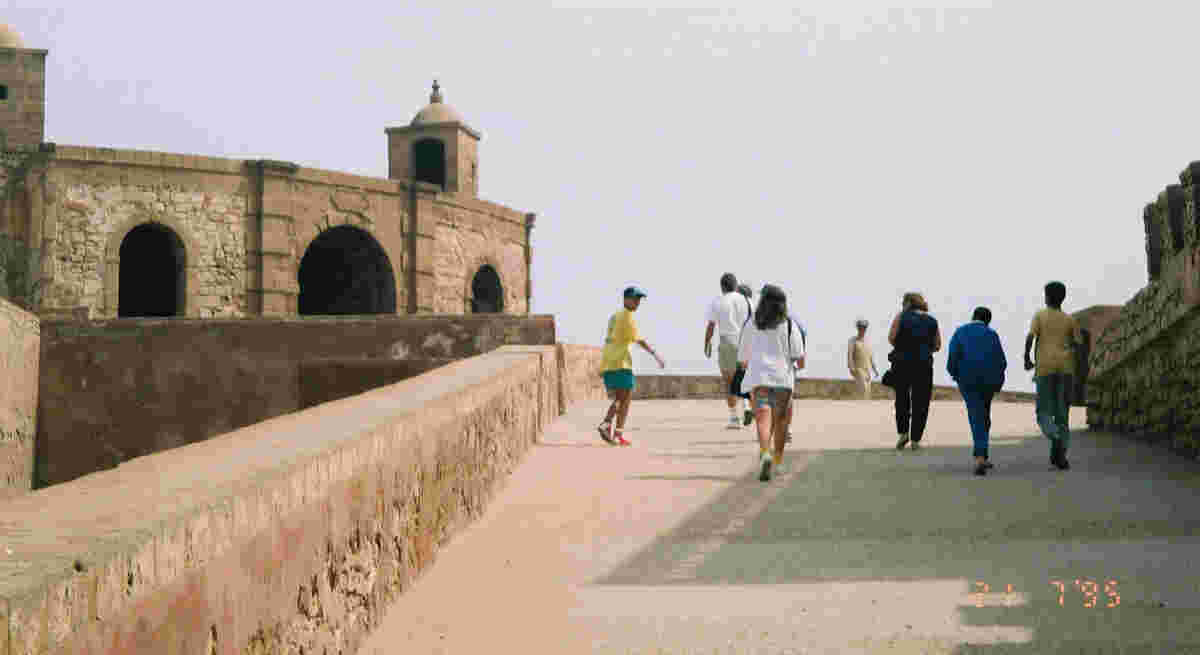
Marrakesh tops the attention of everybody who decides to visit Morocco, but Essaouira, generally a second choice, surely deserves to be a first one. A small and wonderful town, UNESCO heritage, challenges the violence of ocean and wind, and preserves the traces of all the civilizations present in its history, including… Portuguese. Not to be missed.
The Portuguese fort
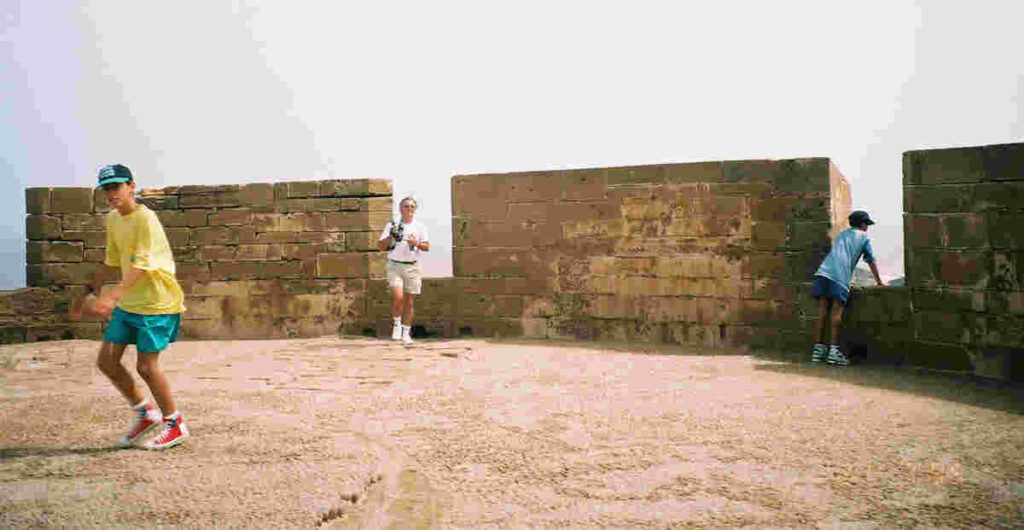
Built as a few other in the beginning of the 16th century, this fortress, soon lost by the Portuguese, still dominates the city, as its best monument and a good testimony of our military architectural skills.
Thuia Bargains
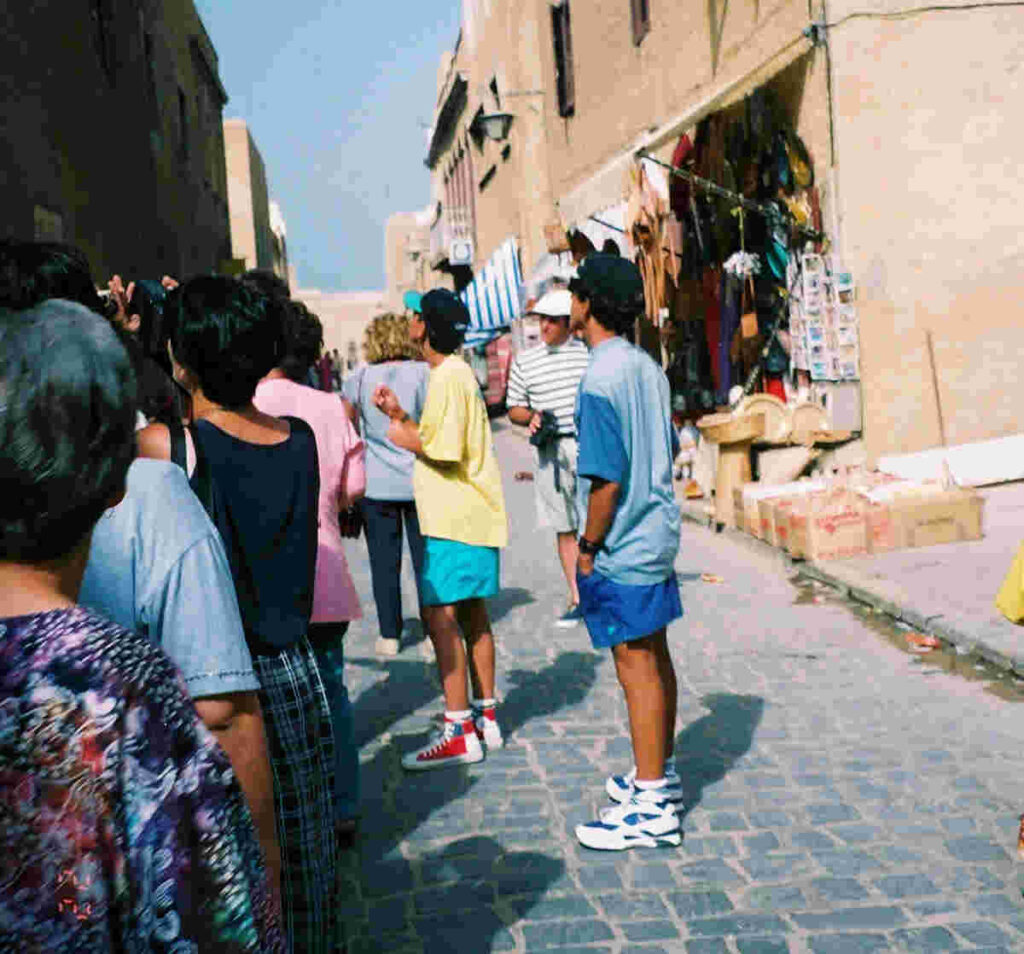
Wherever you go in Morocco, you may find all kind of handicrafts, generally without any mention of its origin and quality.
Thuya carvings and inlaid works are very appealing, by the delicacy of the work and the soft smell of the wood.
If you go to Essaouira, then forget buying thuya works anywhere else. Here you may watch the carvers doing their pieces, and buy directly from the producers, practicing the favorite sport in Morocco – bargaining.
Door to door, in the narrow streets of the Medina, in the shades of the walls, comparing styles, shapes, prices, and smiles, you feel the real Morocco. And save money!
If you want to easily publish your own experiences, after registering you may use the form below. It will be added after revision. You may use text, photos till 20Mb or video. For a more complex publication click here.
Publishing form
You need to be logged in to view this page
Your trip will be perfect with the help of our partners
For a great experience:
For your safety:

For your comfort:
For cheap flights:
For local displacements:
 English
 Português