

Overview
Marrakech is one of Morocco’s most captivating destinations, known for its blend of ancient traditions and modern energy. The city is divided between the historic Medina, a UNESCO World Heritage site filled with souks and narrow alleys, and Gueliz, the contemporary district with cafés, galleries, and wide boulevards. Understanding this contrast helps visitors navigate the city more easily and plan their itinerary effectively — one of the essential Marrakech travel tips for first‑timers.
Best Time to Visit
The ideal seasons to explore Marrakech are spring (March–May) and autumn (September–November), when temperatures are warm and pleasant. Summer can be extremely hot, often surpassing 40°C, so sightseeing is best done early in the morning or late in the afternoon. Winter is mild during the day but can be surprisingly cold at night. These seasonal variations are important when deciding the best time to visit Marrakech.
Getting Around
Walking is often the fastest way to move through the Medina, although its maze-like streets can be confusing. Taxis are inexpensive but fares should be negotiated before entering. For longer distances or to avoid haggling, ride‑hailing apps like Careem are reliable. Traffic can be chaotic, so allow extra time when traveling between districts.
Safety and Local Etiquette
Marrakech is generally safe, but crowded areas such as Jemaa el‑Fnaa require attention to personal belongings. Bargaining is expected in the souks and is part of the cultural experience. Modest clothing is recommended, especially when visiting religious sites or traditional neighborhoods. These cultural considerations are among the key things to know before visiting Marrakech.
Food and Water
Moroccan cuisine is a highlight of any visit. Traditional dishes like tagine, couscous, and pastilla are widely available, and many restaurants offer rooftop terraces with views over the Medina. Tap water is not recommended for drinking; bottled water is inexpensive and easy to find.
Day Trips
Day Trips and Excursions
- Essaouira – Charming Atlantic coastal city known for its medina, fishing port, beaches, and artistic atmosphere.
- Safi – Historic Atlantic city famous for its pottery, fishing industry, and Portuguese heritage.
- Oualidia – Beautiful lagoon destination celebrated for oyster farming, birdwatching, and peaceful beaches.
- El Jadida (Mazagão) – Historic coastal city featuring a UNESCO-listed Portuguese fortified city and impressive seafront setting.
- Azemmour – Historic riverside town known for its Portuguese influences, murals, and traditional medina.
- Casablanca – Morocco’s largest city, famous for the Hassan II Mosque, modern architecture, and Atlantic coastline.
- Agadir – Morocco’s leading beach resort, renowned for its long sandy beaches, marina, seaside promenade, and year-round sunshine.
- Ouarzazate – Historic desert city often called the “Gateway to the Sahara”, famous for its kasbahs and film studios.
- Aït Benhaddou – UNESCO-listed fortified village renowned for its earthen architecture and cinematic history.
These excursions complement a visit to Marrakech with a blend of Atlantic coastal scenery, historic towns, beaches, cultural heritage, and some of Morocco’s most attractive seaside destinations.
Essence of Marrakech
The essence of Marrakech lies in its interplay between intensity and calm. Souks pulse with life, while riads offer quiet courtyards and shaded retreats. Monuments preserve centuries of artistry, and gardens soften the city’s vibrant energy. Marrakech is a place where travelers immerse themselves in atmosphere, color and tradition, experiencing Morocco’s cultural heart in its most expressive form.
Highlights in Marrakech
- Jemaa el-Fnaa – The city’s famous central square filled with performers, food stalls, and traditional entertainers.
- Koutoubia Mosque – Marrakech’s most iconic landmark, known for its impressive minaret.
- Bahia Palace – Magnificent 19th-century palace showcasing Moroccan craftsmanship and architecture.
- Majorelle Garden – Beautiful botanical garden famous for its vivid blue colours and exotic plants.
- Saadian Tombs – Historic royal necropolis dating from the Saadian dynasty.
- Ben Youssef Madrasa – One of the finest examples of Islamic architecture in Morocco.
- Marrakech Medina – UNESCO-listed historic centre filled with souks, riads, and traditional markets.


- Located in central Morocco.
- Official languages: Arabic and Amazigh.
- French is widely spoken.
- Currency: Moroccan Dirham (MAD).
- Credit cards are accepted in many hotels and restaurants.
- Bottled water is recommended.
- One of Morocco’s four imperial cities.
- Excellent base for exploring the Atlas Mountains and southern Morocco.
- Famous for souks, palaces, gardens, and traditional riads.
- Comfortable walking shoes are recommended.
- Early morning and late afternoon are the best times for sightseeing during warmer months.
Marrakech offers a wide range of hotels—from luxurious riads like La Maison Arabe to modern resorts like Kenzi Menara Palace. Many feature pools, spas, and rooftop terraces, blending traditional Moroccan charm with contemporary comfort.
For a broad search:
Marrakech has a semi-arid climate, with hot summers and mild winters.
- Spring (March-May) – Pleasant temperatures and ideal sightseeing conditions.
- Summer (June-August) – Very hot and dry weather.
- Autumn (September-November) – Comfortable temperatures and excellent travel conditions.
- Winter (December-February) – Mild sunny days and cool evenings.
The most popular period to visit is from March to May and September to November, when conditions are ideal for exploring the Medina, visiting historic monuments, discovering local cuisine, and experiencing the unique atmosphere that makes Marrakech one of the world’s most captivating travel destinations.
Today:

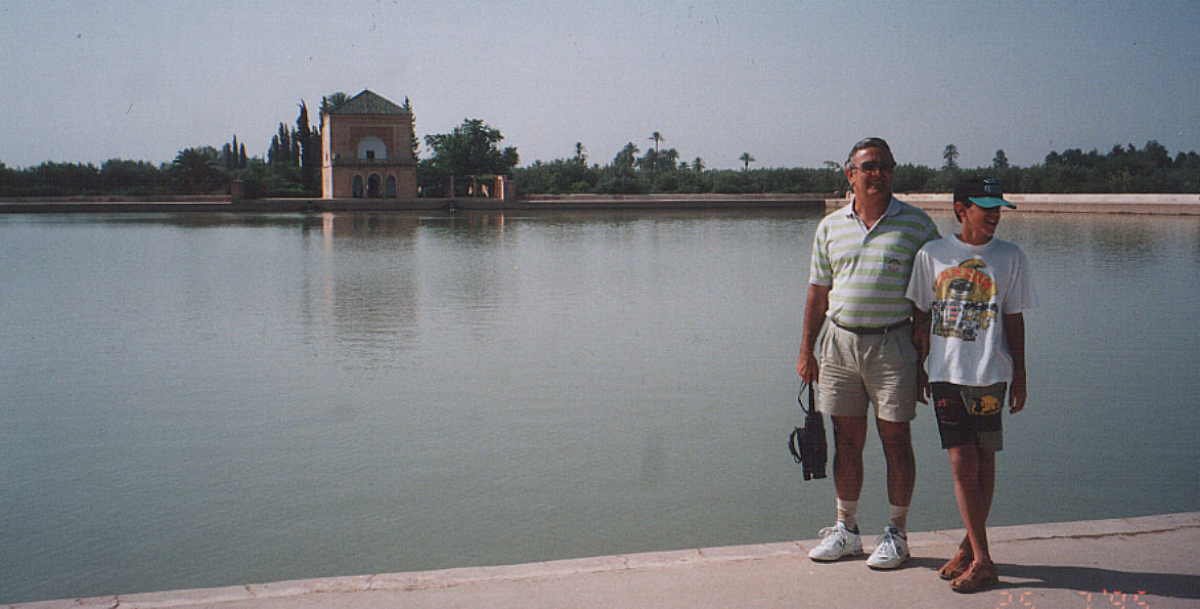
Which is my favourite place in Morocco? Maybe Fes? Maybe Marrakech?
I don’t decide. I appreciated both of them. In different colours, in different shapes, history and social authenticity merge well with modernity, allowing excellent vacations.
Djemaa El Fna – Always on
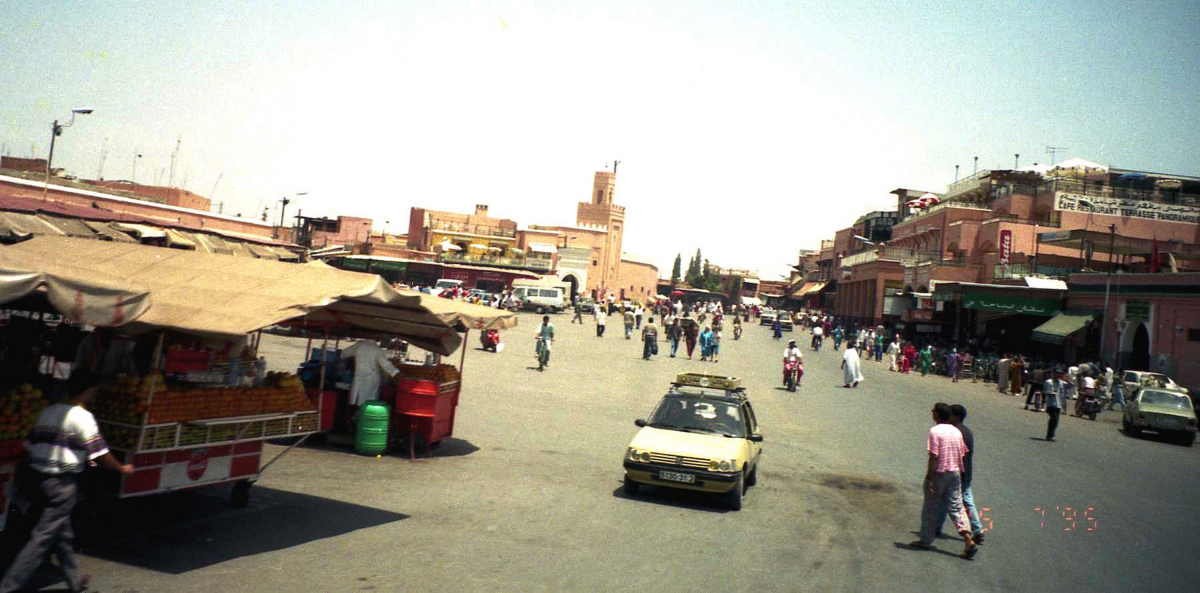
The heart of Morocco beats in Djemaa el-Fna, where everything happens, and everything has a price, in a non-stop touristy happening.
The size of the square, very uncommon in old Moroccan quarters may explain this intense merging of business and popular arts.
The square is a living stage, performing for tourist everything that may lead to a deal.
Medina of Marrakech – Not impressive

I must confess that I was not impressed by the Medina, in Marrakesh.
After visiting Tetouan, Tangier, Casablanca, and specially Fes, this Medina seemed a common commercial quarter, without the strong sensations lived in Fes.
Of course, for a first contact with Moroccan way of life the sensation may be totally different, but… this was what I felt.
 Personal Memories
 Personal Memories
A different dinner
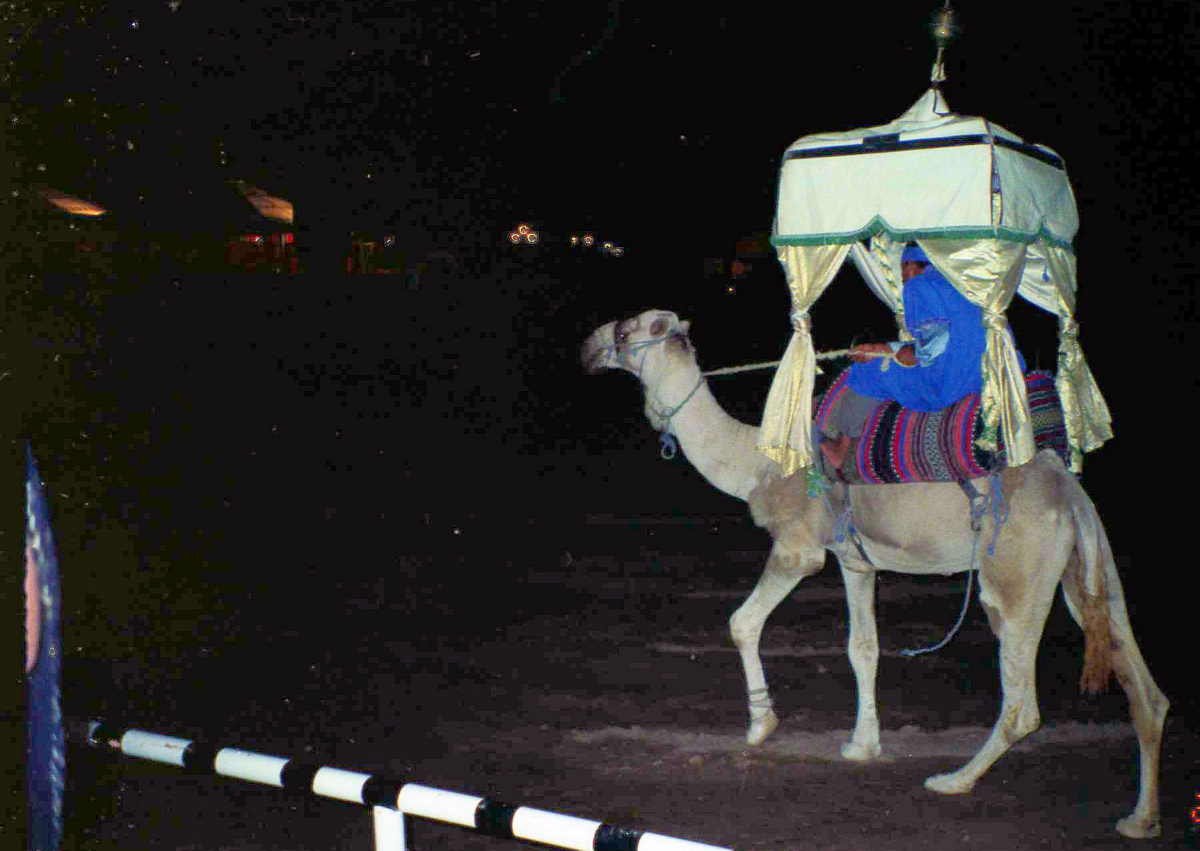
Touristy, no doubt, but a very easy and simple way to try (in comfort) a small experience of Berber life: in Marrakech a typical restaurant is a meeting point for tourists to watch some horse and camel rides and enjoy a lamb dinner with folk dances.
Artificial but nice, with the usual opportunity for the tourists to dress in local style, and not too expensive, if you think that all those performers are being paid.

After the mandatory Berber dinner, in a very large tent, we had a demonstration of what it seemed several and different folkloric groups.
Maybe it was only a professional group showing different costumes, but it was well conceived, and the few dances performed really seemed a little different from each other.
The ambiance was inviting, we were in costume, so we did try their dances.
Well… we really had fun.

Sleeping in Marrakech – 1 simple but fine place
Eating in Marrakech 1 great program
Useful in Marrakech – 1 cool advice
If you want to easily publish your own experiences, after registering you may use the form below. It will be added after revision. You may use text, photos till 20Mb or video. For a more complex publication click here.
Publishing form
You need to be logged in to view this page
Your trip will be perfect with the help of our partners
For a great experience:
For your safety:
For your comfort:
For cheap flights:
For local displacements:
 English
 Português