

Overview
Casablanca is Morocco’s largest and most modern city, a dynamic urban center where contemporary architecture, business districts, and wide boulevards contrast with pockets of traditional life. Although not as atmospheric as Marrakech or Fes, the city offers a unique blend of modernity and heritage, shaped by French colonial planning and Moroccan identity. Its coastal setting, impressive Hassan II Mosque, and lively neighborhoods make it an interesting stop for travelers seeking a different perspective on Morocco—one that reflects the country’s present as much as its past.
Best Time to Visit
The best time to visit Casablanca is from April to June and September to November, when temperatures are mild and ideal for exploring the city on foot. Summer is warm but moderated by the Atlantic breeze, making it more comfortable than inland destinations. Winter is mild and occasionally rainy, but still suitable for sightseeing. The city is active year‑round, with fewer seasonal fluctuations than Morocco’s more touristic regions.
Getting Around
Casablanca is a large, spread‑out city, but its main attractions are relatively easy to reach. The modern tramway connects key districts, while taxis are abundant and inexpensive. Walking is pleasant in areas like the Corniche, the old medina, and the boulevards around the city center. For visiting the Hassan II Mosque or the Habous Quarter, taxis or ride‑hailing apps are the most convenient options. The city is also well connected by train to Rabat, Marrakech, and the airport.
Safety and Local Etiquette
Casablanca is generally safe, with a cosmopolitan atmosphere and a mix of locals, business travelers, and tourists. As in any major city, basic precautions apply, especially in crowded areas or at night. Respect for local customs is appreciated—modest clothing is recommended when visiting religious or traditional areas. The Hassan II Mosque has specific visiting hours for non‑Muslims, and visitors should follow dress codes and behave respectfully. Politeness and patience are valued in daily interactions.
Food and Water
Casablanca has one of Morocco’s most diverse culinary scenes, offering everything from traditional Moroccan dishes to international cuisine. Fresh fish and seafood are widely available along the coast, while tagines, couscous, and pastries remain staples. The city also has modern cafés, bakeries, and upscale restaurants. Tap water is treated but bottled water is recommended for visitors. Markets and street stalls offer local snacks, but it’s best to choose busy, reputable vendors.
Day Trips and Excursions
Popular excursions from Casablanca include the imperial city of Rabat, with its historic medina and coastal kasbah, and El Jadida, known for its Portuguese cistern and relaxed seaside atmosphere. The nearby town of Mohammedia offers quieter beaches, while Azemmour provides a more traditional riverside setting. Within the city, highlights include the Hassan II Mosque, the Corniche, the Habous Quarter, and the old medina, where traces of traditional Morocco still survive amid modern development.
Essence of Casablanca
The essence of Casablanca lies in its blend of modern energy and cultural depth. The city moves quickly, yet its architecture, seaside views and vibrant neighborhoods reveal layers of identity shaped by history and innovation. Casablanca is a place where travelers experience Morocco’s contemporary face while still feeling the country’s traditions in everyday life.
Highlights in Casablanca
- The magnificent Hassan II Mosque is one of the largest mosques in the world and stands dramatically above the Atlantic Ocean.
- The elegant Corniche offers oceanfront promenades, beaches, restaurants, and some of the city’s most attractive coastal scenery.
- Habous Quarter combines traditional Moroccan architecture with French influences and is one of the city’s most charming districts.
- The historic Old Medina preserves a glimpse of Casablanca’s past and offers narrow streets, local markets, and traditional life.
- The impressive Place Mohammed V forms the civic heart of the city and is surrounded by notable colonial-era buildings.
- The modern Morocco Mall is one of Africa’s largest shopping centres and combines retail, entertainment, and dining experiences.
Visitors can also enjoy art galleries, seaside cafés, traditional souks, contemporary architecture, cultural festivals, and vibrant nightlife throughout the city.


- Casablanca is the largest city in Morocco.
- Arabic and Amazigh are the official languages, while French is widely spoken.
- The city is Morocco’s main economic and commercial centre.
- Bottled water is recommended for visitors.
- Credit and debit cards are widely accepted in hotels, restaurants, and shopping centres.
- The official currency is the Moroccan Dirham (MAD).
- Hassan II Mosque is one of the city’s most famous landmarks.
- The tram network provides convenient transportation across the city.
- Casablanca is Morocco’s busiest air transport hub.
- The city combines modern districts with traditional neighbourhoods.
- Appropriate clothing is recommended when visiting religious sites.
- Taxis are widely available and commonly used.
- Casablanca serves as an excellent gateway to the rest of Morocco.
Casablanca has a Mediterranean climate with Atlantic influences, characterised by warm summers, mild winters, and moderate temperatures throughout much of the year.
- Spring (March to May) — pleasant temperatures, blooming gardens, and excellent conditions for sightseeing.
- Summer (June to August) — warm weather moderated by Atlantic breezes, making conditions more comfortable than in inland Morocco.
- Autumn (September to November) — mild temperatures and favourable conditions for exploring the city and coastline.
- Winter (December to February) — generally mild weather with occasional rainfall and comfortable daytime temperatures.
The most popular period to visit is from March to June and from September to November, when weather conditions are generally ideal for discovering Casablanca’s landmarks, enjoying the Atlantic coastline, exploring traditional neighbourhoods, and experiencing the modern culture of Morocco.
Today:

Visiting Casablanca
I’ve been twice in Casablanca, the first one in a self-driven circuit that started in Tetouan and ending in Tangier before a nervous hour driving with little fuel through the mountains that separated us from Ceuta, hesitating between stopping at Ksar es-Seghir
or continuing slowly. Everything went well, and when, already at home, I noticed that Ksar es_Seghir was the Alcázar Ceguer of our story, I regretted not having paid more attention to it.
That visit was made after the fabulous experience in Fes and Rabat and that drove some disappointment, corrected in the second visit, when its airport was the arrival and departure point for a week in Agadir and a pre-booked tour.
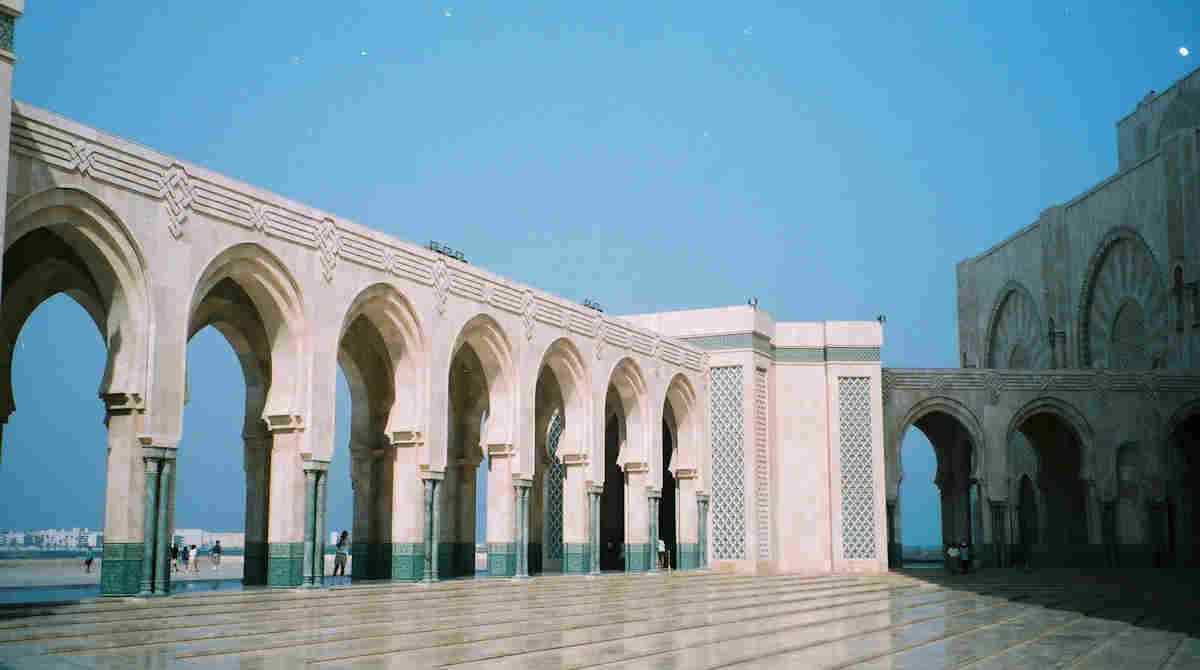
I must confess that the biggest town in Morocco was also the least interesting of all, at last until the building of Hassan II Mosque. That building is now a must see. Opened in 1993, it misses the weight of history but shows how powerful leaders still can carry their country richness for self-promoting monuments.
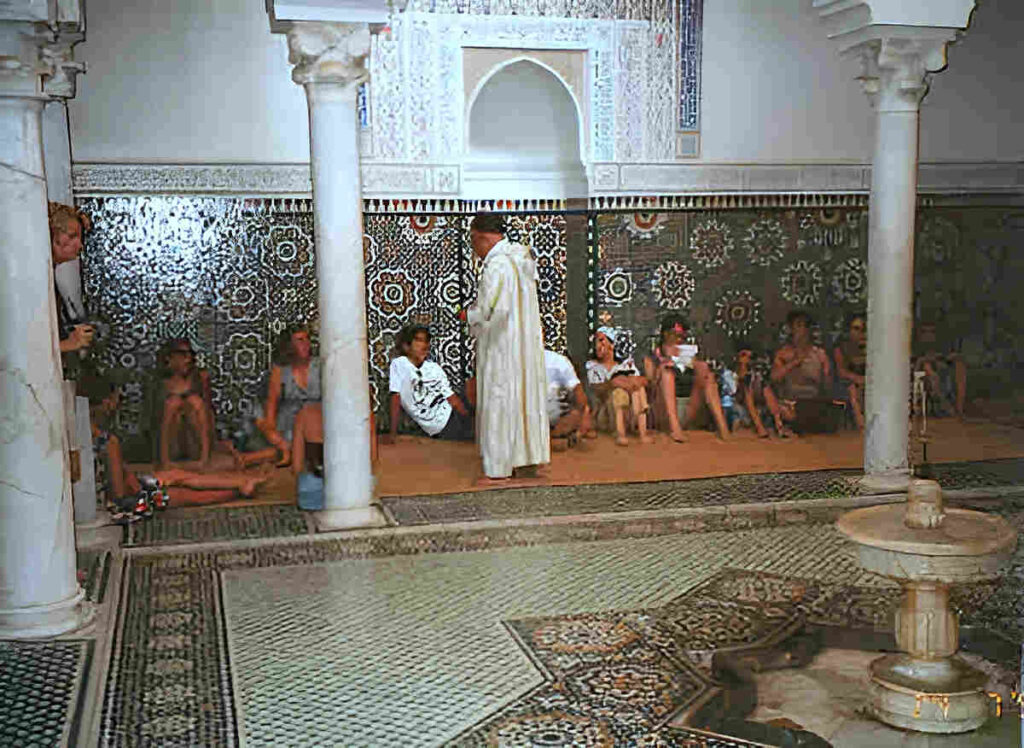
Interesting the visit to Prefecture Mechouar.
Modern City
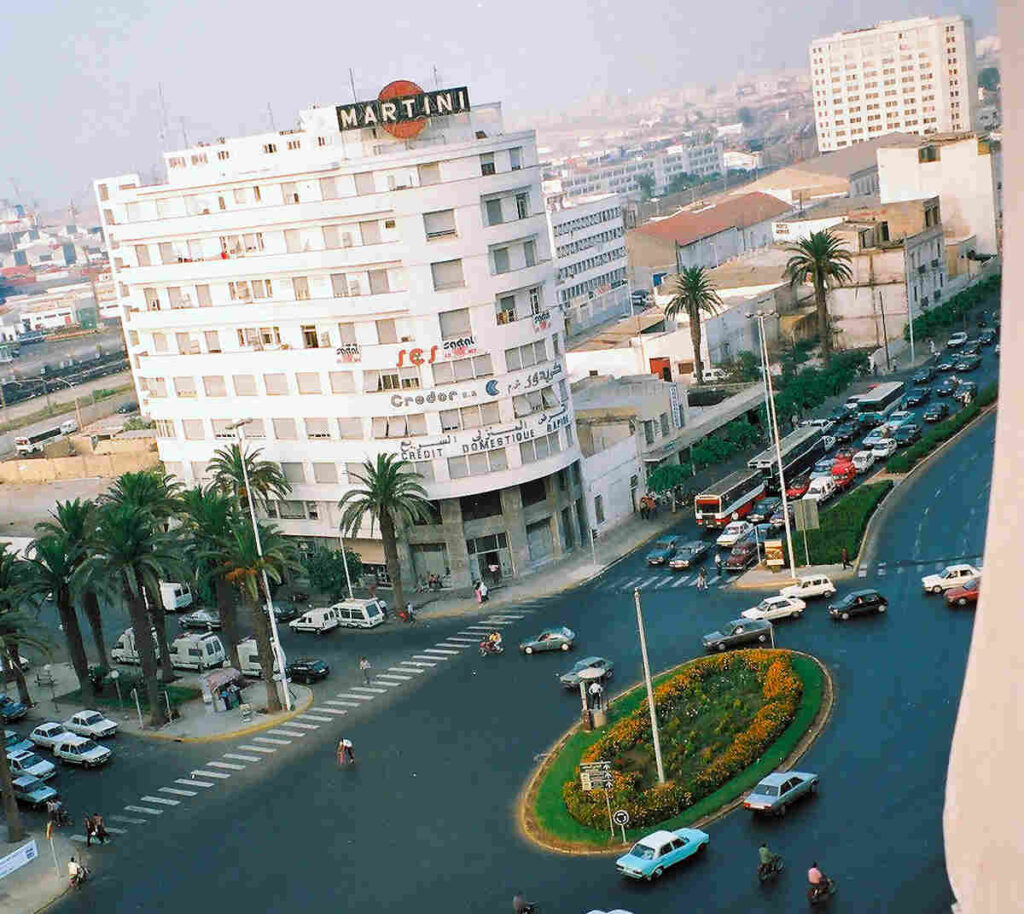
Casablanca is a large and modern city, where, once, someone made a film that, for reasons that I couldn’t really understand in the 97 times that I saw it, became very famous.
If you are thinking in the film scenery, you may find a reconstructed bar, an area they say that it was in the movie, and… that’s it. If you want to meet Morocco, then the best you have is the airport and railway station.
But if you appreciate big and busy cities, then that’s your place. And here and there, the real Morocco comes to surface.
Huge and closed to westerns – Hassan II Mosque
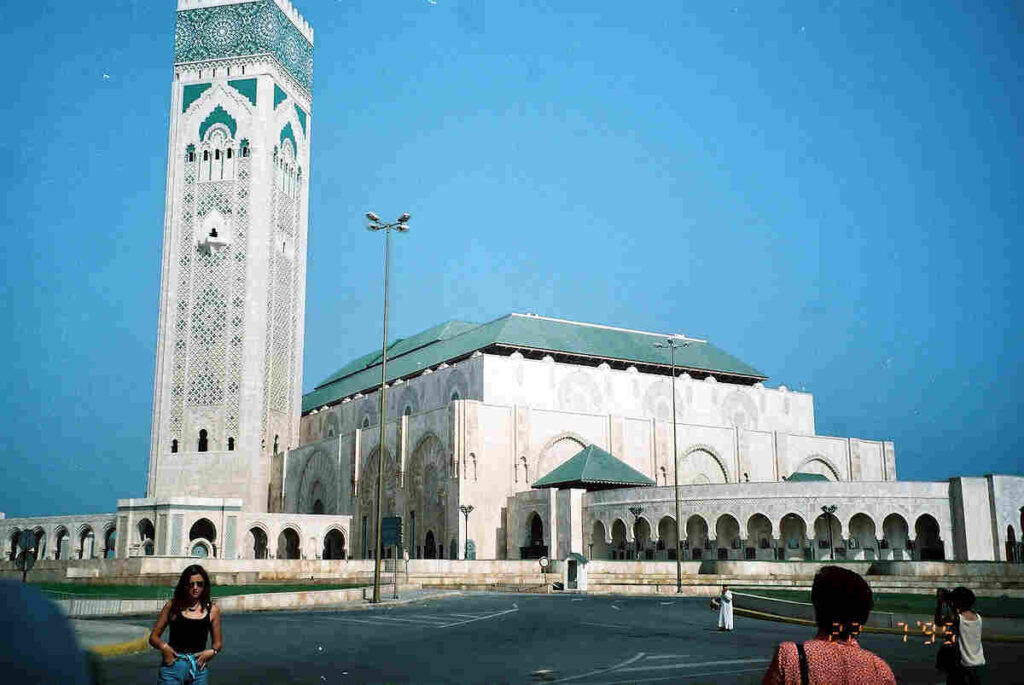
The new mosque of Hassan II it’s a marvel of architecture, looking big and being bigger than it looks, favored by its location entering the sea.
I didn’t visit the interior, which, for non Muslims, is only accessible in organized visits that we couldn’t access. But it’s always possible to walk in the esplanade, seeing the doors and arches in detail.
Visiting Prefecture Mechouar
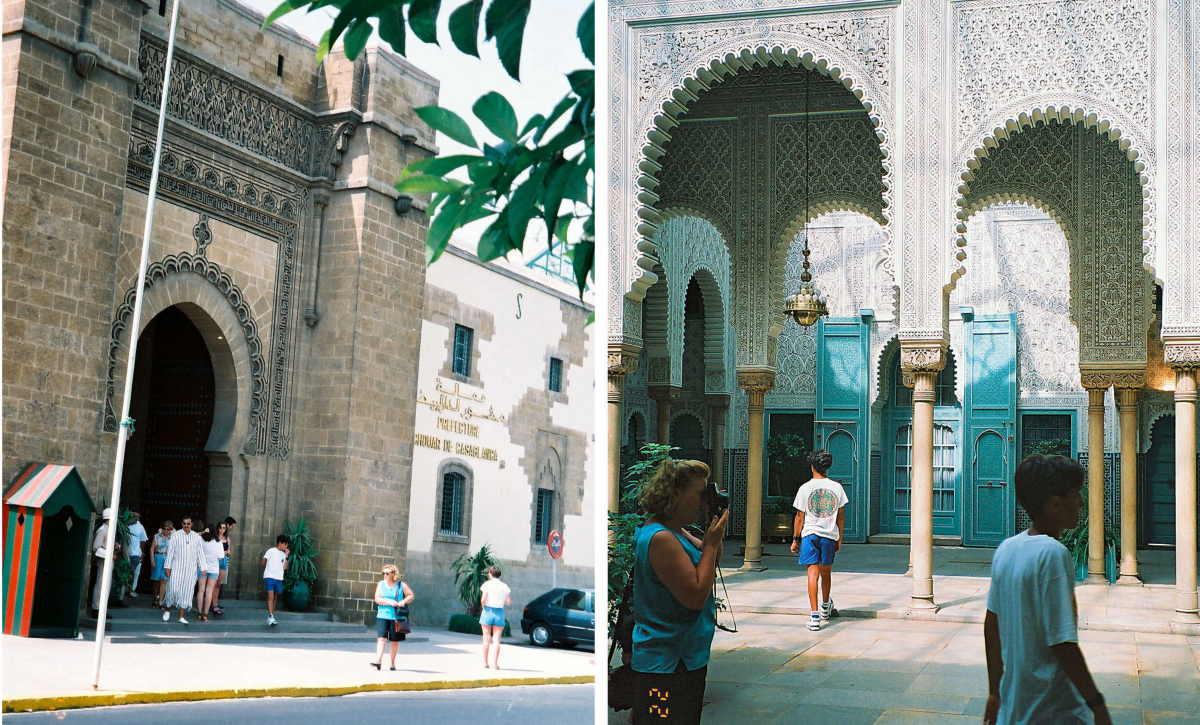
Casablanca is not a touristy city, nor the best place to see Moroccan art and architecture, but, if you’re there, then one of the best visits should be Prefecture Mechouar, fortified palace with the traditional look of Moroccan architecture.
Don’t be impressed by the military appearance. The building must be still in official use but tourists are welcome.
La Corniche
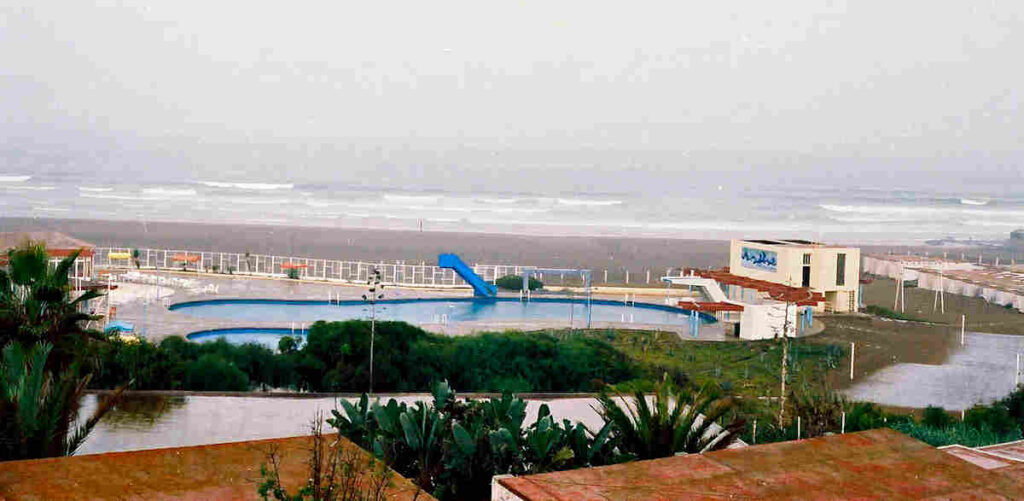
The coastal area south of Casablanca, is a resort zone named Corniche.
Too rocky to my taste, we got there a bad weather and a rough sea. That left us a negative impression, in contrast with the heavy construction of playful facilities in the coast, suggesting a quality that… we didn’t notice.
Maybe in a second visit…
 Personal Memories
 Personal Memories
Don’t forget your shoes

Morocco it’s a Muslim country.
In doubt, take your shoes off, but don’t forget them. And that applies not only in religious places, becoming a repetitive exercise. Here, were we at Casablanca City Hall or… in Meknès?

Sleeping in Casablanca in 1st fine visit
If you want to easily publish your own experiences, after registering you may use the form below. It will be added after revision. You may use text, photos till 20Mb or video. For a more complex publication click here.
Publishing form
You need to be logged in to view this page
Your trip will be perfect with the help of our partners
For a great experience:
For your safety:
For your comfort:
For cheap flights:
For local displacements:
 English
 Português