

Overview
Bayeux is one of the most charming and historically significant towns in Normandy, France. Best known for the world-famous Bayeux Tapestry, this beautifully preserved medieval town escaped major destruction during World War II and today offers visitors a unique combination of Norman heritage, Gothic architecture, elegant streets, and proximity to the D-Day Landing Beaches. Its rich history, walkable centre, and authentic atmosphere make it one of Normandy’s most rewarding destinations.
This town is part of the Normandy Cluster, a curated region showcasing medieval cities, dramatic coastlines, historic landmarks, and some of France’s most important cultural and military heritage sites.
Best Time to Visit
The best months to visit Bayeux are May to September, when temperatures are mild and ideal for exploring both the town and the surrounding D-Day sites.
Spring offers blooming gardens and fewer crowds, while summer provides the warmest weather and longest daylight hours. Early autumn remains pleasant and is excellent for sightseeing.
Getting Around
Bayeux is compact and easy to explore on foot. The historic centre, cathedral, museums, restaurants, and shopping streets are all within walking distance.
A car is highly recommended for visiting the nearby:
- Omaha Beach
- Utah Beach
- Pointe du Hoc
- American Cemetery
- Arromanches-les-Bains
- Normandy countryside
Organised D-Day tours are also widely available.
Safety and Local Etiquette
Bayeux is a very safe and welcoming destination. Normal precautions are sufficient throughout the town.
Visitors should:
- Respect war memorials and military cemeteries.
- Dress appropriately when visiting churches.
- Maintain a quiet and respectful atmosphere at remembrance sites.
Food and Water
Tap water is safe to drink.
Bayeux is known for:
- Camembert cheese
- Normandy cider
- Calvados apple brandy
- Seafood
- Crêpes and galettes
- Traditional Norman cuisine
Many local restaurants specialise in regional products sourced from surrounding farms and coastal waters.
Day Trips and Excursions
- Omaha Beach — one of the most famous D-Day landing beaches.
- Arromanches-les-Bains — known for the remains of the Mulberry Harbour used during the Normandy landings.
- Pointe du Hoc — dramatic cliffs and a key D-Day battlefield site.
- Mont-Saint-Michel — one of France’s most iconic UNESCO World Heritage Sites.
- Caen — a historic city featuring the Memorial Museum and the castles of William the Conqueror.
Essence of Bayeux
Bayeux perfectly combines medieval charm with modern historical significance. Its cathedral, timber-framed buildings, museums, and connection to both William the Conqueror and the D-Day landings create an exceptional destination where nearly a thousand years of European history can be explored in a single visit.
Highlights in Bayeux
The main highlights include the Bayeux Tapestry, the magnificent Bayeux Cathedral, the Museum of the Battle of Normandy, the charming old town, and its role as the ideal gateway to the D-Day beaches. Few places in France offer such a rich concentration of history within such a compact setting.
On the coast, Longues-sur-Mer and the many other memories of the war are nearby.


- Bayeux was the first major French town liberated after the D-Day landings in June 1944.
- The Bayeux Tapestry is one of Europe’s most important medieval artifacts.
- The town escaped major destruction during World War II.
- Tap water is safe to drink.
- Bayeux is the best base for exploring the Normandy D-Day Beaches.
- The historic centre can easily be explored on foot.
- Many guided tours depart daily to the main World War II sites.
- The town is safe and visitor-friendly; normal precautions are sufficient.
- Credit and debit cards are widely accepted.
- The official currency is the Euro (€).
- June is particularly popular due to D-Day anniversary events and commemorations.
- Respect military cemeteries, memorials, museums, and historic sites when visiting.
The weather in Bayeux is typically mild and oceanic, with cool winters and warm summers. Rainfall is frequent year-round, and coastal breezes keep temperatures moderate and pleasant.
- Spring (March to May) — mild temperatures and ideal sightseeing conditions.
- Summer (June to August) — pleasant weather, generally ranging between 20°C and 28°C.
- Autumn (September to November) — comfortable temperatures and fewer visitors.
- Winter (December to February) — cool and occasionally rainy, with temperatures usually between 3°C and 10°C.
The most popular period to visit is from May to September, especially around the anniversary commemorations of D-Day in June.
Today:


Visiting Bayeux top monument
We just had a glimpse of the city and its cathedral, but it was enough to understand that I shall plan a next time. I will.
The cathedral
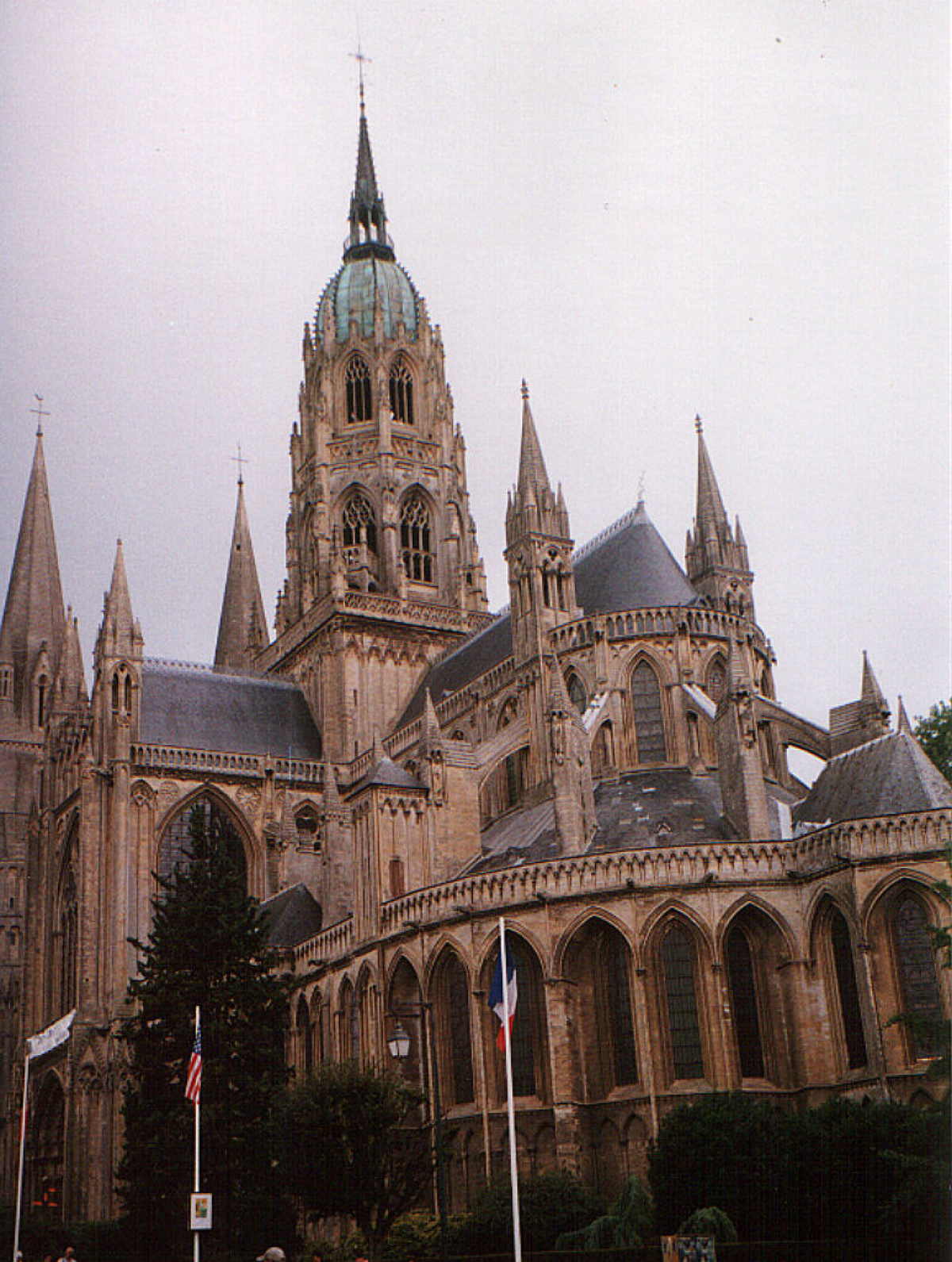
A Norman-Romanesque cathedral started in the 11th century but mainly built in the 13th, surprised us in the way to the coast.
We were so concentrated in WW2 remains, and so short in time, that we didn’t even enter it. The lightness of my passage was such that I included the cathedral that impressed me in Caen, an error later corrected.
Then, I read something about an important tapestry that… I knew!
We must read before going anywhere, and that lesson helped me a lot in my recent trips!
If you want to easily publish your own experiences, after registering you may use the form below. It will be added after revision. You may use text, photos till 20Mb or video. For a more complex publication click here.
Publishing form
You need to be logged in to view this page
Your trip will be perfect with the help of our partners
For a great experience:
For your safety:

For your comfort:
For cheap flights:
For local displacements:
 English
 Português