

Overview
La Manga del Mar Menor is a unique coastal strip in southeastern Spain, shaped by long beaches, calm lagoon waters and a bright Mediterranean atmosphere. The narrow peninsula separates the Mar Menor from the open sea, creating a landscape of contrasts: warm, shallow waters on one side and the full strength of the Mediterranean on the other. Its resorts, promenades and natural areas form a destination that feels sunny, relaxed and deeply connected to coastal life.
Best time to visit
The best time to visit La Manga del Mar Menor is from May to September, when warm temperatures and clear skies make swimming and beach days ideal. Spring brings mild weather and quieter streets. Summer offers lively evenings and bright days. Early autumn adds softer light and fewer crowds. Winter is calm and suited for slow travel and coastal walks.
Getting around
La Manga is easy to explore by car or bus, as the strip extends for several kilometres. Walking is ideal for beach areas, promenades and local shops. Boats connect the peninsula with nearby towns and islands across the Mar Menor. Movement feels simple and scenic, shaped by water on both sides and long coastal views.
Safety and local etiquette
La Manga is safe and welcoming, with a relaxed Mediterranean atmosphere. Normal precautions are sufficient. Visitors should respect beaches, natural areas and quiet residential zones. Locals appreciate politeness, calm behaviour and care for the environment. The region values its coastal identity and natural lagoon.
Food and water
Local gastronomy reflects Murcian coastal traditions, with dishes such as caldero, fresh fish, seafood and Mediterranean flavours. Restaurants offer simple, generous meals connected to local produce. Tap water is safe to drink. Dining feels relaxed and social, shaped by seaside life.
Day trips and excursions
La Manga is perfectly positioned for exploring the Mar Menor and the Murcia region. Cabo de Palos offers a lighthouse, diving spots and coastal charm. Cartagena reveals Roman heritage and a scenic port. San Pedro del Pinatar provides salt flats and nature trails. The Mar Menor itself offers sailing, kayaking and calm beaches. Each excursion enriches any itinerary with nature, culture or sea views.
Essence of La Manga del Mar Menor
The essence of La Manga lies in its harmony between lagoon, sea and coastal leisure. The strip shapes the region’s rhythm, the beaches add brightness and the surrounding towns create cultural depth. It is a place where water defines the landscape, where the pace is gentle and where the Iberian Mediterranean Cluster reveals one of its most distinctive seaside destinations.
Highlights in La Manga
Visitors can enjoy the pristine beaches on both sides of the long stripe, with golden sands and stunning views. The ocean side is calm, with clean waters, perfect to swim or sunbath. The lagoon side is warmer, very shallow, perfect for water sports.
Nearby, nature lovers may enjoy Calblanque Natural Park and those who want a change, Murcia and Cartagena are very close.


- La Manga is located in the Region of Murcia in southeastern Spain.
- The peninsula separates the Mediterranean Sea from the Mar Menor lagoon.
- Spanish is the official language.
- Tap water is safe to drink.
- Credit and debit cards are widely accepted.
- The official currency is the Euro (€).
- La Manga extends for approximately 21 kilometres.
- The Mar Menor is known for its warm and shallow waters.
- The area is highly popular for water sports.
- Summer is the busiest tourism season.
- A car can be useful for exploring the entire peninsula.
- Seafood and rice dishes are local gastronomic highlights.
- The area enjoys one of the sunniest climates in Spain.
La Manga del Mar Menor has a Mediterranean climate, characterised by hot summers, mild winters, and abundant sunshine throughout most of the year.
- Spring (March to May) — warm temperatures and excellent conditions for outdoor activities and coastal exploration.
- Summer (June to August) — hot, sunny weather and ideal conditions for swimming, sailing, and beach holidays.
- Autumn (September to November) — warm sea temperatures and pleasant conditions for sightseeing and water sports.
- Winter (December to February) — mild weather with comfortable daytime temperatures and relatively little rainfall.
The most popular period to visit is from April to October, when weather conditions are generally ideal for beaches, water sports, outdoor dining, and enjoying the unique landscapes of both the Mediterranean Sea and the Mar Menor.
Today:
🌐 Regional connection
This destination is part of the Murcia Region Cluster, a curated region showcasing Mediterranean beaches, historic cities, natural parks, coastal villages, and some of Spain’s most authentic cultural experiences.

La Manga del Mar Menor – 7 great days
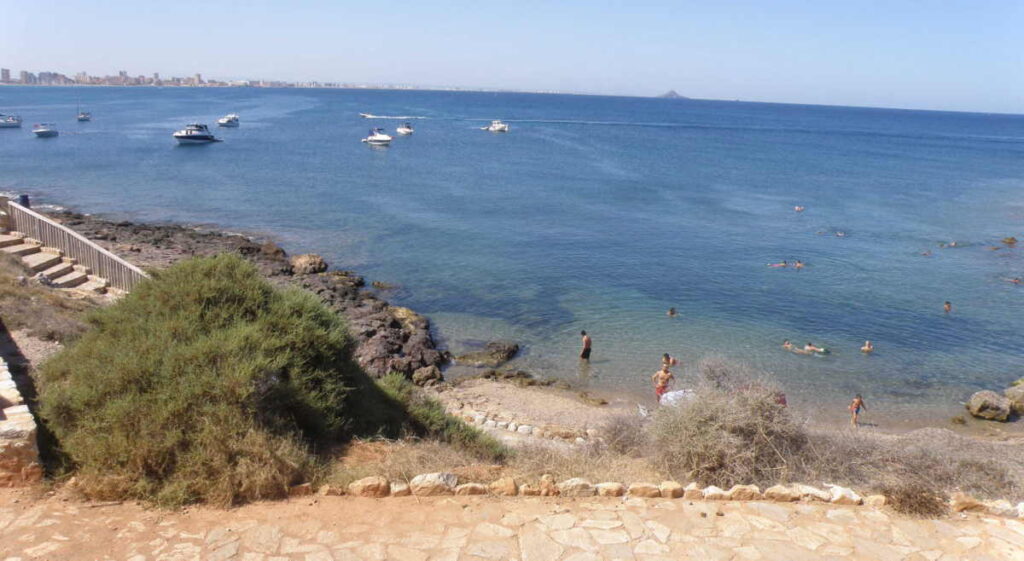
I was surprised for not finding La Manga del Mar Menor in Virtual Tourist.
Upon my arrival, I discovered why – it is mainly a vacation place for locals and… Portuguese.
However, many thousand people fill the immense stripe of apartment buildings and hotels, lining a very good beach.
Why not to mention it?
We spent a very good week there, swimming in a tepid sea, with crystalline waters. So pure that… it was a surprise. It’s common to see that purity in rocky coast, but not so common in a soft sandy beach.That was, for a week, Fernanda’s Paradise…
Visiting La Manga del Mar Menor
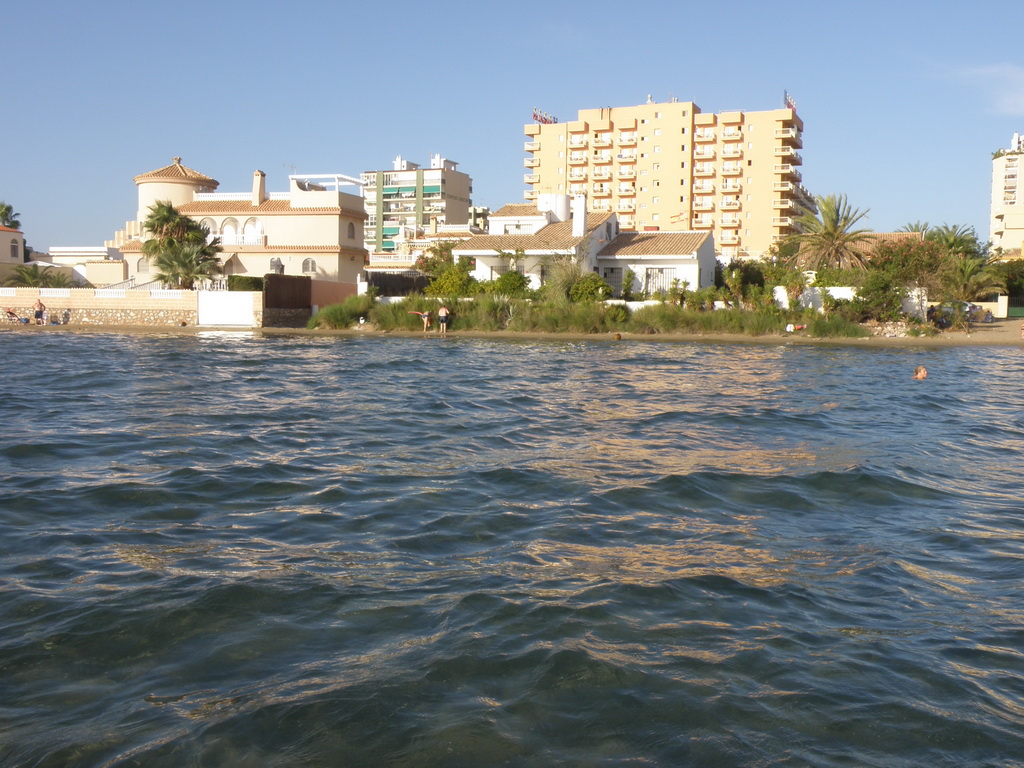
We spent a very good week there, swimming in a tepid open sea, with a few visits to the interior sea (almost a lake)
It is so shallow that it is absolutely safe for children, but almost useless for adults, since, even walking several hundred meters into the sea, I couldn’t find dept enough to wet my pants.
Of course, those who enjoy “boiling” in the water were in Paradise…
Cabo de Palos
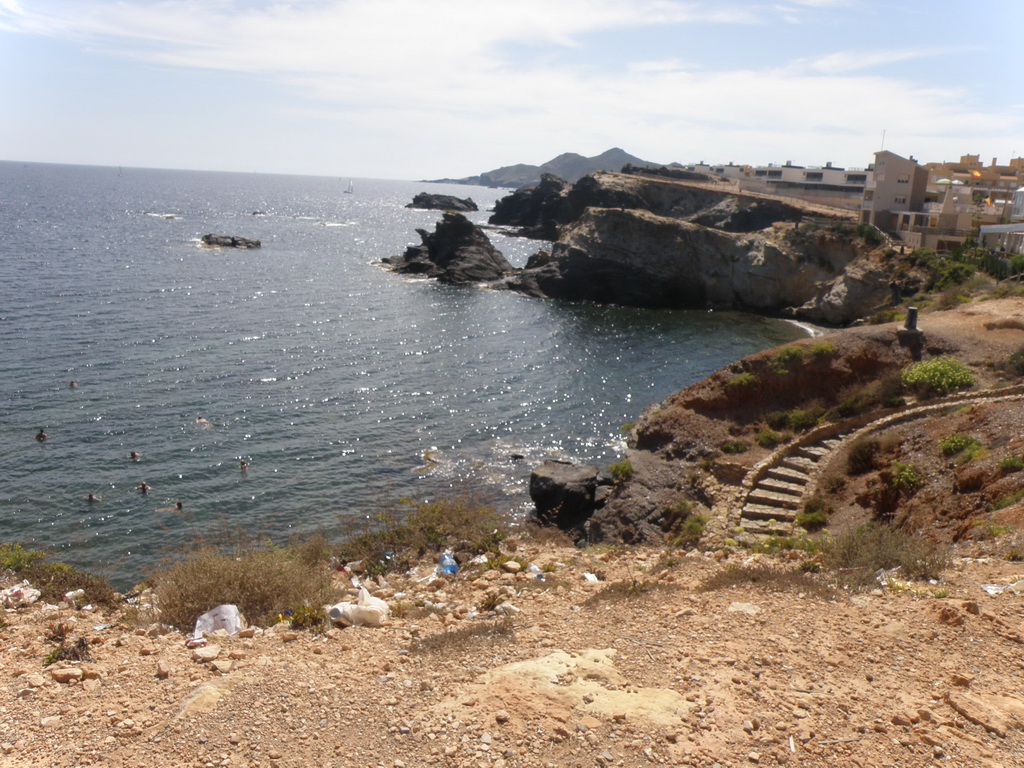
The entrance to La Manga
I’ve been there, “pushed” by Virtual Tourist that didn’t know La Manga, but I must confess that great part of what I’m going to write respects to La Manga de Mar Menor, a long strip of sand that, starting here, in Cabo de Palos goes northeastward lined by two seas.
To oppose the shallow and wide sandy coast of La Manga, here we get a rocky coast with a few small coves.
Lighthouse

Built in 1865, the lighthouse signals the cape, that is part of a marine reserve, together with Hormigas islands. Behind it there’s a good marina.
Marina
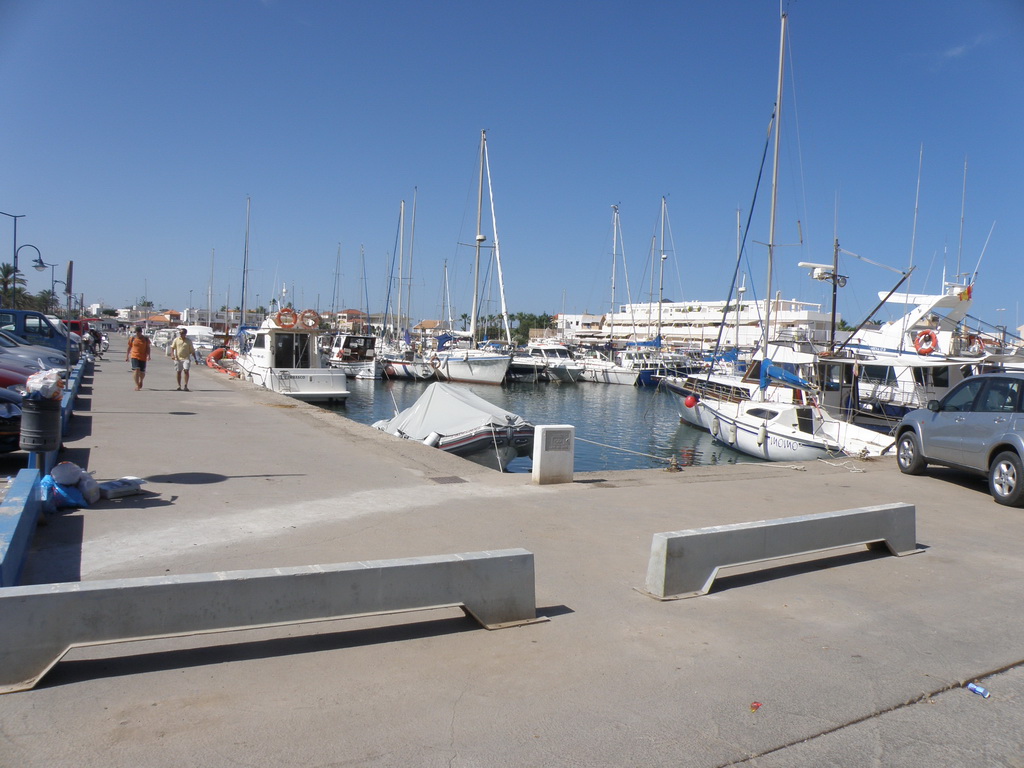
Well protected by the rocky cape, there’s a small marina.
The long coastline of La Manga has a few other places to park boats, but I think that only very small boats may enter them, so this must be the greatest marina in the area, well supported by the usual commerce around it.
Reona beach
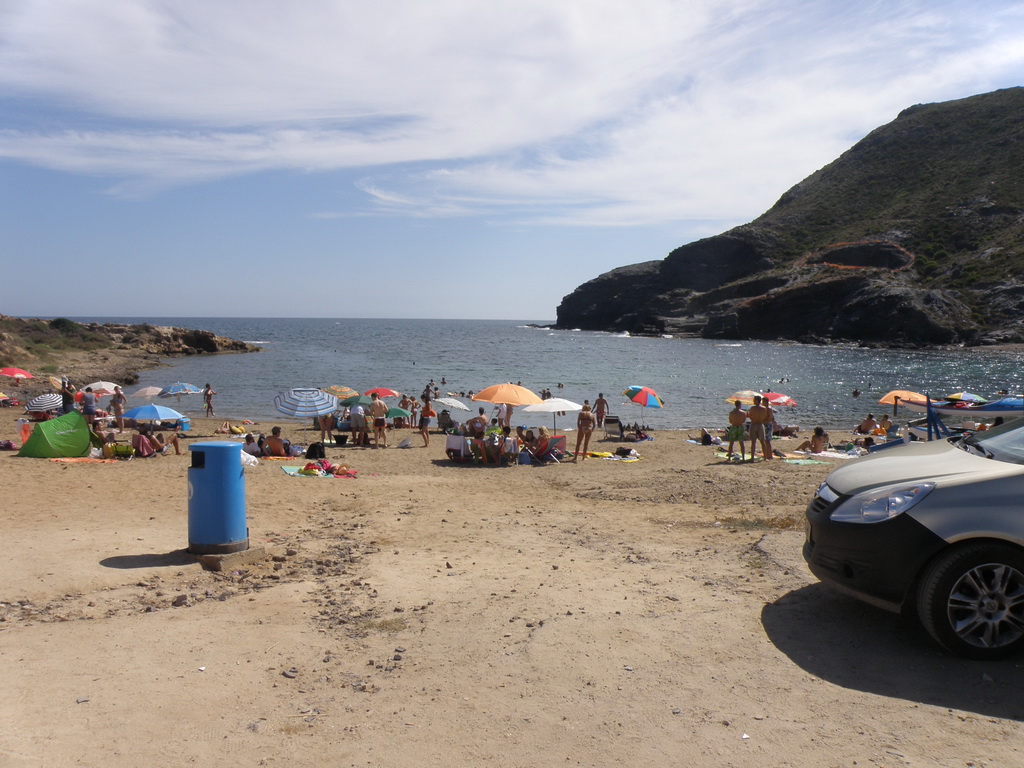
At least one of the small beaches in Cabo de Palos, called Reona is easily reached by car, that may park in background.
It is, probably used by families from inland, that don’t like to venture in the confusion of the touristy length of La Manga.
 Personal Memories
 Personal Memories
Photo

What the hell will be in that lady’s mind?
She knows that I hate to stay under the sun for long, she knows that in this Mar Menor, we my enter the water for hundreds of meters, without the water reaching the waist.
Why was she so interested in this common picture?
Why is she shouting that focusing with tele objective from distance takes time?
Wouldn’t it be easier and nicer to say that she doesn’t like my weak tan?
No comments


Eat in La Manga – 4 fine choices
Sleep in La Manga – 2 fine options
Shopping in La Manga – 1 inviting solution
Warnings in La Manga – 1
If you want to easily publish your own experiences, after registering you may use the form below. It will be added after revision. You may use text, photos till 20Mb or video. For a more complex publication click here.
Publishing form
You need to be logged in to view this page
Your trip will be perfect with the help of our partners
For a great experience:
For your safety:
For your comfort:
For cheap flights:
For local displacements:
 English
 Português