

Overview
Zaragoza is one of Spain’s great historic cities — a crossroads of Roman, Moorish, Jewish, and Christian heritage set along the banks of the Ebro River. Known for the monumental Basílica del Pilar, the elegant La Seo, and the Mudejar architecture that defines Aragon, Zaragoza blends culture, gastronomy, and urban charm. It’s a destination for travelers who enjoy history, lively streets, and a city that feels both grand and welcoming.
Best Time to Visit
The best time to visit Zaragoza is from April to June and September to October, when temperatures are pleasant for walking through the historic center and exploring museums and viewpoints. Summer is hot but vibrant, especially in the evenings. Winter is cool and dry, ideal for cultural visits and slow travel.
Getting Around
Zaragoza is easy to navigate:
- The historic center is walkable and compact.
- Public transport (buses and tram) is efficient for longer distances.
- Parking is available but limited in central areas — park on the outskirts and walk in.
- A car is useful only if you plan to explore surrounding towns and natural parks.
Safety and Local Etiquette
Zaragoza is safe and welcoming. Summer heat and dry winds can be intense — bring water and sunscreen. Respect quiet areas around churches and historic sites. Locals appreciate politeness, calm behavior, and interest in Aragonese culture and gastronomy.
Food and Water
Zaragoza’s gastronomy reflects Aragonese tradition. Expect ternasco de Aragón, migas, bacalao ajoarriero, borrajas, tapas, and excellent local wines. Tap water is safe to drink. Restaurants and cafés are concentrated around El Tubo, Plaza del Pilar, and the historic center.
Day Trips and Excursions
Zaragoza is perfectly located for exploring Aragon and nearby natural areas. Highlights include:
- Basílica del Pilar — iconic riverside basilica and city symbol.
- La Seo Cathedral — Gothic‑Mudejar masterpiece.
- Aljafería Palace — stunning Islamic palace later transformed by Christian kings.
- Puente de Piedra — historic bridge with views of the basilica.
- El Tubo — lively tapas district.
- Goya Museum — dedicated to the region’s most famous artist.
- Parque Grande José Antonio Labordeta — Zaragoza’s main urban park.
For longer trips, you can reach:
- Monasterio de Piedra — waterfalls and lush gardens.
- Tarazona — Mudejar architecture and medieval charm.
- Huesca — gateway to the Pyrenees.
- Belchite — haunting ruins of the old town destroyed in the Civil War.
The essence of Zaragoza
Zaragoza is defined by its river — the Ebro flowing past basilicas, bridges, and plazas — and by the layers of history that shape its streets. It’s a city where Roman stones meet Mudejar towers, where evenings are filled with tapas and conversation, and where every viewpoint reveals the cultural heart of Aragon. The essence of Zaragoza lies in its identity: historic, lively, and unmistakably Aragonese.
Highlights in Zaragoza:
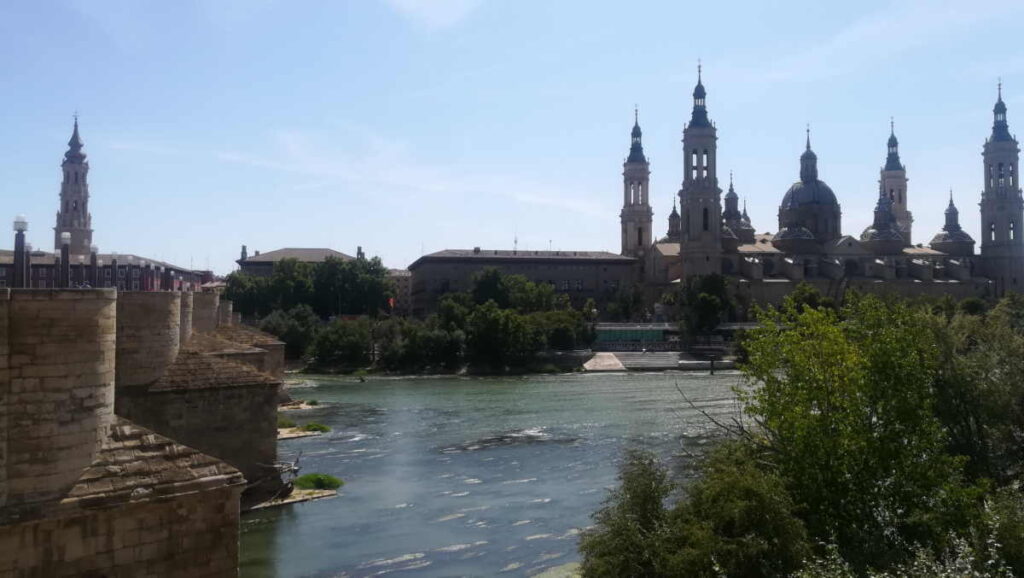
In a city with an excellent relationship with the river, they deserve to be highlighted the monastery of Our Lady of Pilar, the Aljafería Palace, a Moorish fortress built in the 11th century, the cathedral of the Saviour, and many other points.


 Visiting Zaragoza
 Visiting Zaragoza
After several trips to Zaragoza with no time to stop, the day has come to schedule a visit.
It was a very brief stop, conditioned by the presence of two children, but it was possible to appreciate the essentials of the city.
Our Lady of Pilar

The most impressive monument in the city is the monastery of Senhora do Pilar. Due to its beauty, size and location by the river, it is a real charm for good and bad photographers.
Unfortunately, there was no time to go inside, but the outside views were rewarding.
Bridge

Crossing the river to get the most emblematic view of the monastery, we cannot fail to appreciate the beauty of the famous Stone Bridge, another of the city’s ex-libris.
Cathedral

Despite being a little in the shadow of the monastery, the Cathedral of the Savior is imposing, much appreciated for the richness of its architecture, begun in the 12th century in the Romanesque style, and completed in the 18th century in the Baroque style.
Interestingly, the tower incorporates remains of the Saragusta mosque’s minaret, which predates the Christian construction.

Plaza de España
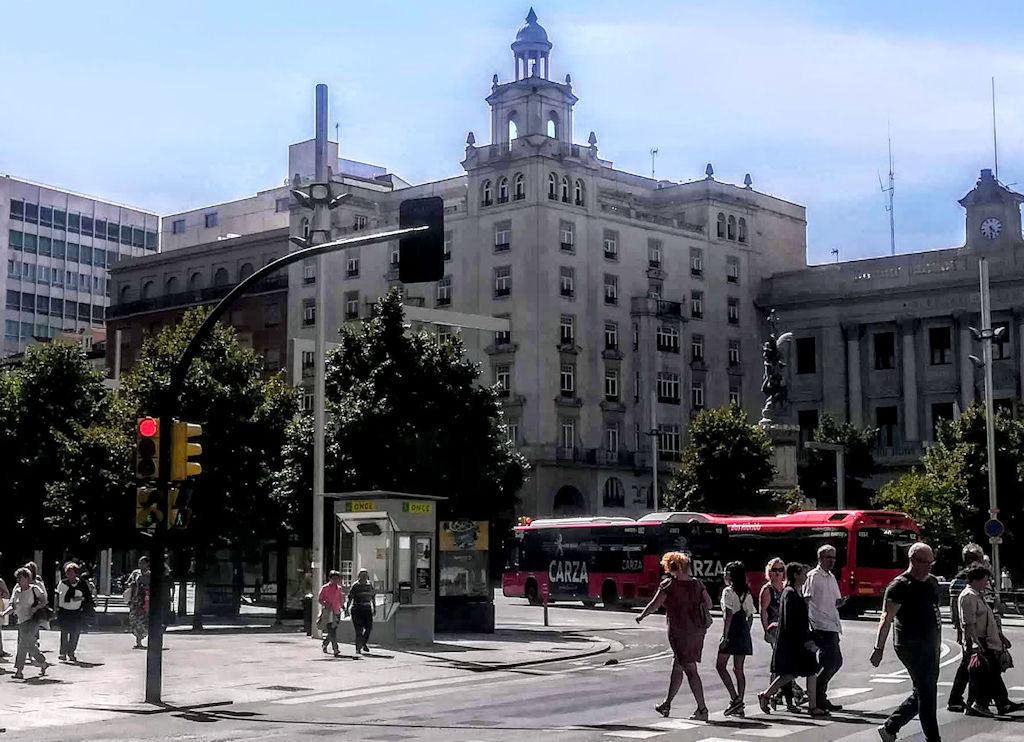
All Spanish cities develop around a Plaza de España (well, in Madrid with the competition of the Plaza Mayor), and here could be no exception.
Unlike most, it’s not the prettiest, although it’s surrounded by some characterful buildings, and a nice central fountain, but it’s a hub of intense activity.
Dom Jaime

The siesta is an essential stop after lunch in the south of Spain, and a good opportunity for those who skip shopping to see the most commercial streets.
I took advantage of the opportunity, and the very commercial street Dom Jaime was a delightfully peaceful place.
If you want to easily publish your own experiences, after registering you may use the form below. It will be added after revision. You may use text, photos till 20Mb or video. For a more complex publication click here.
Publishing form
Your trip will be perfect with the help of our partners
For a great experience:
For your safety:
For your comfort:
For cheap flights:
For packages in Europe:
For local displacements:

