

Overview
Sernancelhe is one of the most characteristic villages of northern Beira Alta, shaped by granite heritage, quiet rural landscapes and a deep cultural identity connected to the Távora valley. The town feels intimate and traditional, with stone houses, narrow streets and a rhythm rooted in centuries of local life. Surrounded by gentle hills, agricultural fields and small villages that preserve authentic rural charm, Sernancelhe offers a serene atmosphere where history, nature and community blend harmoniously. It is a destination that reflects the timeless soul of inland Portugal.
Best time to visit
The best time to visit Sernancelhe is from April to October, when mild temperatures and clear skies make walking, scenic drives and cultural visits comfortable. Spring brings fresh colours and soft light across the granite façades. Summer offers warm days suited for exploring villages and viewpoints. Early autumn provides golden tones and a quieter pace. Winter is cool and calm, ideal for travellers seeking rural tranquillity and atmospheric landscapes.
Getting around
Sernancelhe is compact and easy to explore on foot, with the historic centre, viewpoints and local cafés all within short distances. For reaching nearby villages, river areas or the scenic roads of the Távora valley, a car provides flexibility and comfort. Roads are well maintained and follow the natural contours of the region. Movement feels relaxed and intuitive, shaped by rural scenery and the village’s gentle rhythm.
Safety and local etiquette
The village is safe and welcoming, with a friendly atmosphere typical of Portugal’s interior. Normal precautions apply, especially when walking near rural paths or uneven terrain. Locals appreciate politeness, quiet behaviour and respect for agricultural spaces. The environment encourages slow exploration and thoughtful interaction, reflecting the calm and authentic character of the region.
Food and water
Dining in Sernancelhe highlights traditional Beira Alta flavours — roasted meats, regional sausages, local cheeses, hearty soups and dishes rooted in rural tradition. Nearby restaurants offer simple, generous meals connected to the land and its produce. Tap water is safe to drink. Food experiences feel authentic and comforting, reflecting the rustic charm of northern Portugal.
Day trips and excursions
Sernancelhe is perfectly positioned for exploring the Távora valley and the surrounding region. Nearby villages preserve granite architecture and rural identity. The Douro Valley lies within reach, offering scenic viewpoints and wine heritage. Moimenta da Beira and Penedono add cultural depth and historical interest. Each excursion complements Sernancelhe’s blend of tradition, nature and countryside tranquillity.
Essence of Sernancelhe
The essence of Sernancelhe lies in its harmony between granite heritage and rural serenity. Stone houses reflect centuries of history, fields stretch toward the horizon and the village maintains a rhythm shaped by land, community and quiet beauty. It is a place where travellers slow down, enjoy peaceful moments and feel the grounded soul of Beira Alta. Sernancelhe embodies the serene, traditional and quietly captivating spirit of inland Portugal.
Highlights in Sernancelhe:
Known as the “Land of the Chestnut,” this region has a deep connection to chestnut cultivation, shaping its landscapes and traditions. Visitors can explore the 12th-century Romanesque church, a well-preserved architectural treasure, alongside the remnants of the medieval castle and pillory. Nearby, the Sanctuary of Nossa Senhora da Lapa is a significant pilgrimage site and Adriano’s castle a funny curiosity. Nature lovers can enjoy the Serra da Lapa and the Passadiços do Távora, perfect for hiking and relaxation.


- Sernancelhe is a historic municipality in the district of Viseu, located in the heart of the Beira Alta region.
- The municipality is famous for its strong association with the chestnut tree and is often known as the “Land of the Chestnut”.
- Tap water is safe to drink and of excellent quality.
- The area preserves a rich medieval heritage, with granite villages, manor houses, churches, and historical monuments.
- The renowned Sanctuary of Nossa Senhora da Lapa, one of Portugal’s most important pilgrimage sites, is located within the municipality.
- The sanctuary’s famous Lapa Grotto attracts pilgrims and visitors from across Portugal.
- Sernancelhe has strong links to the history of the Jesuits and religious education in Portugal.
- The municipality is surrounded by forests, agricultural landscapes, vineyards, olive groves, and scenic granite hills.
- Nearby attractions include Penedono, Trancoso, Lamego, Moimenta da Beira, and the Douro Wine Region.
- The region is renowned for chestnuts, olive oil, honey, smoked meats, traditional cheeses, regional wines, and artisan bread.
- Traditional gastronomy highlights include roast kid goat, lamb dishes, local sausages, chestnut recipes, and convent-style sweets.
- The municipality hosts various religious celebrations, cultural events, and the famous chestnut-related festivities.
- The destination is safe and visitor-friendly; normal precautions are generally sufficient.
- Credit and debit cards are accepted in most establishments, although carrying some cash is advisable in smaller villages.
- The official currency is the Euro (€).
- A car is highly recommended for exploring nearby villages, viewpoints, sanctuaries, and rural landscapes.
- Respect historic monuments, religious sites, agricultural properties, local traditions, and natural areas when visiting.
Sernancelhe enjoys a continental Mediterranean climate, characterised by warm summers, cool winters, and distinct seasonal contrasts. Located in the Beira Alta region, the municipality sits on elevated terrain between the Douro Valley and the mountains of central Portugal.
- Spring (March to May) – mild temperatures, flowering landscapes, and excellent conditions for exploring historic villages, sanctuaries, and walking trails.
- Summer (June to August) – warm and generally dry, with temperatures typically ranging between 24°C and 34°C.
- Autumn (September to November) – pleasant weather, colourful countryside, chestnut season, and ideal conditions for cultural tourism and photography.
- Winter (December to February) – cool conditions, generally ranging between 1°C and 11°C, with frequent frost and cold nights.
Spring and autumn are widely considered the best seasons to visit Sernancelhe.
Today:
🌐 Regional connection
This town is part of the Interior Center Cluster, a curated region that connects mountain towns, rural landscapes and historic villages across central inland Portugal.

Sernancelhe – 1st visit
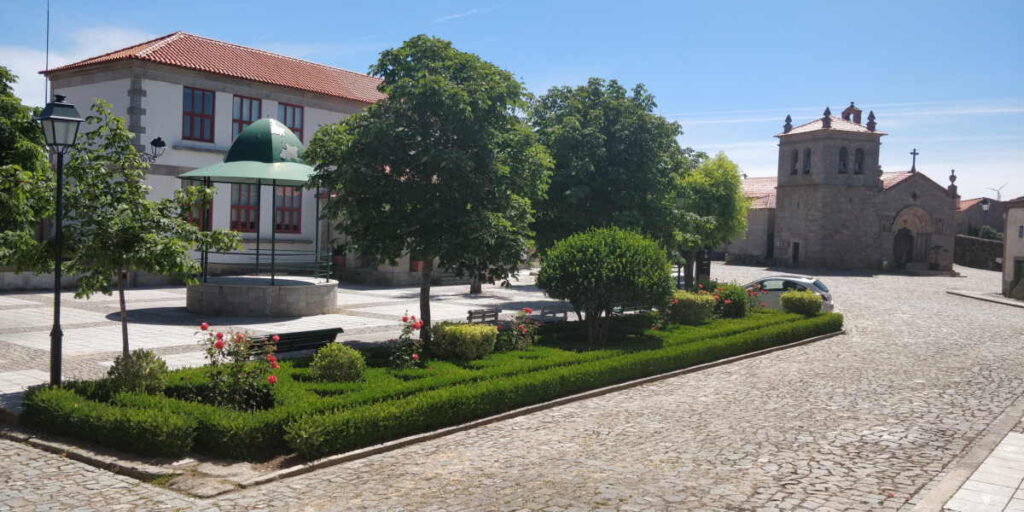
Church

Construction began in 1172, the main church, dedicated to São João Batista, is a gem where the original Romanesque style was respected, with interventions over the centuries being limited to decorative elements, with frescoes and gilded altars.
Castle

What remains of the castle are just a few sections of the walls.
A staircase leads to their top, but there’s not much to see.


Sleep in Sernancelhe – 2 fine sugestions
If you want to easily publish your own experiences, after registering you may use the form below. It will be added after revision. You may use text, photos till 20Mb or video. For a more complex publication click here.
Publishing form
You need to be logged in to view this page
Your trip will be perfect with the help of our partners
For a great experience:
For your safety:

For your comfort:
For cheap flights:
For local displacements:
 English
 Português