

Overview
Overview
Porto Covo is one of the most charming coastal villages on the Alentejo coast, known for its rugged cliffs, quiet coves, and relaxed seaside atmosphere. With whitewashed houses, narrow streets, and access to some of Portugal’s most beautiful beaches, it’s a perfect destination for slow travel, nature lovers, and anyone seeking a peaceful escape by the Atlantic.
Best Time to Visit
The best time to visit Porto Covo is from May to September, when the weather is warm and ideal for beach days and coastal walks. July and August are the busiest months. Spring and early autumn offer mild temperatures, fewer crowds, and excellent conditions for hiking along the Vicentina Coast.
Getting Around
Porto Covo is compact and easy to explore on foot. The beaches and viewpoints are within short walking distance from the village center. For exploring the wider region — Sines, Vila Nova de Milfontes, or the Vicentina Trail — having a car is useful. Parking is generally easy outside peak summer.
Safety and Local Etiquette
Porto Covo is safe and welcoming. The Atlantic can be rough, so caution is advised when swimming or exploring rocky coves. Respect nature, marked trails, and protected areas. Locals appreciate calm behavior, support for small businesses, and care for the coastline.
Food and Water
Seafood is the highlight of Porto Covo’s cuisine. Expect fresh fish, cataplanas, grilled specialties, and regional dishes from the Alentejo. Tap water is safe to drink. Restaurants are concentrated around the main square and the coastal promenade, offering a mix of traditional and modern options.
Day Trips and Excursions
Porto Covo is perfectly located for exploring the Alentejo coast. Popular excursions include:
- Ilha do Pessegueiro — historic ruins, scenic views, and a beautiful beach.
- Vila Nova de Milfontes — river beaches, viewpoints, and a lively town.
- Sines — castle, maritime history, and a larger harbor.
- Vicentina Coast Trails — dramatic cliffs and untouched nature.
For longer trips, you can reach Zambujeira do Mar, Odeceixe, or even the Algarve’s west coast.
Essence of Porto Covo
Porto Covo is where the wild Atlantic meets Alentejo calm. Rugged cliffs, golden sands, and a village that keeps its authentic pace. It’s a place to disconnect, breathe, and feel the ocean at its purest.
Highlights in Porto Covo:
All the coast is nice, but we may evidence the main beach, Pessegueiro island, the fort of Nossa Senhora da Soledade, and, nearby, Cabo Sardão.


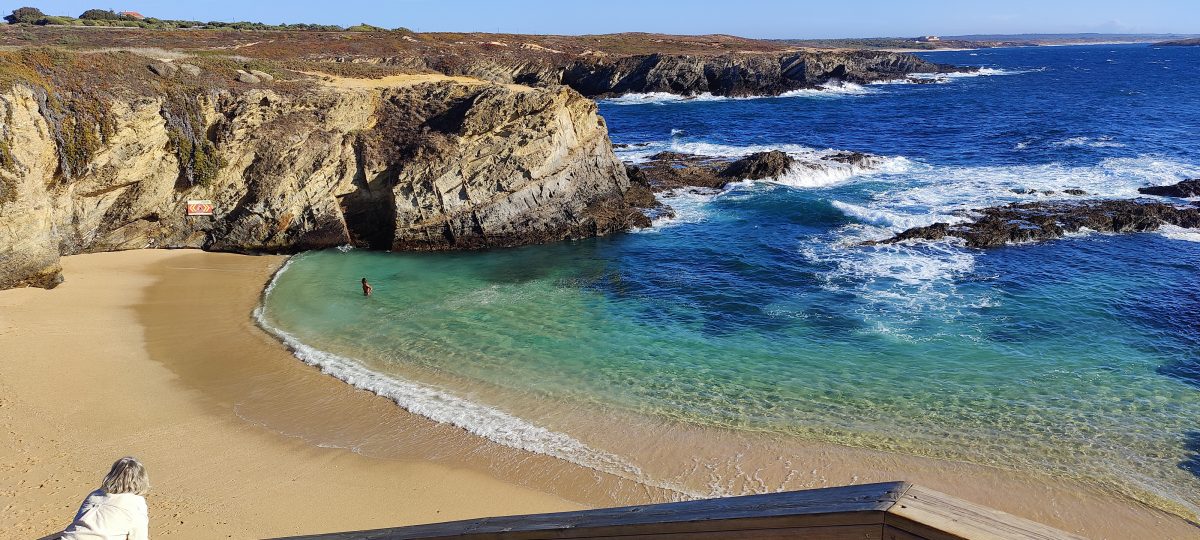
Porto Covo is a charming coastal village in Alentejo region, known for its whitewashed houses, rugged cliffs, and serene beaches. Once a quiet fishing settlement, it now attracts visitors with its natural beauty, nearby Pessegueiro Island, and peaceful atmosphere—perfect for a relaxing seaside escape.
Vasco da Gama avenue
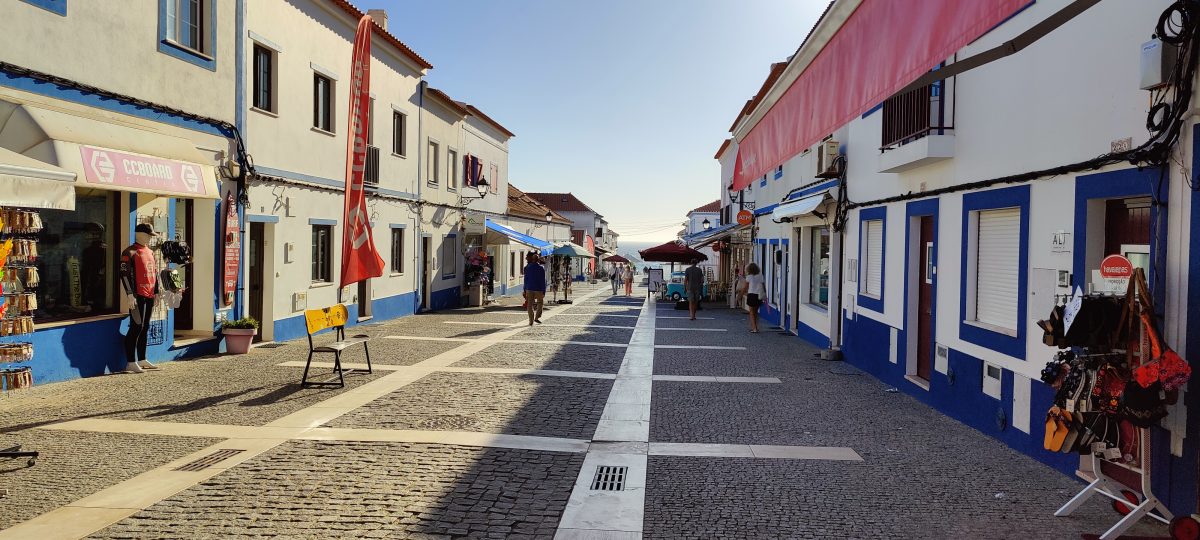
This is Porto Covo’s scenic main street, the real heart of touristy life, lined with whitewashed houses and local shops. It gently slopes toward the sea, offering glimpses of the Atlantic. Ideal for a leisurely stroll, it captures the village’s relaxed rhythm and connects visitors to beaches, cafés, and the heart of town.
Marquês de Pombal square
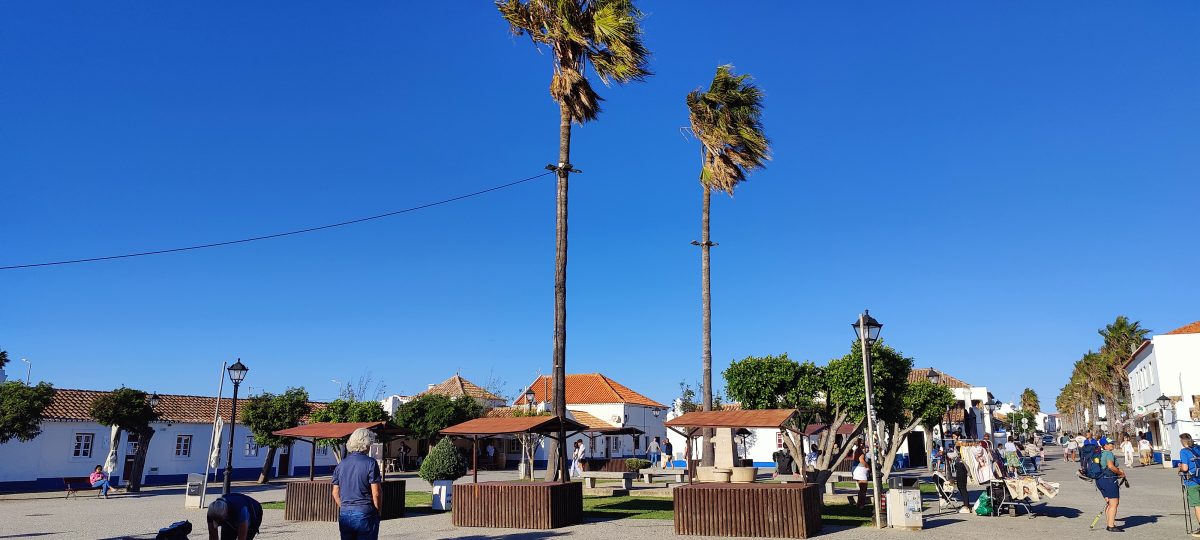
Praça Marquês de Pombal is the historic center of Porto Covo, framed by symmetrical architecture and cobbled charm. Restored after the 1755 earthquake, it reflects Pombaline urban planning, justifying the name. Locals gather here for markets and festivals, making it a vibrant social hub with timeless character and a peaceful, welcoming atmosphere.
Church
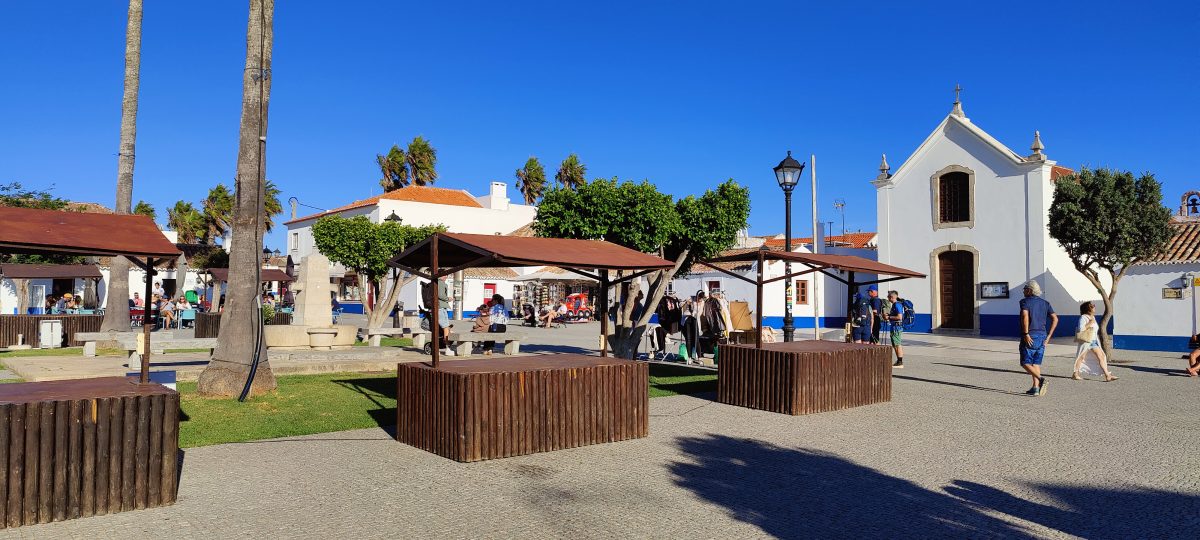
Alentejo is not a very religious area, as stated by the small church that stands quietly near the main square. Its simple façade and intimate interior reflect the town’s maritime soul. Dedicated to Our Lady of Solitude, it offers a serene space to religious visitors.
Baía beach
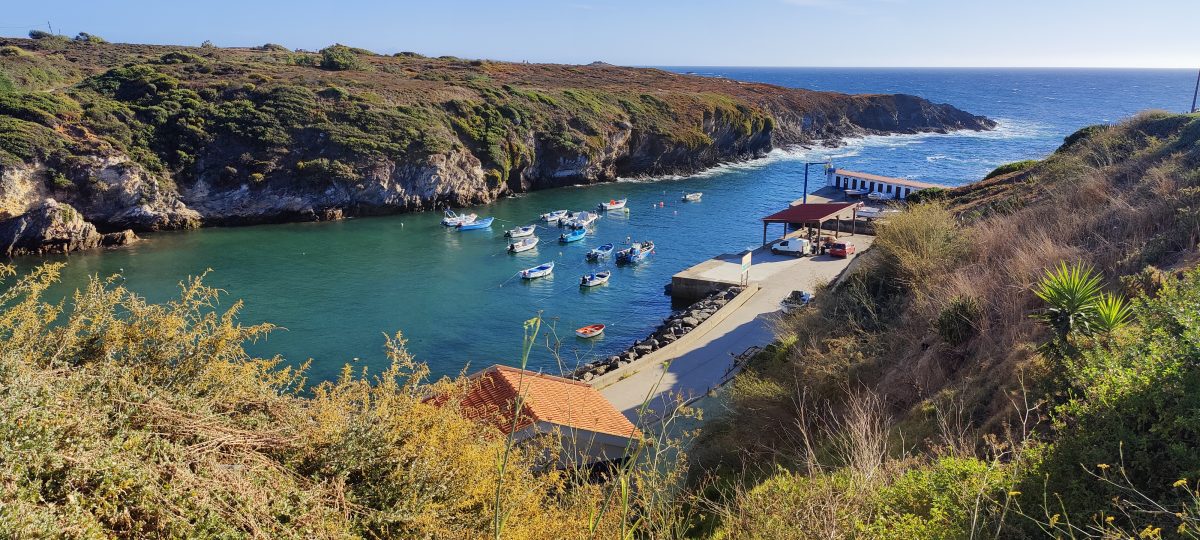
Baía Beach is a very small, sheltered cove with golden sand and calm waters, safe for families and quiet swims. Surrounded by cliffs, it offers natural protection from wind and waves. Its intimate setting and easy access make it a favorite for those seeking tranquility near the village center.
Buzinhos beach
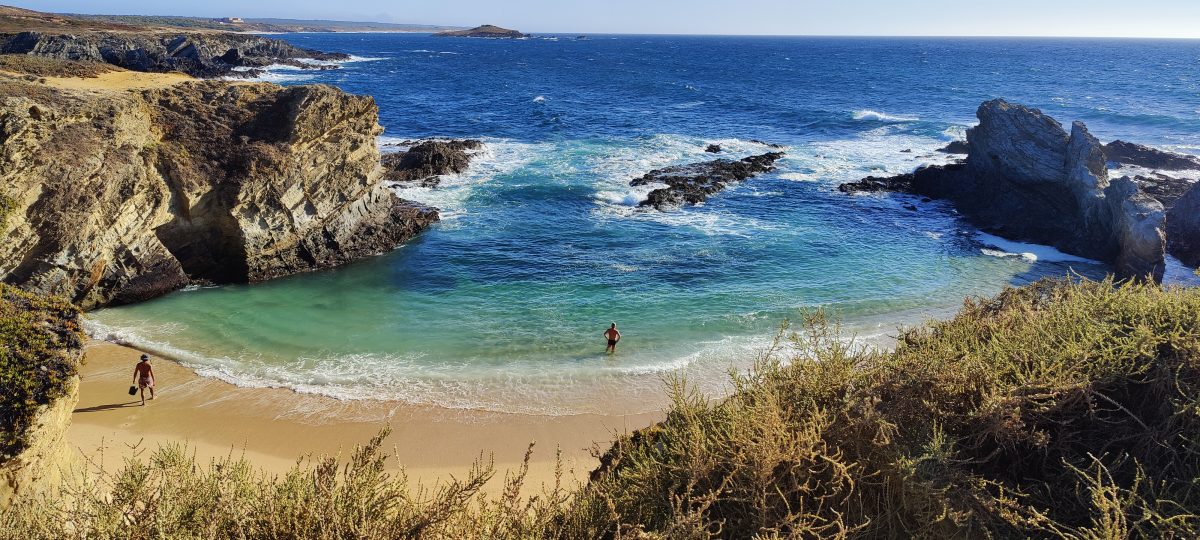
Buzinhos Beach is the other aalternative close to the center of town, and the mostbeautiful, with its dramatic rock formations and crystal-clear waters. Ideal for sunbathing and photography, it’s a peaceful spot tucked between cliffs. The tide reveals natural pools and marine life, making it a hidden gem for explorers and those who appreciate Porto Covo’s raw coastal beauty.
Espingardeiro beach
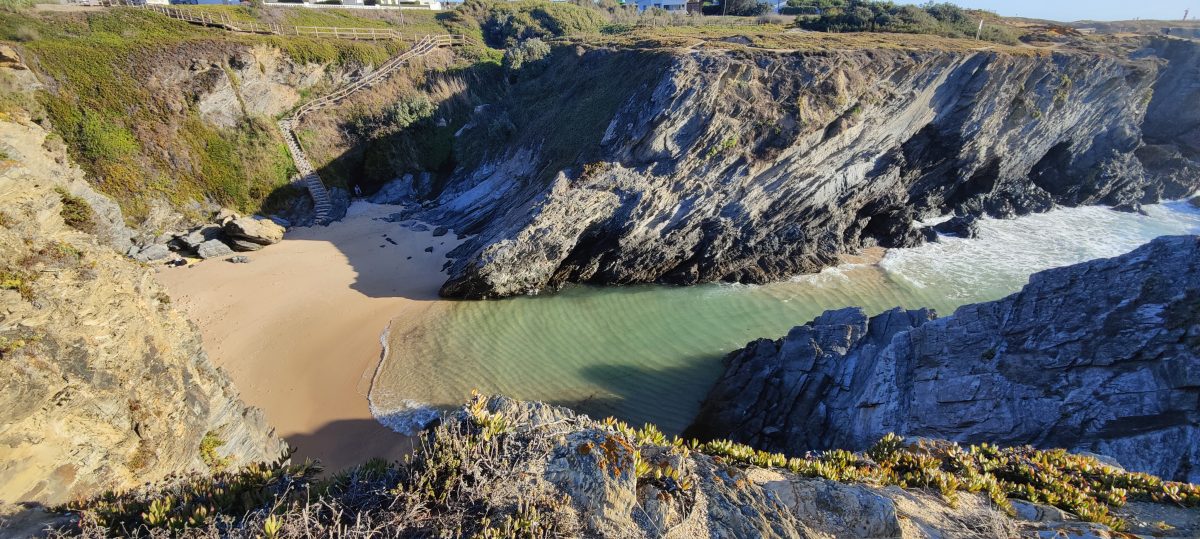
A few meters north of the center, Espingardeiro Beach is a narrow strip of sand nestled between rugged cliffs, offering a secluded escape. Its name hints at historical ties, possibly to coastal defense. Great views and fewer crowds, it’s perfect for enjoying the Atlantic waves.
Banho beach
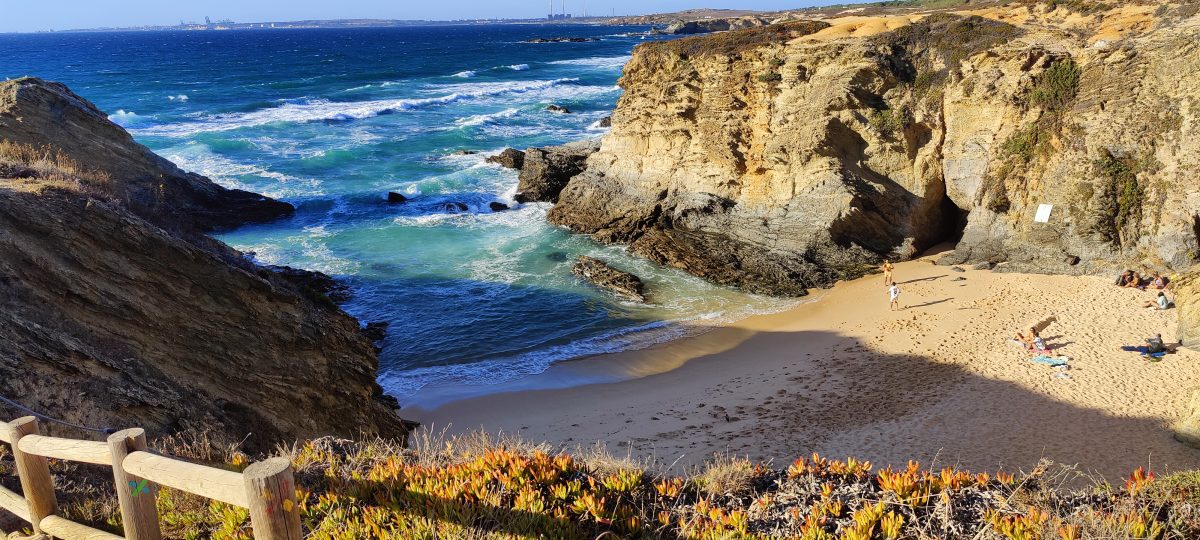
Banho Beach, some more meters to the north, is known for its gentle slope and inviting waters, making it a popular spot for swimming. The name “banho” reflects its role as a traditional bathing beach.
Grande beach

The last beach going north is, Grande Beach, as the name indicates the biggest of all. It’s ideal for long walks, beach games, and watching sunsets. The open space and fresh breeze make it a favorite for both relaxation and activity, capturing the essence of Porto Covo’s coastline.
Pessegueiro island

Going south a couple of kilometers, we find Pessegueiro Island. Once a Roman outpost, it later hosted fortifications. Today, it’s a protected site with ruins and seabird habitats. The island adds mystique to the horizon and invites admiration from shore and may be visited by boat, but without great interest.
Pessegueiro beach

Facing the island and partialyy protected by it, Pessegueiro Beach, offers golden sands, calm waters, and stunning views of the Island. Framed by rugged cliffs, it’s ideal for swimming, sunbathing, and peaceful walks.
Pessegueiro fort
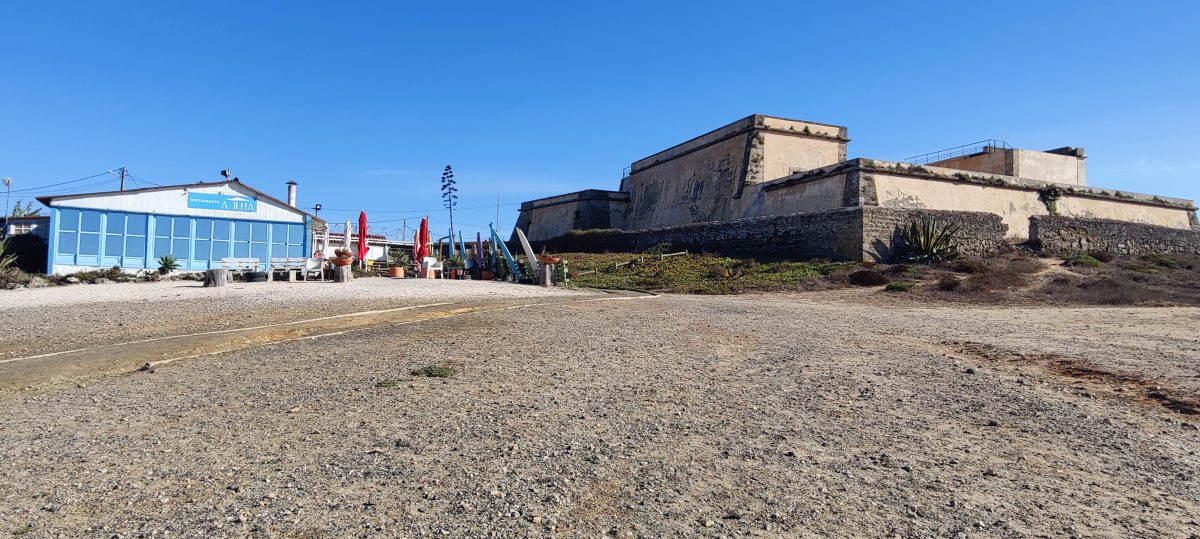
The Pessegueiro Fort, built in the late 17th century near Porto Covo, Portugal, overlooks the beach and faces the Island. Designed for coastal defense, it features a star-shaped layout with bastions and a chapel. Once part of a planned harbor system, it now stands as a historic landmark in Alentejo.
Samoqueiro beach
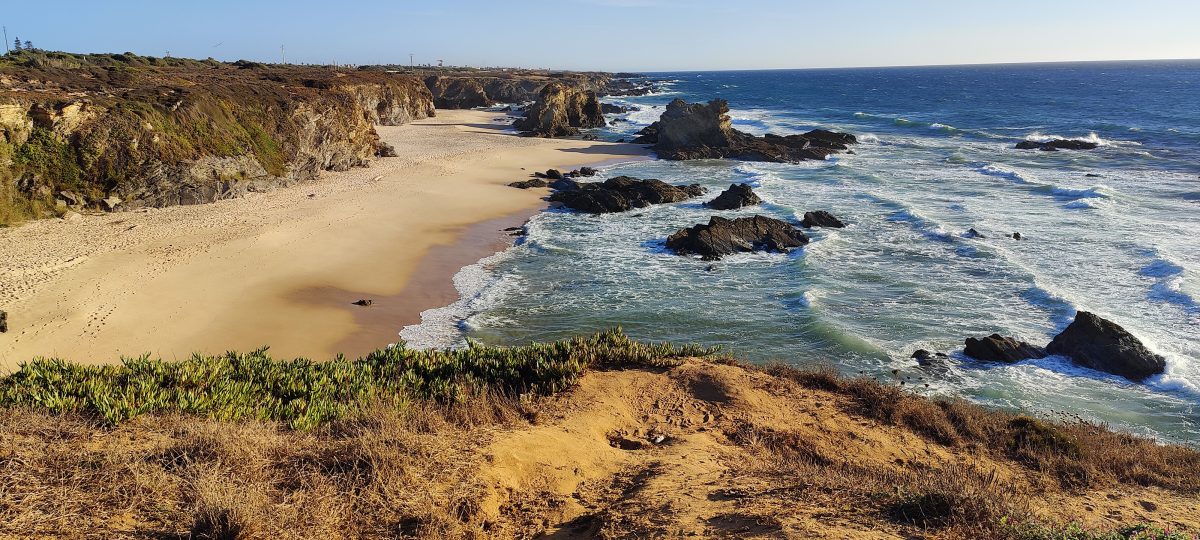
Located almost halfway to Sines, I don’t know to which city belongs this beach, but I have to mention it because I consider it the most beautiful in this coast.
Known for its natural tide pools and caves revealed at low tide, it’s ideal for quiet exploration and photography. With minimal infrastructure, it offers a peaceful, untouched coastal experience in Alentejo for those seeking for empty great places.
 Personal Memories
 Personal Memories
First time in Porto Covo beach

The most popular beach around Sines is this one. Some years ago, it was a wild area, with a secluded beach turned into a privilege to the few who could access it.
Successive investments transformed it in a massive holiday place, and… a beach like many other in that beautiful coast.
OK! If you want to swim in a not so cold water as up north and don’t want to go further south…
If you want to easily publish your own experiences, after registering you may use the form below. It will be added after revision. You may use text, photos till 20Mb or video. For a more complex publication click here.
Publishing form
Your trip will be perfect with the help of our partners
For a great experience:
For your safety:
For your comfort:
For cheap flights:
For packages in Europe:
For local displacements:

