

Overview
Marinha Grande is one of Portugal’s historic industrial towns — known as the capital of glass, surrounded by pine forests, coastal landscapes, and a strong manufacturing heritage. Located in the Leiria district, close to São Pedro de Moel and the Atlantic coast, the town blends tradition, craftsmanship, and nature. It’s a destination for travelers who enjoy local culture, forest walks, coastal viewpoints, and authentic Portuguese life away from the usual tourist routes.
Best Time to Visit
Marinha Grande can be visited year‑round, with each season offering a different atmosphere:
- Spring (Apr–Jun) — mild temperatures, ideal for exploring the forest and coastal areas.
- Summer (Jul–Sep) — warm and lively, perfect for beaches and seaside walks in São Pedro de Moel.
- Autumn (Sep–Nov) — calm, atmospheric, excellent for photography and nature.
- Winter (Dec–Mar) — quiet and cool, ideal for cultural visits and coastal viewpoints.
The Atlantic influence keeps summers pleasant and winters mild.
Getting Around
Marinha Grande is easy to explore:
- Walking — ideal for the town center and cultural sites.
- Bike — great for forest routes and the road to São Pedro de Moel.
- Car — useful for reaching beaches, Leiria, and nearby villages.
- Parking — generally available throughout the town.
Distances are short, and the region is well connected by road.
Safety and Local Etiquette
Marinha Grande is safe and welcoming. Forests and coastal roads can be windy — bring a light jacket. Respect quiet residential streets and natural protected areas. Locals appreciate politeness, calm behavior, and interest in the town’s glass‑making heritage.
Food and Water
Marinha Grande’s gastronomy reflects central Portuguese tradition. Expect:
- Fresh fish and seafood (especially near São Pedro de Moel)
- Leitão da Bairrada (popular in the region)
- Caldo verde & traditional soups
- Local pastries and convent sweets
- Wines from Bairrada and Tejo
Tap water is safe to drink. Restaurants and cafés are concentrated in the town center and coastal areas.
Day Trips and Excursions
Marinha Grande is perfectly located for exploring the central Portuguese coast and cultural sites. Highlights include:
Within Marinha Grande
- Museu do Vidro — dedicated to the town’s glass‑making heritage.
- Pinhal do Rei — historic pine forest ideal for walking and cycling.
- Centro Histórico — traditional streets and local shops.
- Fábricas de Vidro — industrial heritage and craftsmanship.
Nearby Destinations
- São Pedro de Moel — charming seaside village with cliffs, beaches, and viewpoints.
- Leiria — castle, old town, and riverside walks.
- Praia da Vieira — fishing village with seafood restaurants and a long beach.
- Nazaré — famous for giant waves and coastal scenery.
- Batalha — UNESCO monastery and historic architecture.
- Fátima — major pilgrimage site.
For nature lovers, the Lisboa–Porto coastal route offers scenic drives and viewpoints.
The essence of Marinha Grande
Marinha Grande is defined by its glass — a craft that shaped the town’s identity — and by the quiet rhythm of forests and coastal landscapes that surround it. It’s a place where industry meets nature, where pine trees stretch to the sea, and where every walk reveals authentic Portuguese life. The essence of Marinha Grande lies in its character: traditional, natural, and unmistakably local.
Highlights in Marinha Grande:
Despite the decline it is still possible to see the manual art of glass, and visit the excellent museum. Leiria’s pine forest is nature at its best, and as far as beaches go, Vieira de Leiria and São Pedro de Moel are close by.


- Marinha Grande is internationally known as the centre of Portugal’s glass industry and is often referred to as the country’s “Glass Capital”.
- The city developed around the historic Pinhal de Leiria (Leiria Pine Forest), planted during the reign of King Dinis.
- Tap water is safe to drink and of excellent quality.
- The Museum of Glass (Museu do Vidro) is one of the city’s most important cultural attractions.
- Marinha Grande played a significant role in Portugal’s industrial development and remains an important manufacturing centre.
- The nearby beaches of São Pedro de Moel, Praia da Vieira, and Pedra do Ouro are among the most popular coastal destinations in the region.
- The municipality offers excellent opportunities for walking, cycling, and nature tourism in the Leiria Pine Forest.
- São Pedro de Moel combines beautiful Atlantic scenery with historic architecture and coastal walking trails.
- The city is conveniently located between Leiria, Nazaré, and Figueira da Foz.
- Local gastronomy highlights include fresh seafood, grilled fish, traditional Portuguese dishes, and regional pastries.
- The destination is safe and visitor-friendly; normal precautions are generally sufficient.
- Credit and debit cards are widely accepted throughout the municipality.
- The official currency is the Euro (€).
- Marinha Grande offers a unique combination of industrial heritage, forest landscapes, and Atlantic coastline.
- Respect protected coastal areas, forest environments, historical sites, and local communities when visiting.
Marinha Grande enjoys a Mediterranean climate with strong Atlantic influences, characterised by mild temperatures, moderate rainfall, and comfortable weather throughout much of the year. Its location close to the Atlantic Ocean helps moderate seasonal extremes.
- Spring (March to May) — mild temperatures, blooming landscapes, and excellent conditions for exploring the city, nearby forests, and beaches.
- Summer (June to August) — warm and generally sunny, with temperatures typically ranging between 22°C and 30°C. Coastal breezes help maintain comfortable conditions.
- Autumn (September to November) — pleasant weather, fewer visitors, and ideal conditions for sightseeing, hiking, and outdoor activities.
- Winter (December to February) — mild conditions, generally ranging between 6°C and 15°C, with occasional rainfall and Atlantic storms.
The nearby ocean and extensive pine forests contribute to a pleasant environment throughout the year.
Today:
🌐 Regional connection
This town is part of the South Central Coast Cluster, a curated region that connects coastal towns, heritage sites and Atlantic landscapes across central Portugal.

Marinha Grande – 35 years working
Visiting Marinha Grande – The Glass capital
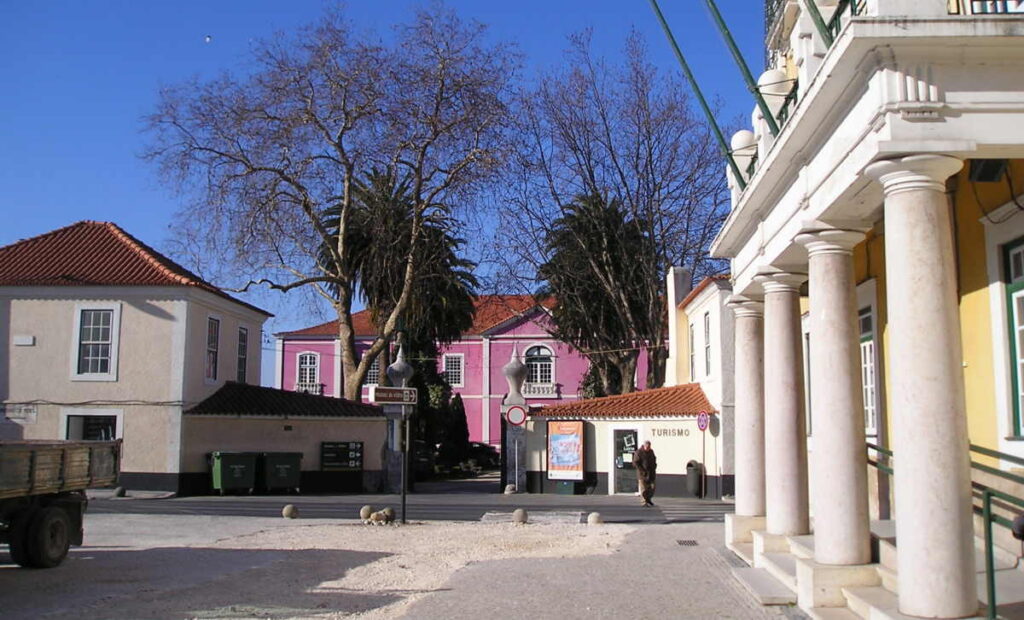
Till some years ago Marinha Grande was the ugliest town on earth (well… almost). In the last years things have changed, and the town holds now some interesting attractions. History and tradition concentrate in glass manufacturing. For decades that was the biggest attraction, but now only a few factories show live production.
Town Hall joins the buildings that once were part of the first glass factory, built in the XVIII century.
Across the street, the museum uses the old palace. A new library and a school complete the actual use of the factory of Stephens brothers. Glass has lost most of its significance in local life. However, the tradition remains, and glass is still the great cultural reference of town.
Glass Museum

Centrally located, it’s very interesting for two reasons: An excellent collection of glass artifacts, and the palace, built immediately after Lisbon’s earthquake.
The fear of the owner, who lost almost all his possessions in Lisbon, forced an anti-seismic structure, well displayed in the 2nd floor.
Not to be missed.
Join the controversy

Right in the historical complex in the center of town, a new building was built to install the library, causing some controversy: some people say it is well conceived and integrated in the style of the whole, some other claim that it is a mistake, sacrificing old construction, and chocking visually.
I’m not an expert, can’t take position, but the building, surely, can’t be unnoticed, and I don’t dislike it.
Cerca

Trying to embellish the town, a large area of land belonging to the former glass factory, was transformed in a wide and cool park.
Still waiting for the shades of the growing trees, it is already a place for a relaxing rest, and I know some more projects for the area, that I will not say, so you must check it locally.
PS – I retired and the “secret” projects are gone
Strike celebration

Marinha Grande challenges Barreiro as the Portuguese historic capital of working strikes.
In January 18th 1934, a general strike failed everywhere, except in Marinha Grande, where the glass workers hold the control of town for many hours.
The government sent the army that defeated the rebellion.
Since then, the 18th January is a local holiday for glass manufacturers, with political demonstrations honoring the rebels against the dictatorship, near the allusive statue in central square.
Rotary Association statue


In the Portuguese capital of glass, the common sense demanded a glass monument, and it came, recently.
Celebrating the Rotary Association, a glass column 7 meters high and weighing almost 4 tons, is one of the biggest glass monuments in the world.
It can be seen close to the center of town.
Exhibition Hall

From the large buildings of a former glass factory, the local authorities made a wide and versatile exhibition hall, where everything can happen, since rally park and control to sport training.
Exhibitions, convivial dinners, Christmas celebrations, fashion events, whatever you think, that’s the place, in Marinha Grande.
In my last visit art was the subject, but lots of the city’s life is concentrated here.
Glassblower

Marinha Grande is proud of working traditions, where glass blowing leads local references.
Most recent monuments celebrate this hard profession. In a southern square, a new statue is inspired in the traditional window glass manufacturing.
Crisform

Opened in September 2005, Crisform was a glass school, where you could, not only watch the teachers and students demonstrate all the techniques of glass manufacturing, but even try them by yourself
In the main lobby there’s a permanent exhibition, with interactive experiments.
In a comfortable auditorium, you could see a film explaining the techniques of glass production, with images from all the local factories.
Crisform no longer exists, extinguished by the government due to the crisis and included in IEFP structure. However, with luck, Cencal that now leads the technical part of the school, may allow the visit.
 Personal Memories
 Personal Memories
Art’s Biennale
Glass is married to Marinha Grande. To celebrate the marriage, each even year the expose the best artistic works they can gather. It’s an interesting cultural event, always growing in quality and dimension, that runs from September to the end of October.

In 2006, the featured artist was Olinda Colaço, a local painter with a long and remarkable career in glass painting.
in 2008 the featured artist was Guilherme Correia (and Olinda Colaço shined with a composition of pâte-de-verre made in Crisform).
PS – I retired in 2011 and I think that they stopped in 2010.
Address: Parque Municipal de Exposições, Marinha Grande.


Eat in Marinha Grande – 1 fine option
Sleep in Marinha Grande – 1 fine hotel
If you want to easily publish your own experiences, after registering you may use the form below. It will be added after revision. You may use text, photos till 20Mb or video. For a more complex publication click here.
Publishing form
You need to be logged in to view this page
Your trip will be perfect with the help of our partners
For great experiences:
For your safety:
For your comfort:
For cheap flights:
For local displacements:
 English
 Português