


Croatia is a country in the martyred Balkan region, bordering Slovenia to the northwest, Hungary to the northeast, Serbia to the east, Bosnia and Herzegovina and Montenegro to the southeast and sharing a maritime border with Italy on the Adriatic.
Overview
Croatia stretches along the Adriatic coast as one of Europe’s most dazzling seaside countries — a land of islands, medieval towns, and clear blue waters. From Dubrovnik’s ancient walls to the tranquil bays of Istria and the vibrant streets of Zagreb, Croatia blends history, nature, and Mediterranean charm with effortless grace.
Best Time to Visit
The best months are May to September, when the Adriatic is warm and lively. Spring brings mild weather and blooming landscapes. Summer offers bright days and festivals across the coast. Autumn is quieter, ideal for cultural travel and photography. Winter is calm, with Zagreb’s Christmas markets adding seasonal magic.
Getting Around
Croatia is easy to explore:
- Car — perfect for coastal drives and island hopping.
- Bus — reliable for intercity travel.
- Ferry — connects islands and coastal towns.
- Train — limited but scenic routes inland. Distances are short, and roads follow the sea for spectacular views.
Safety & Local Etiquette
Croatia is safe and welcoming. Tourist areas are well organized, and locals are friendly. Respect historical sites and natural parks. English is widely spoken, especially along the coast.
Food & Water
Croatian cuisine reflects Mediterranean and Central European influences. Expect:
- Seafood and grilled fish
- Olive oil and local wines
- Peka (slow‑cooked meat or seafood)
- Truffles and pasta in Istria Tap water is safe throughout the country.
Day Trips and Excursions

- Dubrovnik – UNESCO-listed Adriatic city famous for its medieval walls, historic centre and coastal beauty.
- Split – Historic coastal city built around the remarkable Diocletian’s Palace.
- Zadar – Dalmatian city renowned for the Sea Organ, Roman heritage and spectacular sunsets.
- Trogir – UNESCO World Heritage town celebrated for its exceptionally preserved medieval architecture.
- Šibenik – Historic city famous for the Cathedral of St. James and impressive fortresses.
- Plitvice Lakes National Park – Croatia’s most famous national park, known for turquoise lakes and waterfalls.
- Krka National Park – Spectacular natural area featuring waterfalls, rivers and scenic walking trails.
- Rovinj – One of Croatia’s most picturesque coastal towns, known for its colourful old town and Mediterranean atmosphere.
- Pula – Historic Istrian city famous for its remarkably preserved Roman Amphitheatre.
- Opatija – Elegant seaside resort known for Austro-Hungarian architecture and coastal promenades.
- Makarska – Popular Adriatic resort backed by the dramatic Biokovo Mountains.
- Otok Krk – Croatia’s largest island, famous for beaches, historic towns and wine traditions.
- Korčula – Beautiful island known for medieval architecture and maritime heritage.
- Hvar – World-famous island celebrated for beaches, historic landmarks and vibrant nightlife.
- Orebić – Charming coastal town on the Pelješac Peninsula known for maritime history and vineyards.
- Ston – Historic destination famous for its medieval walls, oyster farms and salt pans.
These destinations showcase Croatia’s remarkable diversity, combining UNESCO heritage sites, islands, medieval cities, national parks, Adriatic beaches and some of Europe’s most beautiful coastal landscapes.
The essence of Croatia
Croatia is defined by its harmony between sea and stone — ancient towns rising above clear waters, islands scattered like jewels, and a rhythm shaped by sunlight and history. It’s a country where beauty feels effortless, where every horizon glows with Mediterranean calm.
Highlights of Croatia

- Dubrovnik Old Town – UNESCO World Heritage Site and one of Europe’s finest medieval cities.
- Diocletian’s Palace (Split) – Extraordinary Roman complex forming the heart of Split’s historic centre.
- Plitvice Lakes National Park – Spectacular network of lakes, waterfalls and forests.
- Krka National Park – Beautiful waterfalls and scenic river landscapes.
- Pula Arena – One of the best-preserved Roman amphitheatres in the world.
- Sea Organ (Zadar) – Unique architectural installation powered by the movement of the sea.
- Hvar Town – Historic island settlement known for Venetian architecture and vibrant atmosphere.
- Rovinj Old Town – Charming peninsula town considered one of the Adriatic’s most beautiful destinations.
- Trogir Historic Centre – UNESCO-listed medieval town with remarkable architectural heritage.
- Walls of Ston – One of Europe’s longest defensive wall systems.
- Biokovo Skywalk – Glass viewing platform offering spectacular views above the Adriatic coast.
- Paklenica National Park – Dramatic mountain landscapes, canyons and hiking trails.
Visited places:


- Capital: Zagreb
- Official language: Croatian
- Currency: Euro (€)
- Member of the European Union
- More than 1,000 islands along the Adriatic coast
- Tap water is safe to drink
- Credit cards are widely accepted
- English is commonly spoken in tourist areas
- The coastline stretches for over 1,700 km
- There are 10 UNESCO World Heritage Sites in the country
- Ferries are an essential part of island travel
- Summer is the busiest tourist season
- Croatia is one of the most popular destinations in the Mediterranean.
Croatia has a varied climate:
- Adriatic Coast: Mediterranean climate with hot summers and mild winters.
- Central Croatia: Continental climate with warm summers and colder winters.
Seasons
- Spring (March-May): Mild temperatures and blooming landscapes.
- Summer (June-August): Hot, sunny weather ideal for beaches and sailing.
- Autumn (September-November): Pleasant temperatures and wine harvest season.
- Winter (December-February): Colder inland, mild along parts of the coast.
The most recommended period is May to June and September to October, when conditions are perfect for sightseeing, island hopping, swimming, and exploring Croatia’s historic cities and natural wonders.
Today:

Croatia – Excellent 8 days visit

 Visiting Croatia – from island to island
 Visiting Croatia – from island to island
Excellent week visiting Croatia. We started to stay in Opatija arriving under a heavy rain, but it soon stopped and the next day in Pula the sun was already with us.
It was supposed to start there the boat trip, but problems with the boat (they said…) forced us to move by bus back to Krk Island, where another boat was waiting. Then we followed between Krk and Cres until Zadar, and without the expected stop at Rab, because of the delay that made us arrive at Zadar by sunset.
The next day we had the visit of Sibenik and Krka National Park, sleeping in Vodice. The third day was reserved to Trogir and Hvar, with a final stop and sleep in Split.

A small change in the program, took us by bus through the Makarska coast, to catch the boat in a beautiful beach that I think it is Drvenik, saving some precious hours to Korcula, before leaving the boat in Orebic.
The long trip to Dubrovnik, along the peninsula of Peljesac, with its beautiful landscape, and a brief stop to trek up the walls of Ston. The free day in Dubrovnik was used to visit Mostar, but that will be referred in its own page. Travelling both ways we were alerted to see a very old tree in Trsteno.
Dubrovnik

The most famous and most beautiful Croatian city was, as I expected, an extraordinary experience, which I describe on the respective page.
Hvar

My expectations regarding Hvar were high, given the wonderful reviews given by my two grandparents, who had visited it shortly before. It met expectations, although time management didn’t allow me to do what they mentioned as the best – the sea bath. While waiting for the boat, we could have a broad image of Drvenik, with a very animated beach.
Korcula

I really liked Korcula, a very harmonious city, where the historical richness is exuberant, and where we were able to spend the hours that we lacked in other places.
Opatija
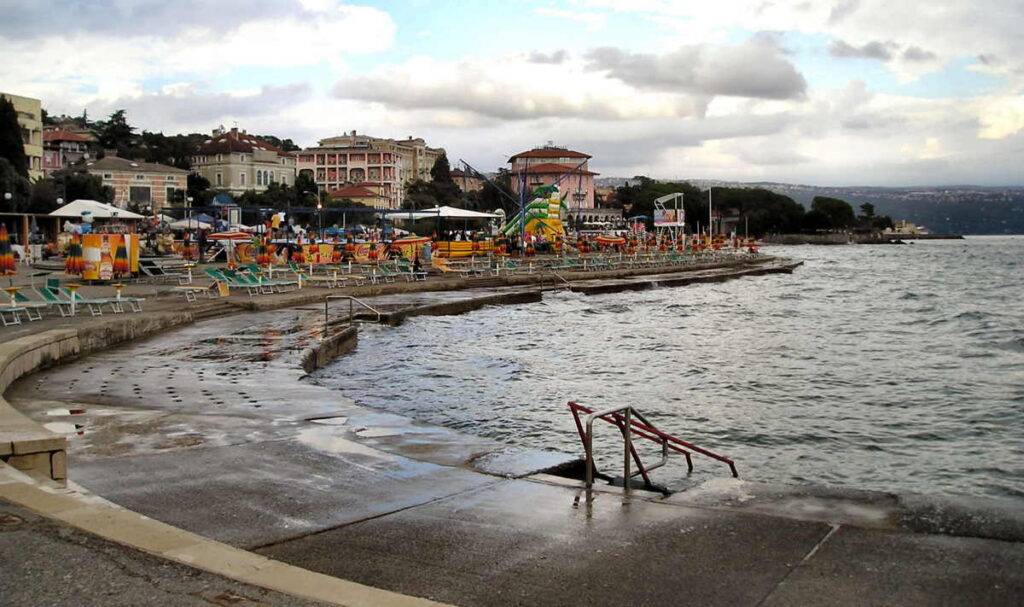
Accustomed as I am to the long sandy stretches of Portuguese beaches, I was surprised by the solution found in Opatija to provide sea bathing, transformed almost into a gigantic swimming pool with natural waves. The result was pleasant, but we were unable to try the water as we were greeted by rain.
Pula

The visit to Pula was very pleasant, not only because it was the first time I came across Croatian architecture and urban planning, but also because of the surprise of the magnificent Roman amphitheater and its careful use.
Sibenik

Perhaps the city that impressed me the least on this visit, Sibenik was, however, a very pleasant stroll through the shopping streets, with visits to the most important tourist attractions. Part of the available time was spent visiting Krka park, and it was worth it.
Krka Park
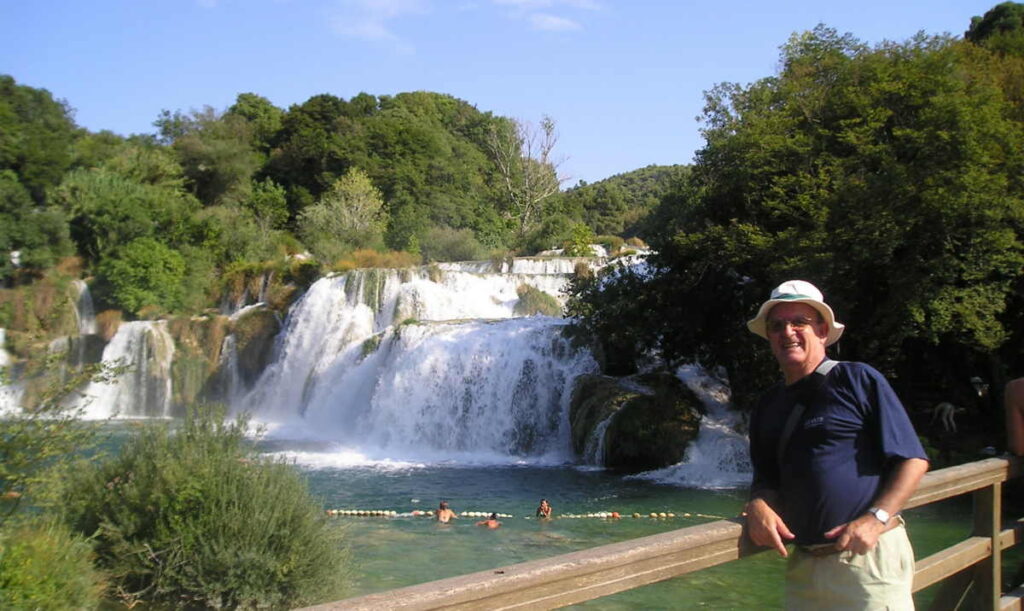
The visit to the complex of lakes and waterfalls of Krka Park was very pleasant, clearly requiring much more time than we were given on this guided tour, so that we could share the pleasure of the dozens of people we saw in the water.
Split

The size and state of conservation of Diocletian’s Palace, the biggest highlight in Split, is admirable. We still had some time to wander around, but the beautiful city certainly deserved much more.
Ston

A small village with a big wall. It was possible to climb a few hundred meters and admire the views over Ston and its salt pans. Just a stop, and a pleasant curiosity.
Trogir
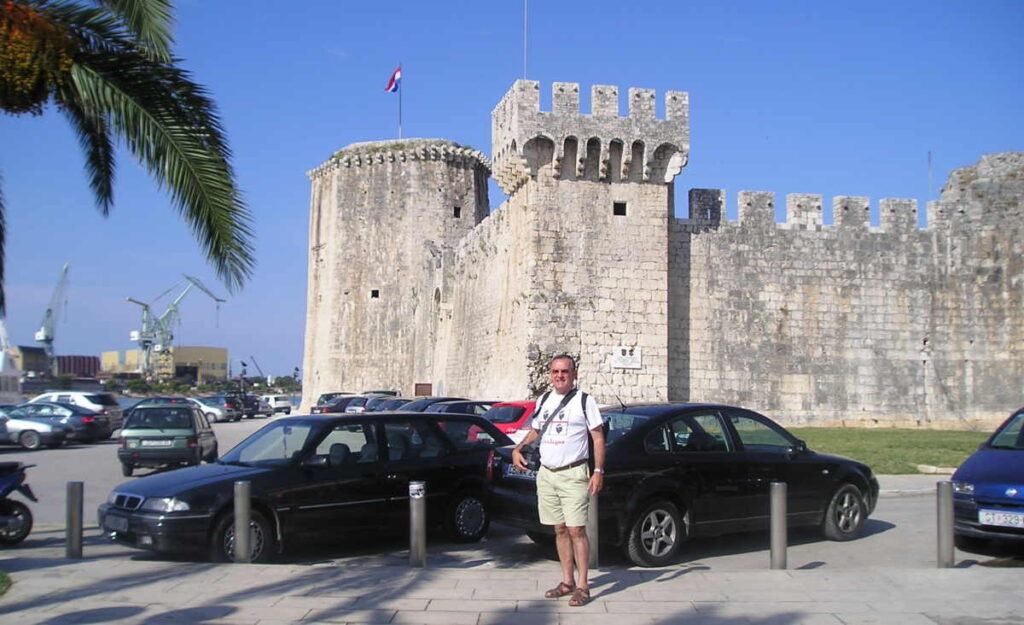
The historic center of Trogir is truly beautiful, and since our guided tour was by boat, we ended up spending a few hours at the pier due to the excessive traffic. It was a shame, because not only were those hours useless in the city, but they also detracted from the rest of the program. Trogir, however, was not to blame, and the visit was very pleasant.
Vodice

Vodice was, essentially, a beach stop, where, curiously, I had the most terrible beach experience, which, among other notes, I tell on the respective page.
Zadar

A night visit was not planned in Zadar, but incidents in an excessively dense program forced us to make a twilight visit. It was no longer possible to enter any of the monuments, and we only had a glimpse of a beautiful city that deserved more time and light.
Plan your visit

Discover more with Touristrips
Welcome to Croatia!
Croatia is a country in the martyred Balkan region, bordering Slovenia to the northwest, Hungary to the northeast, Serbia to the east, Bosnia and Herzegovina and Montenegro to the southeast and sharing a…
Plan your visit
Share your own experience
If you want to easily publish your own experiences, after registering you may use the form below. It will be added after revision. You may use text, photos till 20Mb or video. For a more complex publication click here.
Publishing form
You need to be logged in to view this page
Your trip will be perfect with the help of our partners
For a great experience:
For your safety:
For your comfort:
For cheap flights:
For local displacements:
 English