

Overview
São Paulo is Brazil’s largest city and one of the most dynamic urban centers in the world. Known for its cultural diversity, vibrant arts scene, and impressive skyline, the city offers a mix of modern architecture, historic districts, world‑class museums, and lively neighborhoods. Each area—such as Paulista Avenue, Vila Madalena, Liberdade, and the historic center—has its own identity, making São Paulo a destination full of contrasts and constant movement.
Best Time to Visit
The best months to visit are April to June and August to October, when temperatures are mild and rainfall is lower. Summers (December to March) can be hot and humid, with occasional heavy rain, while winters are cooler but generally pleasant. Weather can change quickly, so it’s useful to check forecasts when planning outdoor activities.
Getting Around
São Paulo has an extensive metro and train network that connects major districts and attractions. Buses and ride‑hailing apps are widely used, though traffic can be heavy during peak hours. Walking is ideal in areas like Paulista Avenue or Vila Madalena, but distances between neighborhoods can be long. For airport transfers, taxis and app‑based services are the most convenient options.
Safety and Local Etiquette
São Paulo is generally safe in tourist areas, but as in any large city, staying aware of your surroundings is important. Avoid displaying valuables and be cautious in crowded places. Locals appreciate politeness and patience, especially in busy restaurants and shops. In residential areas, keeping noise levels low at night is considered respectful.
Food and Water
São Paulo is a culinary powerhouse, offering everything from traditional Brazilian dishes to international cuisine. Popular foods include feijoada, coxinha, pão de queijo, and a wide variety of pizzas and sushi. Tap water is treated, but many visitors prefer bottled water. Street food is common and often excellent, though choosing busy stalls is a good indicator of quality.
Day Trips and Excursions

- Santos – Historic coastal city known for its port, museums, beaches, and football heritage.
- São Roque – Famous wine-producing destination celebrated for wineries, gastronomy, and countryside scenery.
- Campinas – One of the largest and most dynamic cities in the State of São Paulo, renowned for its technological innovation, prestigious universities, historic landmarks, cultural attractions and vibrant business environment.
- Campos do Jordão – Mountain resort town known for Alpine-inspired architecture, cool climate, and beautiful landscapes.
- Embu das Artes – Charming town renowned for its art galleries, artisan markets, and cultural atmosphere.
- Guarujá – Popular beach destination featuring beautiful bays, viewpoints, and Atlantic coastline scenery.
- Ribeirão Preto – Important inland city known for its coffee heritage, vibrant cultural life, historic architecture, breweries, and strong links to Brazil’s agricultural economy.
- Ubatuba – One of Brazil’s premier coastal destinations, famous for its more than 100 beaches, Atlantic Rainforest landscapes, waterfalls, surfing spots, and exceptional biodiversity.
These excursions complement a visit to São Paulo with a blend of beaches, mountain scenery, cultural heritage, wine tourism, Atlantic Forest landscapes, and some of southeastern Brazil’s most attractive destinations.
The essence of São Paulo
São Paulo is defined by movement — a city that never stops, where cultures mix, ideas circulate, and every neighborhood tells a different story. It’s a place of contrasts: skyscrapers and parks, tradition and innovation, quiet cafés and bustling avenues. The essence of São Paulo lies in its energy — vast, diverse, and unmistakably Brazilian.
Highlights in São Paulo:

- Avenida Paulista – The city’s most famous avenue, lined with museums, cultural centres, and skyscrapers.
- Ibirapuera Park – One of Latin America’s most important urban parks.
- São Paulo Museum of Art (MASP) – Iconic museum housing one of the finest art collections in the Southern Hemisphere.
- Municipal Market (Mercadão) – Famous market known for gastronomy and local products.
- Liberdade District – The largest Japanese community outside Japan, offering unique cultural experiences.
- Theatro Municipal – Historic theatre and architectural landmark.
- Pinacoteca de São Paulo – One of Brazil’s most important art museums.


- Located in the state of São Paulo, Brazil.
- Official language: Portuguese.
- Currency: Brazilian Real (BRL).
- Credit and debit cards are widely accepted.
- Largest city in Brazil and South America.
- Major financial and cultural centre.
- Excellent destination for gastronomy, culture, and shopping.
- Extensive metro and transport network.
- Comfortable walking shoes are recommended.
- Lightweight clothing is suitable throughout most of the year.
São Paulo has a subtropical climate, with moderate temperatures throughout the year.
- Spring (September-November) – Pleasant temperatures and blooming parks.
- Summer (December-February) – Warm weather with frequent afternoon showers.
- Autumn (March-May) – Comfortable temperatures and excellent sightseeing conditions.
- Winter (June-August) – Mild temperatures and generally drier weather.
The most popular period to visit is from April to June and August to October, when conditions are ideal for exploring cultural attractions, enjoying outdoor spaces, discovering the city’s exceptional gastronomy, and experiencing the cosmopolitan atmosphere that makes São Paulo one of South America’s most fascinating urban destinations.
Today:


In such a big town, is is convenient to split the travelling notes in a few articles. This tab collects the notes about Avenida Paulista and around it.
The Avenue

Avenida Paulista is one of the most famous and important avenues in the city, and is known for its cultural, financial, and commercial importance. The avenue is approximately 2.8 km long and is surrounded by some of the most iconic skyscrapers in the city.
The avenue is also a popular destination for shopping and dining, with many high-end stores, shopping malls, restaurants, and cafes located along its length.
MASP

The museum was founded in 1947 and has since become one of the most important art museums in Latin America. Its collection includes more than 10,000 works of art, including artists such as Rembrandt, Van Gogh, Monet, Picasso, and Matisse, as well as important Brazilian artists.
The building itself is famous for its architecture, designed by the Brazilian architect Lina Bo Bardi.
Trianon

Japan House

Located on Paulista Avenue, Japan House is a cultural hub dedicated to showcasing contemporary Japan through art, culture, and technology. It has a curious facade made of Japanese cypress and handmade washi paper.
Inside visitors can explore exhibitions, a library, a cafe, and more.
Casa das Rosas

I read that Casa das Rosas, is a classic French-style mansion on Avenida Paulista, that survived demolition threats and now hosts literary events, exhibitions, workshops, and more, however, in my visit the highlight was its garden.
SESC

SESC (Social Service of Commerce) is a private organization supported by entrepreneurs in businesses, tourism, and services, famous for having the best views in Avenida Paulista.
Santa Catarina hospital

Located on Avenida Paulista, this hospital stands out due to the classicism of its architecture, in a setting of skyscrapers. Despite the old appearance, it appears that the operation is of high quality.
São Luiz Gonzaga

Another distinctive building in Avenida Paulista is the church of São Luís Gonzaga, a small neoclassical chapel built in 1935 by the Jesuit priests.
Historic São Paulo refers to the antique area of the city, including “Patio do Colégio”, Ibirapuera, Luz, and more.
Páteo do Colégio square

Basílica Anchieta

Founded in 1598, this church marks the spot where São Paulo was established in 1554. It has now another use, housing a museum, a school and café, preserving the beautiful Portuguese Colonial structure.
Justice palace

Some of the most beautiful buildings in the city surround Páteo do Colégio.
Behind the monument to the First Jesuit Priest we may see the impressive buildings of Justice Secretary and Court.
Mercadão

The Municipal market, affectionately known as the Mercadão, is a vibrant public market located in the historic center, opened in 1933. Visitors can explore its neoclassical architecture, stunning stained-glass windows, and buy all kinds of fresh produce.
Sírio-Lebanese Friendship

The Monumento à Amizade Sírio-Libanesa is a significant tourist attraction in São Paulo, created in 1922, standing near Rua 25 de Março.
The monument symbolizes cultural diversity, depicting three life-sized figures: a Brazilian woman representing the republic, a Syrian girl offering gifts to an indigenous warrior, and a Lebanese man.
25 March

March 25th Street is a very popular shopping street, known for its variety stores, wholesale retailers, and discount shopping. It was named to commemorate Brazil’s first constitution, signed on March 25, 1824. The area hosts three main shopping malls offering… everything.
Banespa

The Banespa Building or Banespão, is an iconic Art Deco skyscraper, constructed between 1939 and 1947, to serve as the headquarters of the Bank of the State of São Paulo (Banespa). It was Inspired by the Empire State Building, and it is one of tallest skyscrapers in the city.
Cathedral

The Metropolitan Cathedral of Our Lady Assumption and Saint Paul, also known as the See Cathedral, is the Roman Catholic cathedral, standing in Praça da Sé, the heart of the city’s Central Zone. It is a Neo-Gothic masterpiece, with a Renaissance-style dome, whose construction started in 1913 and was completed four decades later.
In the long and harmonious square, we also find the statue of Saint Paul, and the city’s zero mark.
S. Francisco square

Perhaps accidentally, what impressed us most in the beautiful square of São Francisco was the intense life and movement. The surrounding architecture is very well cared for and conveys a feeling of classic balance.
S. Francisco church

The Church of Saint Francis (Igreja de São Francisco), located in Largo de São Francisco is a historical and architectural gem.
The church and convent were built during colonial Brazil, in the 17th century.
It underwent significant modifications in the mid-18th century to achieve its Baroque style. A fire in the late 19th century caused damage, but it was restored to be one more fueling my strangeness, when I see that the most modest of the monastic orders, collected the richest churches throughout the Portuguese-speaking world.
Law school

The most beautiful building in the beautiful São Francisco square is the Law School, built in the 19th century, after it began operating in the São Francisco convent.
Paiçandu

Once peripheral, and somewhat neglected, Largo de Paiçandu has become the center of a lively artistic and cultural life, with emphasis on the circus.
In its center is the church of Nossa Senhora do Rosário dos Pretos, next to which the statue of Mãe Preta was erected, in honor of the wet nurses. Every year the end of slavery is celebrated here.
Rock Gallery

My guide mentioned Galeria do Rock as a must-see in Paiçandu.
I don’t know why, it’s a shopping center opened in 1963, but I confess that I found nothing particularly relevant or distinctive, other than a good angle to photograph the square.
Municipal theater

Opened in 1911, and inspired by the Opera Garnier in Paris, this beautiful hotel combined an excellent lunch with a quick visit.
We didn’t visit the concert hall (it wasn’t open), but we could guess the refinement of its decoration.
Republic square

A small but very pleasant park occupies the entirety of this historic square. After an already long walk, it was refreshing and invigorating.
Caetano de Campos palace

Opened in 1984, and almost demolished 80 years later for the construction of the metro, this palace, now a national monument, houses the state education department.
Italy building

The Edifício Itália also known as “Circolo Italiano”, is a 165 m skyscraper, built from 1956 to 1965. Its rooftop observation deck offers breathtaking views for tourists, having an Italian restaurant and a bar with live music in the 41st and 42nd floors.
Piques obelisk

The modest Piques Obelisk was the first public monument, erected in 1814, in Largo da Memória (Memory Square), commemorating the city’s history. Originally known as Largo dos Piques, this triangular square underwent changes, including the addition of walls, staircases, and a portico.
Adjacent to the older quarters, close to Páteo do Colégio, Luz is easy and nice to visit.
Historic buildings
Sacred Art museum
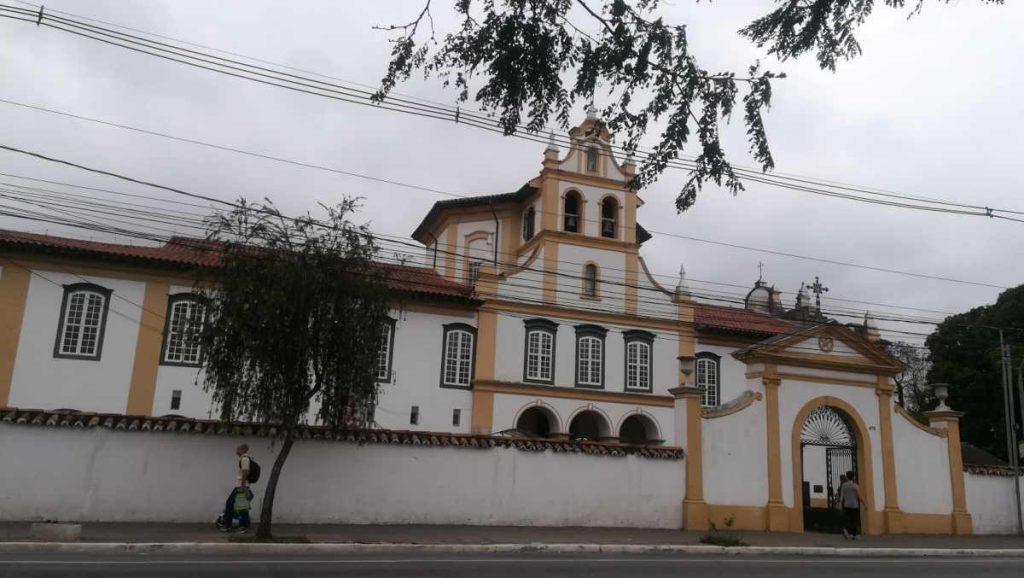
The Luz Monastery, a religious establishment founded in 1774 house today the Sacred Art of São Paulo. The museum’s collection includes Brazilian and foreign sacred works dating back to the sixteenth century. Notable Brazilian artists like Aleijadinho, Agostinho da Piedade, and José Ferraz de Almeida Júnior are represented.
Pinacoteca

The Pinacoteca de São Paulo is one of Brazil’s most prestigious and influential art museums. Its collection spans from the 19th century to contemporary works, embracing diverse global cultures.
It includes 3 buildings, but the most famous is this one, with a neoclassical architecture.
S. Cristovão

São Cristóvão Church is located on Avenida Tiradentes, and it was once the Chapel of the Luz Seminary.
Estação Museum LP

Luz Station is one of the most important railway stations in the city, connecting several train and metro lines.
Exuberant in its neoclassical architecture, since 2006 it also houses the Portuguese Language Museum.
Dom Bosco

The Dom Bosco Institute (Instituto Dom Bosco) in Coronel Fernando Prestes square is a significant educational institution, providing essential services, including education, meals, and support to thousands of individuals annually. Its impact goes far beyond academics, touching lives and empowering both students and their families.
Arquivo histórico Municipal

In the same square, the Municipal Historical Archive is the institution responsible for the custody, preservation, dissemination and study of the historic documents of the city. It has a collection of more than 4 million documents, from the 16th century.
Julio Prestes

Almost next to Luz station, Júlio Prestes station is a beautiful building opened in 1938, which, like its neighbor, adds cultural services to the transport service, in this case the Secretariat of Culture.
After the old town, Pátio do Colégio and Luz area, Ibirapuera was perfect to end the day.
Park

My long day in the city ended in Ibirapuera, a relaxing park that I didn’t have time to enjoy, because night fell and there was still a program to complete. However, he went through it, gathering a general idea, and confirming that, without rushing, he would certainly enjoy it even more.
Auditorium

The Ibirapuera Auditorium is strange building designed by Oscar Niemeyer for musical performances in the 50s. I read in Wikipedia that “The auditorium’s volumetric simplicity stands out—a single block with a trapezoidal plan and triangular section, all painted white. Its unique spatial arrangement sequences the foyer, audience, and stage from exterior to interior” but didn’t enter.
Obelisk

The Obelisk of Ibirapuera, made of pure travertine marble, commemorates the Constitutionalist Revolution of 1932. It is 72 meters high and surrounded by four panels with biblical and historic images.
Planetarium

I was sorry that the limited time did not allow me to enjoy an exhibition at this planetarium. Opened in 1957, it seems to be one of the city’s wonders.
Bandeiras Monument

The Monument to the Bandeiras, completed in 1954, commemorates the 17th-century bandeiras—expeditions that explored Brazil’s interior. The monument pays tribute to the bandeirantes, but has faced controversy due the violence of bandeirantes against indigenous peoples.
Sunset

I had planned to finish my walk of more than 20 km through São Paulo (plus some more with Cabify), at the Skye Bar, located at the top of the Unique hotel. Highly recommended, it was the ideal spot to watch the sunset.
Perfect!
Helped by the color of the pool and the freshness of the light cocktail, the sunset beautifully concluded my “São Paulo in 24 hours” program.
 Personal Memories
 Personal Memories
General security in São Paulo

São Paulo is internationally known by a high rate of crime. We didn’t feel insecure, first because we took the normal precautions, second because police was everywhere
Taxes

When trying to withdraw money from an ATM I was surprised by the warning of heavy commissions to be charged. Near the hotel there were plenty of ATMs, but different policies, as some did not charge fees or commissions. I relied on my memory, I didn’t write it down, and now I don’t remember which ones are free – whether from Caixa or Safra. As they are side by side, it’s easy to clear the doubt – just go there.
Fruits
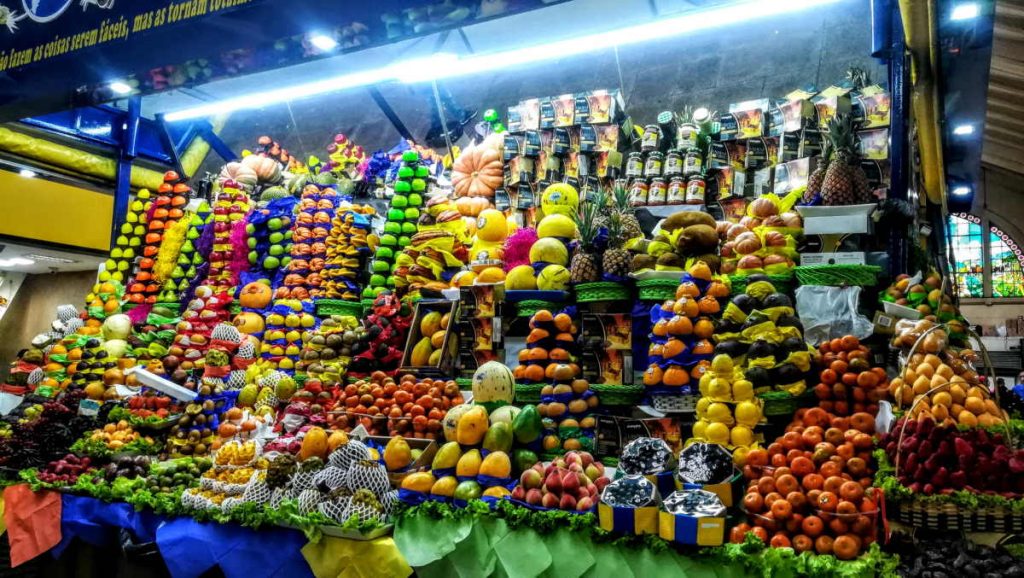
During the quick passage through Mercadão, the most notable note was the colorful display of the fruit stalls, carefully stacked to whet your appetite. Inviting, without a doubt.
Elections

We visited São Paulo during the election campaign, and several parties asked for our vote, before we smiled at them about our Portuguese nationality. In an always orderly atmosphere, the liveliest note was given by a group of drag queens who dominated the MASP area.
I don’t know which party they supported, but the fact that they were exuberant and friendly leaves no doubt.
Old Houses
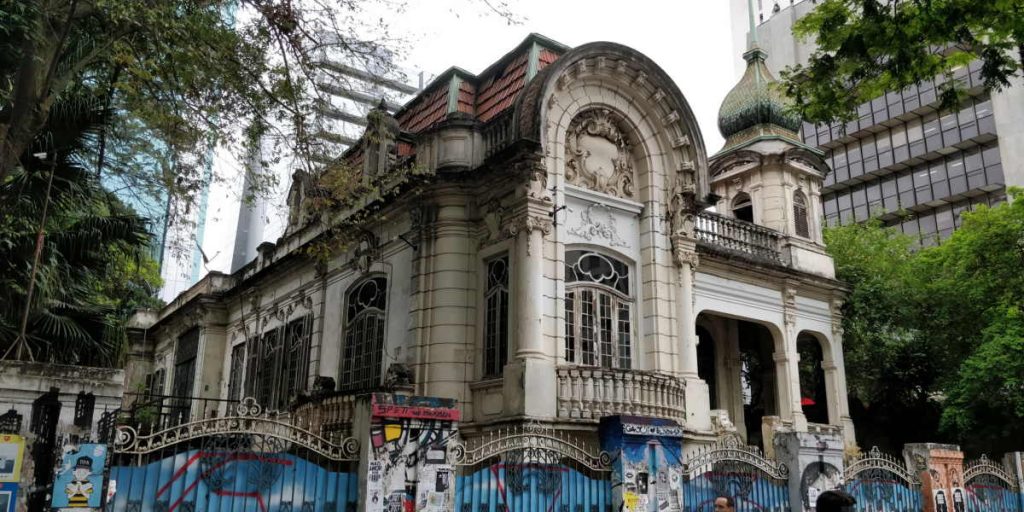
Avenida Paulista is a succession of skyscrapers, but, here and there, a survivor from other times breaks the routine. The most eye-catching is Joaquim Franco Melo’s palace, built in 1905, and whose elegance saved it. Or maybe not…
The building has been classified as a historic monument, and the owner maintains a long arm’s length with the State, demanding compensation, while the building ages, useless.
Business

The visit to the church of São Francisco was made difficult by a lively sale led by… monks. I don’t know what the objective was but seeing Franciscan monks coordinating a business… it was cool, and unusual.
Favelas

I ran through the entire historic center of the city without seeing any risk situation. It is true that at night I did not stray far from Avenida Paulista, but the reputation of being a dangerous city, fortunately, was not confirmed.
Of course, in the many large favelas on the outskirts, the climate is different, but I only saw them in passing, with the car windows closed, due to an agreement between security and the air conditioning.

Eating in São Paulo – 1 great buffet
Sleeping in São Paulo – 2 good nights
Shopping in São Paulo – 3 popular options
Shopping in São Paulo – 3 popular options
Plan your visit

Discover more with Touristrips
Welcome to São Paulo!
São Paulo is Brazil’s largest city and one of the most dynamic urban centers in the world. Known for its cultural diversity, vibrant arts scene, and impressive skyline, the city offers a mix…
Plan your visit
Share your own experience
If you want to easily publish your own experiences, after registering you may use the form below. It will be added after revision. You may use text, photos till 20Mb or video. For a more complex publication click here.
Publishing form
You need to be logged in to view this page
Your trip will be perfect with the help of our partners
For a great experience:
For your safety:
For your comfort:
For cheap flights:
For local displacements:
 English
 Português