

Overview
Olinda is one of Brazil’s most beautiful colonial towns, known for its colorful historic center, baroque churches and sweeping views over the Atlantic. A UNESCO World Heritage Site, it blends art, tradition, steep cobblestone streets and a lively cultural atmosphere that mixes spirituality with everyday joy.
Best time to visit
The best time to visit Olinda is from September to March, when warm weather makes exploring the historic hills enjoyable. Carnival is the city’s most iconic moment, with traditional street parades and music everywhere. The rainy season, from April to August, brings fewer crowds and lush scenery.
Getting around
Olinda is compact and perfect for walking — though its hills require a bit of energy. Taxis and rideshares help with quick transfers. Its proximity to Recife makes travel between the two cities easy by bus, car or app‑based transport.
Safety and local etiquette
Olinda is welcoming and safe in its main tourist areas. As in any urban destination, staying aware in busy spots is recommended. Locals value friendliness, respect for traditions and relaxed conversation. Visitors are encouraged to explore calmly and enjoy the Pernambucan rhythm.
Food and water
Olinda’s cuisine highlights regional flavors: tapioca, seafood, fish stews, broths and traditional sweets. Restaurants and bars offer local dishes often paired with ocean views. Tap water is generally safe, though many visitors prefer bottled water due to the heat.
Day Trips and Excursions

- Recife – Pernambuco’s vibrant capital, known for its museums, waterfront districts, bridges, and cultural attractions.
- Porto de Galinhas – One of Brazil’s most famous beach destinations, celebrated for its natural pools and crystal-clear waters.
- Cabo de Santo Agostinho – Coastal region featuring dramatic landscapes, tropical beaches, and historic landmarks.
- Gaibu – Beautiful beach destination in Cabo de Santo Agostinho, known for its golden sands, clear waters, scenic cliffs, and lively beachfront atmosphere.
- Itamaracá – Historic island known for beaches, colonial heritage, mangroves, and Fort Orange.
- Igarassu – One of Brazil’s oldest cities, renowned for colonial churches and important historical heritage.
- Maragogi – Famous coastal destination celebrated for turquoise waters, coral reefs, and natural pools known as galés.
These excursions complement a visit to Olinda with a blend of tropical beaches, colonial heritage, island scenery, cultural attractions, and some of northeastern Brazil’s most remarkable destinations.
Essence of Olinda
The essence of Olinda lies in its harmony between history, color and culture. Colonial façades glow under the sun, centuries‑old churches rise above the hills and music drifts through the streets. It is a place where tradition meets joy — vibrant, artistic and unmistakably Brazilian.
Highlights in Olinda:
- Historic Centre of Olinda – UNESCO-listed district featuring colourful colonial houses and cobbled streets.
- Alto da Sé – Famous viewpoint offering spectacular views over Olinda and Recife.
- Monastery of São Bento – One of the finest examples of baroque religious architecture in Brazil.
- Church of Sé – Historic church overlooking the city and coastline.
- Rua do Amparo – Picturesque street lined with colourful buildings, galleries, and artisan shops.
- Carnival of Olinda – One of Brazil’s most authentic and vibrant Carnival celebrations, famous for its giant puppets.
- Museums and Art Studios – Numerous cultural spaces showcasing Pernambuco’s artistic traditions.


- Located in the state of Pernambuco, Brazil.
- Official language: Portuguese.
- Currency: Brazilian Real (BRL).
- Credit and debit cards are widely accepted.
- UNESCO World Heritage Site.
- Approximately 7 km from Recife.
- Famous for colonial architecture and Carnival.
- One of Brazil’s most important cultural destinations.
- Comfortable walking shoes are recommended due to steep streets and cobblestones.
- Ideal destination for cultural and historical tourism.
Olinda has a tropical coastal climate, with warm temperatures throughout the year.
- Spring (September-November) – Sunny weather and ideal sightseeing conditions.
- Summer (December-February) – Hot temperatures and vibrant cultural atmosphere.
- Autumn (March-May) – Warm weather with occasional rainfall.
- Winter (June-August) – Mild temperatures and greener landscapes.
The most popular period to visit is from September to March, when conditions are ideal for exploring the historic centre, enjoying cultural events, discovering Pernambuco’s heritage, and experiencing the unique atmosphere that makes Olinda one of Brazil’s most enchanting colonial cities.
Today:


Well done Portugal (And well done Brazil!)
Close to Recife, it’s “impossible” to visit one without going to the other, but they are so different, that the visits complement well each other.
Olinda is history and tradition, with evident Portuguese signs in each church, street or corner. Impossible to miss.
History is well preserved, and shows the best that Portugal made in Brazil. Together with Ouro Preto and Parati, Olinda honors the men that built and preserved them.
Old Town

Where am I? In Óbidos? Monsaraz? Castelo de Vide? No! With this temperature in March it cannot be Portugal. But it looks like!
Sorry folks, you will have to content with a good lunch in Estrela do Mar, because this sensation is reserved for the Portuguese, but the visual pleasure is shareable. So, walk slow, breath deeply, and… enjoy!
There is always a solution to understand the described feeling – come to Portugal and try to understand the links.
Cathedral

Created in the 16th century, this church was destroyed during the war between Portuguese and Dutch.
Rebuilt in the 17th and ruined again, the final version is about 100 years old.
It’s far from being among the best in Olinda, but it surely is located in the best sightseeing place of town.
The yard in its back is mandatory.
São Francisco church

The most beautiful church I saw in Olinda, St Francis suffered the common mistreatment of the war, but kept the appearance of its reconstruction in the 17th century.
Nested in green, its sober cloisters contrast with its very rich baroque decoration. The golden altar and the frescoes in the roof stand out amidst many figurative tiles.
Though some panels already miss a few tiles, the whole is rich and very beautiful.
São Bento Church – Golden Altar
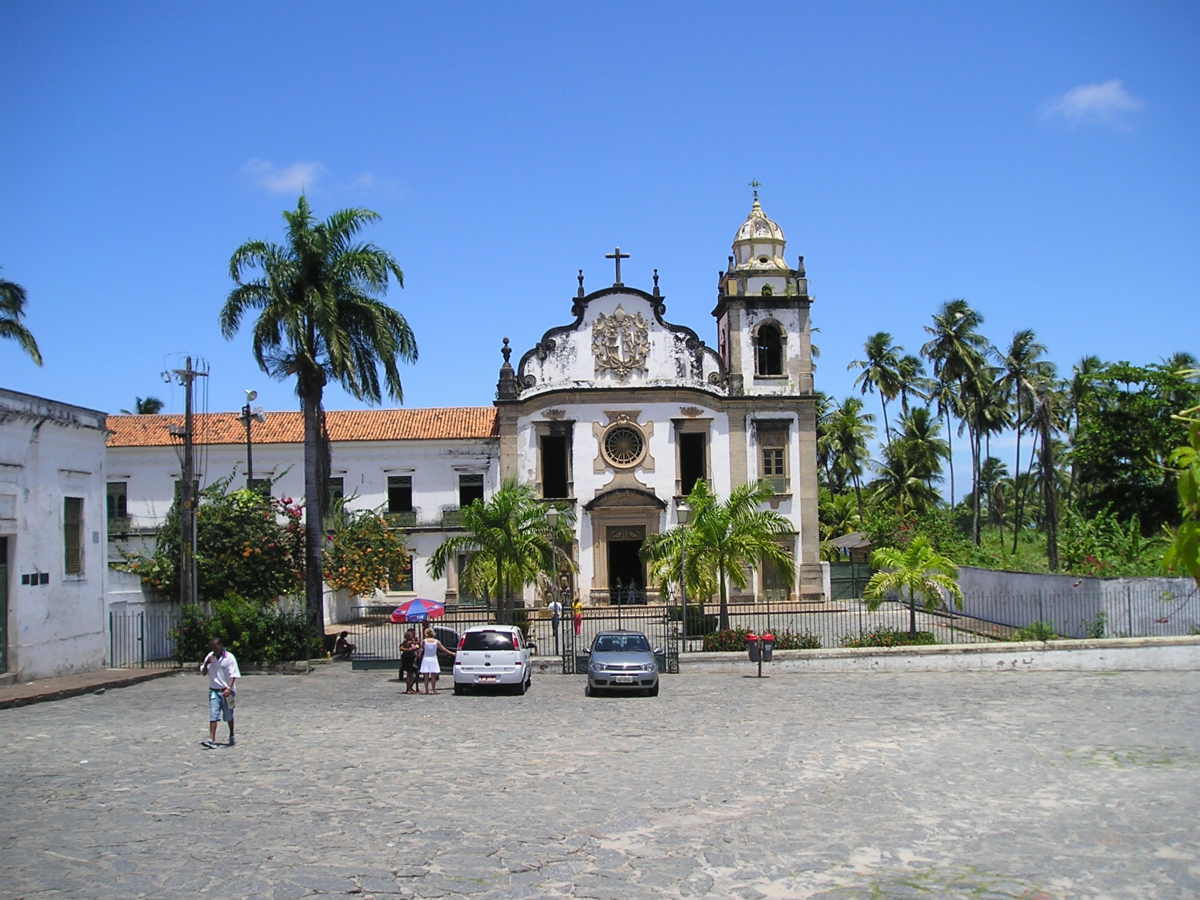
I left Portugal with a severe warning from a friend: I should not miss this church.
Thanks for the warning! I didn’t and agree that the richness and beauty of the altar are unbeatable.
Unfortunately the photo of the altar (flash forbidden) was so lousy I don’t dare to publish it, but it’s better that way: you will have to go there and look for yourself.
Carmo Church

We didn’t enter this church, that shows from below the serious need of conservation.
It’s a beautiful building atop a small hill, dating from the 17th century.
Slave Market

I read that the so called slave market never was used for that purpose.
I don’t know the truth, but if it did, then the look should be different from what it is.
There are no dramatic references in the place, with shops covering it all, respecting the ambiance but giving color and life to a place that, if the story is true, should be treated in a more austere way, inviting us to reflect about the world of slavery.
Recife

I was in Recife and visited Olinda from there, but nothing stops you to do it the opposite way.
No matter where you are, one thing is clear: they are very different, and both places must be seen, and it will take only some minutes to move between them.

Eating in Olinda – 1 great lunch
Eating in Olinda – 1 great lunch
Plan your visit

Discover more with Touristrips
Welcome to Olinda!
Olinda is one of Brazil’s most beautiful colonial towns, known for its colorful historic center, baroque churches and sweeping views over the Atlantic. A UNESCO World Heritage Site, it blends art, tradition, steep…
Plan your visit
Share your own experience
If you want to easily publish your own experiences, after registering you may use the form below. It will be added after revision. You may use text, photos till 20Mb or video. For a more complex publication click here.
Publishing form
You need to be logged in to view this page
Your trip will be perfect with the help of our partners
For a great experience:
For your safety:

For your comfort:
For cheap flights:
For local displacements:
 English
 Português