

Overview
Luanda is a vibrant Atlantic capital shaped by contrasts, energy and coastal scenery. The city spreads along a wide bay, combining historic districts, modern avenues, islands, beaches and intense urban life. Its rhythm is fast, colorful and diverse, reflecting Angola’s cultural richness and economic pulse. From the colonial streets of Baixa to the waterfront of Marginal and the calm sands of Ilha do Cabo, Luanda blends heritage, ocean views and everyday movement.
Best time to visit
The best time to visit Luanda is from June to September, during the dry season, when temperatures are mild and humidity lower. These months offer clearer skies and more predictable conditions for exploring the city and nearby beaches. The hot season, from October to April, brings higher humidity and occasional rain, but the coastal breeze keeps the city pleasant. Year‑round, Luanda maintains a warm climate suited for outdoor life.
Getting around
Luanda is best explored with a mix of walking and car travel. The central districts, Marginal and waterfront areas are walkable and lively. A car or taxi is useful for reaching the Ilha, Talatona, Miramar and other neighborhoods spread across the city’s hills and coastline. Traffic can be intense at peak hours, so planning routes and timing helps. The city’s geography reveals a blend of bay views, elevated streets and coastal roads.
Safety and local etiquette
Luanda is welcoming but requires basic urban precautions. Visitors should stay aware of surroundings, avoid isolated areas at night and keep valuables secure. In restaurants, markets and beaches, interactions are friendly and warm. Respect for local customs, patience in busy areas and polite communication are appreciated. The city values its cultural identity, and responsible behavior enhances the experience.
Food and water
Luanda’s gastronomy blends Angolan tradition with Portuguese and Brazilian influences. Popular dishes include fish stews, funge, moamba, grilled seafood and cassava‑based specialties. The city offers everything from simple local eateries to refined restaurants with ocean views. Tap water is not recommended; bottled water is widely available and advisable. Dining is social, generous and connected to coastal flavors.
Day Trips and Excursions
- Ilha do Mussulo – Beautiful peninsula and lagoon area known for calm waters, sandy beaches, and water sports.
- Miradouro da Lua – Spectacular landscape of colourful cliffs and rock formations shaped by centuries of erosion.
- Kissama National Park – Angola’s most famous wildlife reserve, offering safari experiences and diverse fauna.
- Cabo Ledo – Stunning coastal destination renowned for surfing, beaches, and dramatic scenery.
- Calandula Falls – One of Africa’s largest waterfalls and one of Angola’s most impressive natural wonders.
- Muxima – Historic pilgrimage town famous for the Sanctuary of Our Lady of Muxima and its religious significance.
- Belas – Coastal area south of Luanda featuring beaches, resorts, and modern residential developments.
These excursions complement a visit to Luanda with a blend of beaches, wildlife, history, culture, and some of Angola’s most remarkable landscapes. For a longer trip. Lobito, Lubango or Huambo deserve to be visited.
Essence of Luanda
The essence of Luanda lies in its blend of ocean, culture and urban energy. The bay shapes the city’s identity, the streets reflect centuries of history and the coastline adds brightness and movement. It is a place where contrasts coexist, where daily life feels intense and expressive, and where Angola reveals one of its most dynamic and captivating faces.
Highlights in Luanda
Highlights
- Fortaleza de São Miguel – Historic 16th-century fortress offering panoramic views over Luanda Bay.
- Marginal de Luanda – Modern waterfront promenade lined with restaurants, cafés, and leisure areas.
- National Museum of Anthropology – Important museum showcasing Angola’s cultural diversity and traditions.
- Agostinho Neto Memorial – Striking monument dedicated to Angola’s first president.
- Luanda Bay – Scenic setting at the heart of the city.
- Ilha de Luanda – Popular beachfront area known for restaurants, nightlife, and ocean views.
- Iron Palace (Palácio de Ferro) – Historic iron structure attributed to Gustave Eiffel’s architectural influence.


- Capital of Angola.
- Official language: Portuguese.
- Currency: Angolan Kwanza (AOA).
- Portuguese is widely spoken throughout the city.
- Largest city in Angola.
- Main international gateway to the country.
- Bottled water is recommended.
- Popular for business, culture, and coastal tourism.
- A vehicle or organised transport is recommended for regional excursions.
- Comfortable walking shoes and sun protection are advisable.
Luanda has a hot semi-arid coastal climate, moderated by the cold Benguela Current.
- Summer (November-April) – Warm temperatures and increased humidity.
- Autumn (April-May) – Pleasant weather with decreasing rainfall.
- Winter (June-August) – Dry, mild conditions, known locally as the cacimbo season.
- Spring (September-October) – Warmer temperatures and excellent conditions for sightseeing.
The most popular period to visit is from May to October, when the dry weather, comfortable temperatures, and clear skies create ideal conditions for exploring the city, enjoying the coastline, and discovering the attractions that make Luanda one of Africa’s most fascinating capitals.
Today:

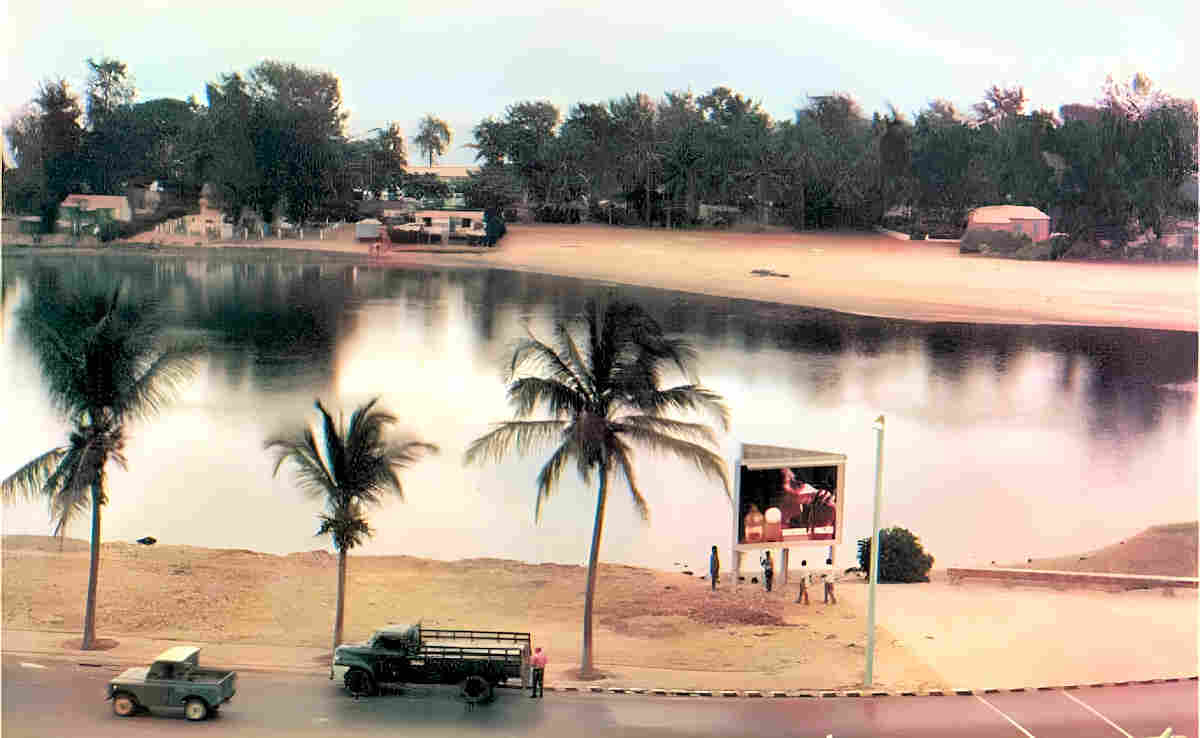
Luanda was a very beautiful city.
In 1974 this was the look of the island’s access from the fort. And now, what will it be?
Luanda was a wonderful town, where progress was seen everywhere. The war threw the town to chaos, and it will take time to recover, but I still dream, that, one day, I will see it again and congratulate the Angolans for its recuperation. The problem is the limitations of the touristy structures, and the “crazy” prices. Meanwhile ~, several friends decided to move into the country and initiate there a new life. They seem to be stabilized and insist inviting me. I would gladly go, but how to convince Fernanda to support the long 9 hours flying?


The wide areas in the outskirts of town were suffering the effects of fast but organized growing, reflecting the development introduced by the Portuguese during the years of colonial war. I heard that the degradation of the center of town and the massive migration due to war, pushed people to the surrounding areas. How are them nowadays? Did they keep the trend of organized development, or suffered the effects of chaos brought by civil war?
The island
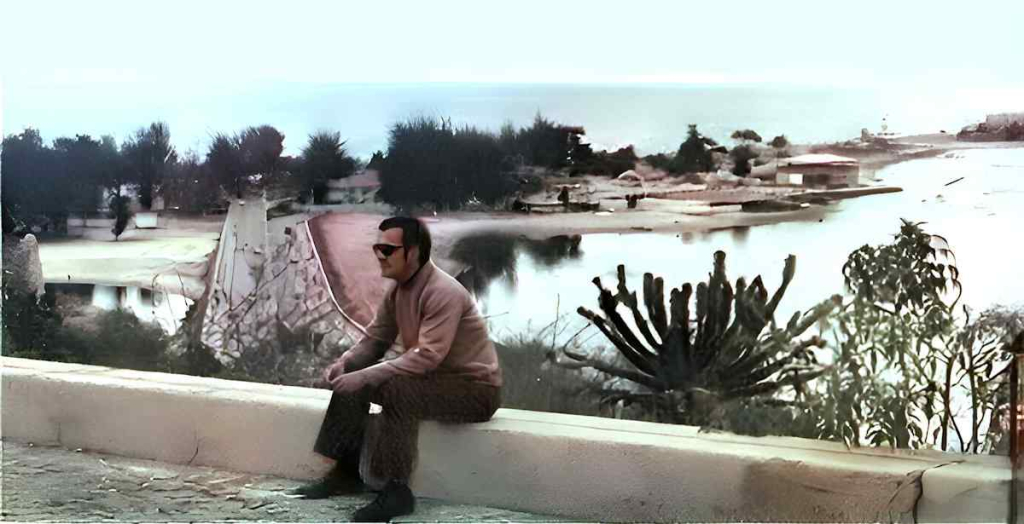

Lined in front of town, one narrow stripe of sand, ten kilometers long, closes the bay, and provides several beaches. The ocean side is a clean and usually safe open sea, the land side is a calm lake not recommended for health reasons. But some kids don’t pay any attention to it.
Corimba

In the southern outskirts of Luanda, Corimba invites to swim.
If you may cross, the island of Mussulo is the top destination but not beating the beauty of the coast.
(This, before civil war, but I’m curious to see it again).
Mussulo

A few kilometers far from Luanda, Mussulo Island was a paradise. Now that the economy is recovering, and Luanda starts attracting again, some visitors, I’m curious about what they will do in that Island or with what remains of it. Well, it surely there will be an opportunity to visit it in my necessary future visit.
The bay
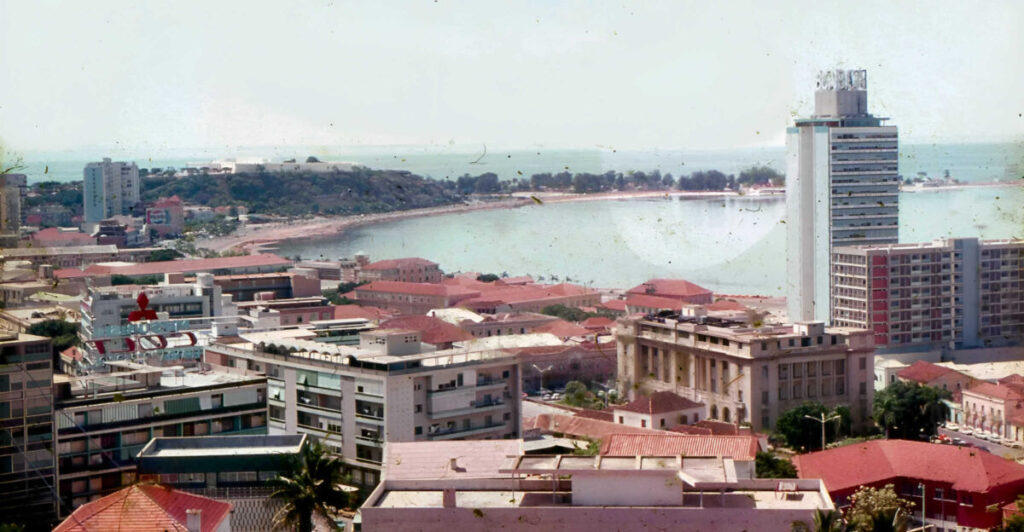
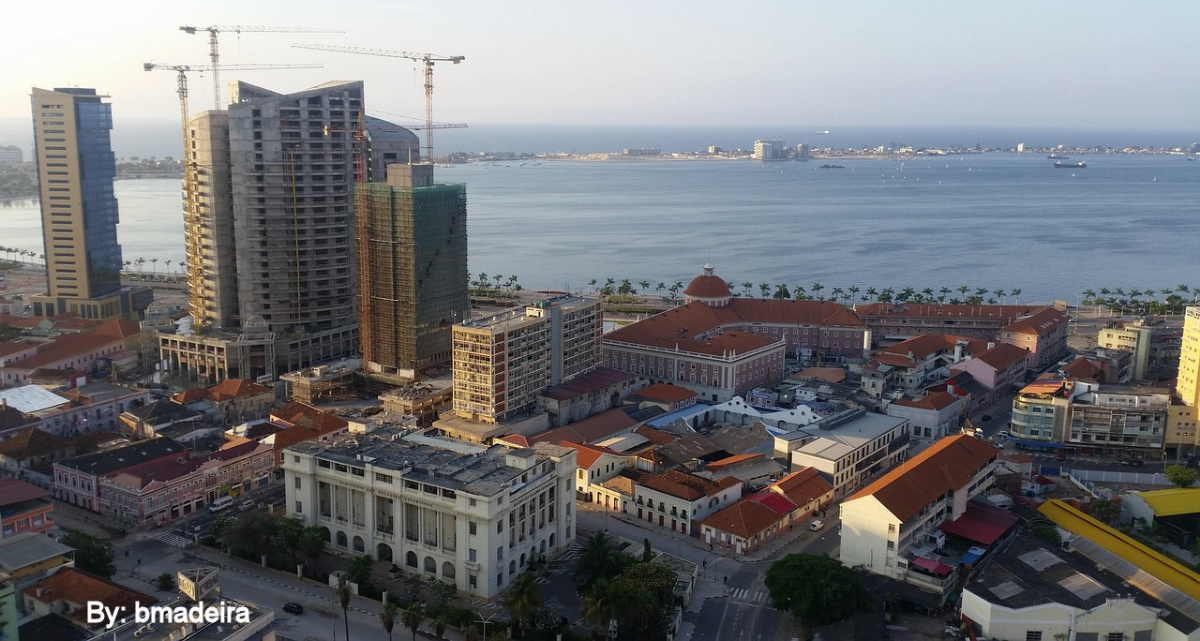
Not suitable to swim, the bay of Luanda is wonderful no matter the point from where you observe it, day or night.
Miramar, a high quarter, is, maybe, the best point to do it. And if you want to swim, the facing island is only a narrow strip with open waters.
Luanda – Business and leisure
The Sagrada Familia Church – pics from the inside.
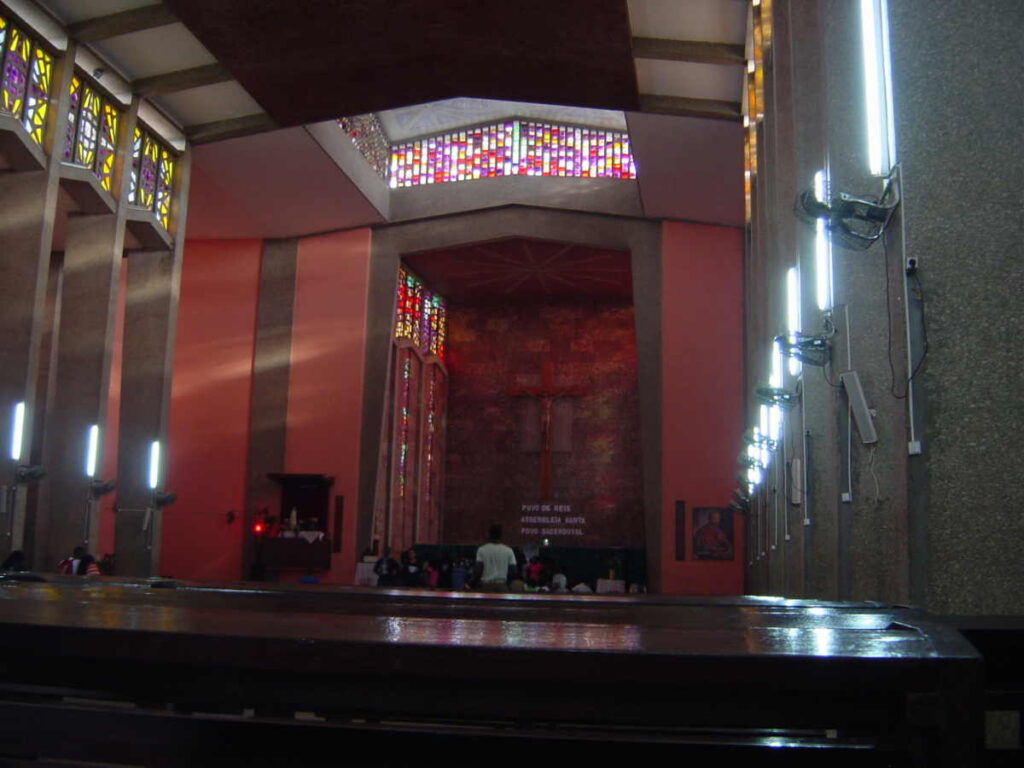
The Church of Sagrada Familia (The Sacred Family) was built in 1960 and is a Luanda landmark, a sign of the new Angola.
This Tip: Picture from the inside.
The Sagrada Familia Church – pics from the outside
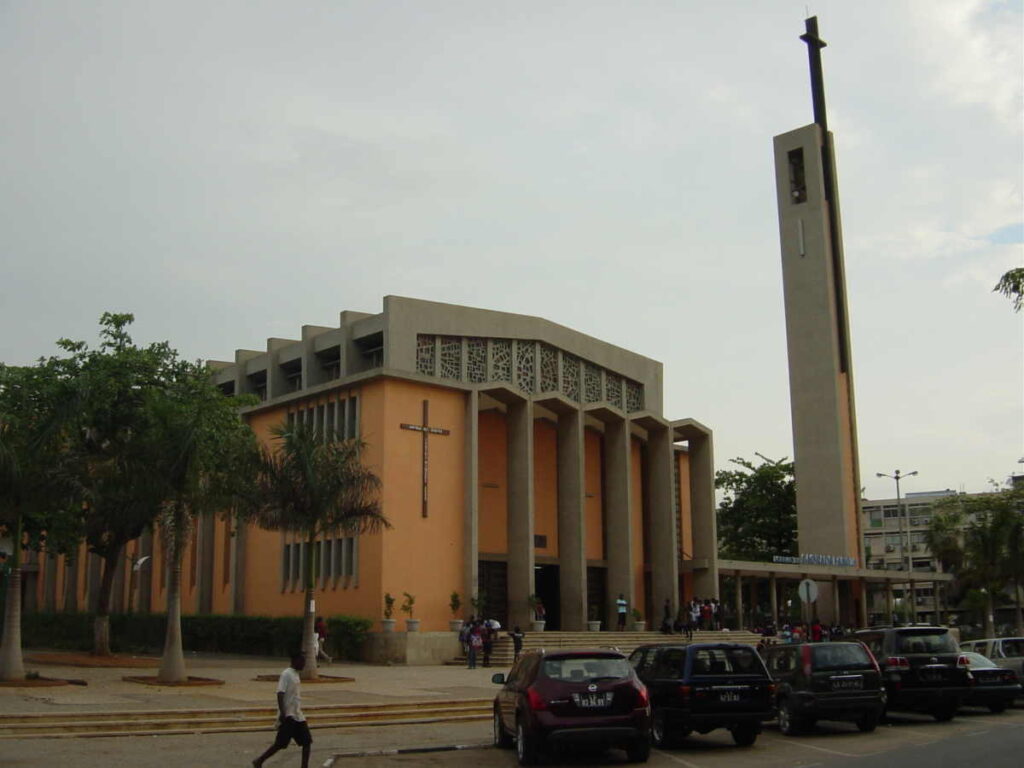
The Church of Sagrada Familia (The Sacred Family) was built in 1960 and is a Luanda landmark.
This Tip: Picture from the outside.
 Personal Memories
 Personal Memories
Portuguese Products are popular
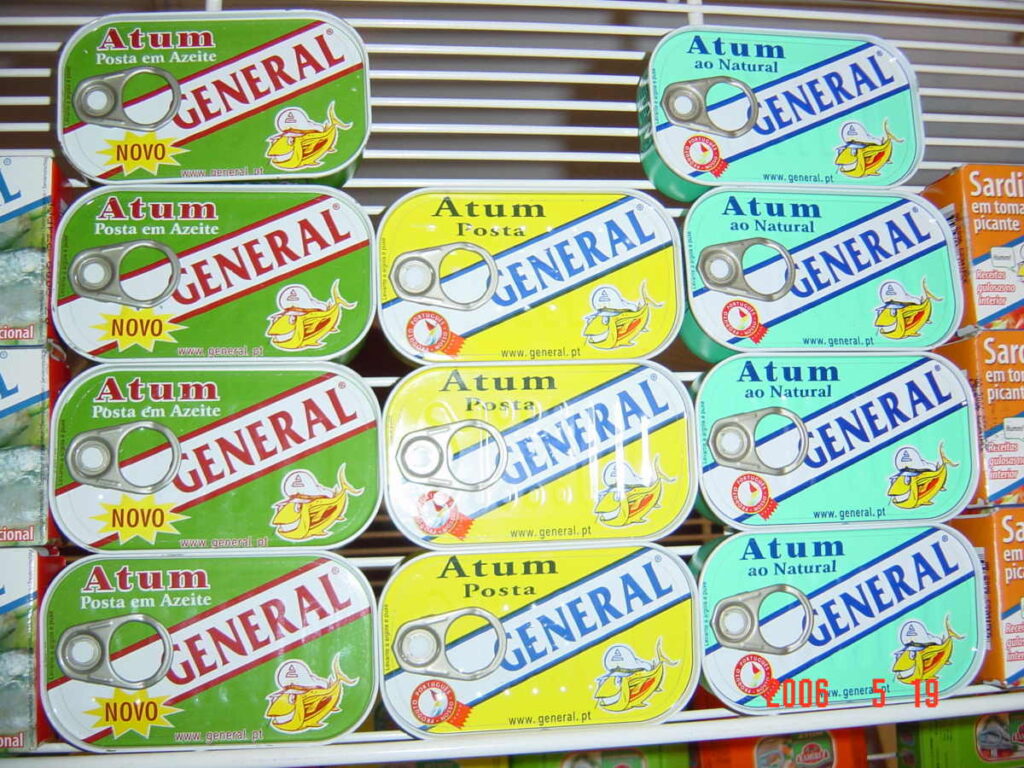
Interesting to see that Portuguese Products are quite popular in Luanda (and it seems that the same rule applies for all Angola in general).
Portuguese beers such as Sagres, Super Bock, and Cristal definitely lead the way.
Other products are also quite popular: Ramirez tuna canned fish, also Inês canned fish, Delta coffee, Mimosa milk, Compal fruit juices, some major portuguese branded wines, and also GALP gasoline stations, etc …..
Quilmes – Argentinean Beer
Angola in general and Luanda in particular is an huge market on beer consumption.
Quilmes – an Argentinean beer, is marketing hard in Luanda to get its own market share in this African country.
Blue Soda: Angolan Product + Brazilian Marketing
Once I got in Luanda I immediately noticed the cool Blue soda advertising billboards. This sodas’ street advertising is really, really good.
I found out later that Blue soda, which I tasted and found it extremely good, is produced locally, 100% Angolan, and marketed with Brazilian marketing !!!
This mix (Angolan product + Brazilian marketing) turn out to be EXPLOSIVE, eheheeh …
No wonder why those outdoor billboards keep being robbed by the locals for private home decoration.
“Advertising Painter.”
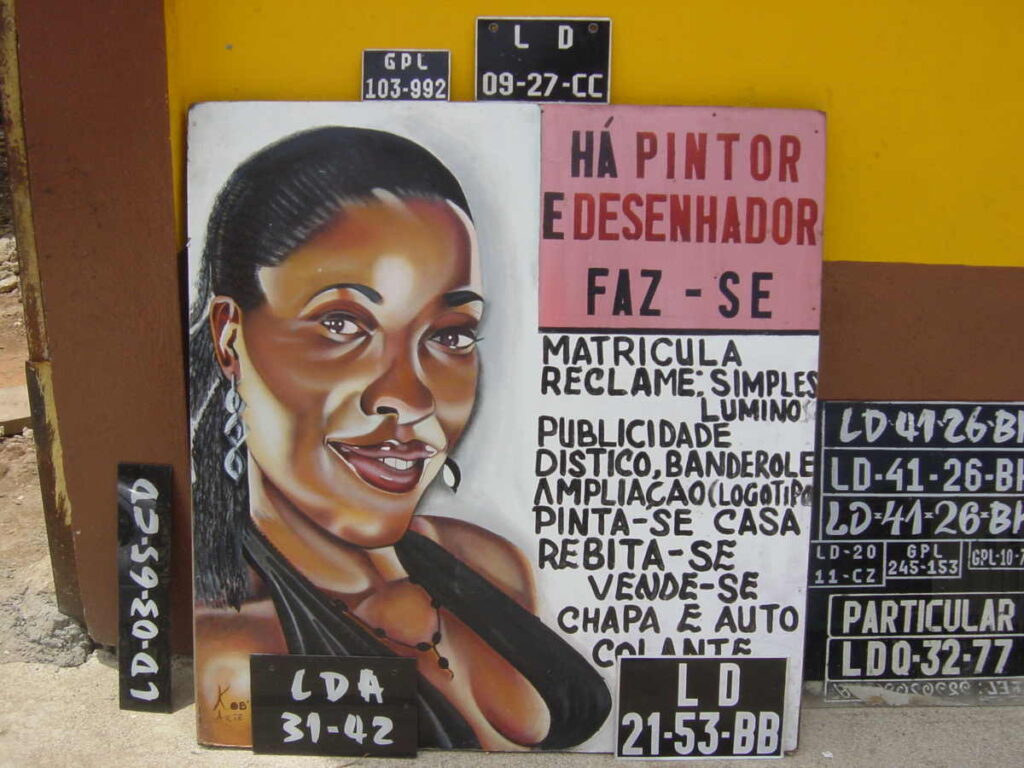
I’ve just saw this great sign on the Resolução de Outubro Avenue (aka: Airport Avenue), opposite to Clinica Girasol.
The sign advertises services for Painter, Designer, Simple or w/ Light Adds, House Painters, Stickers, etc, and they do also make License plates.
My whole attention goes for the painting itself (pictured). The one that did this job is definitely a good painter.
> Mario Ferreira, Luanda, 2 December 2010.
view from the island: “Luanda at night”
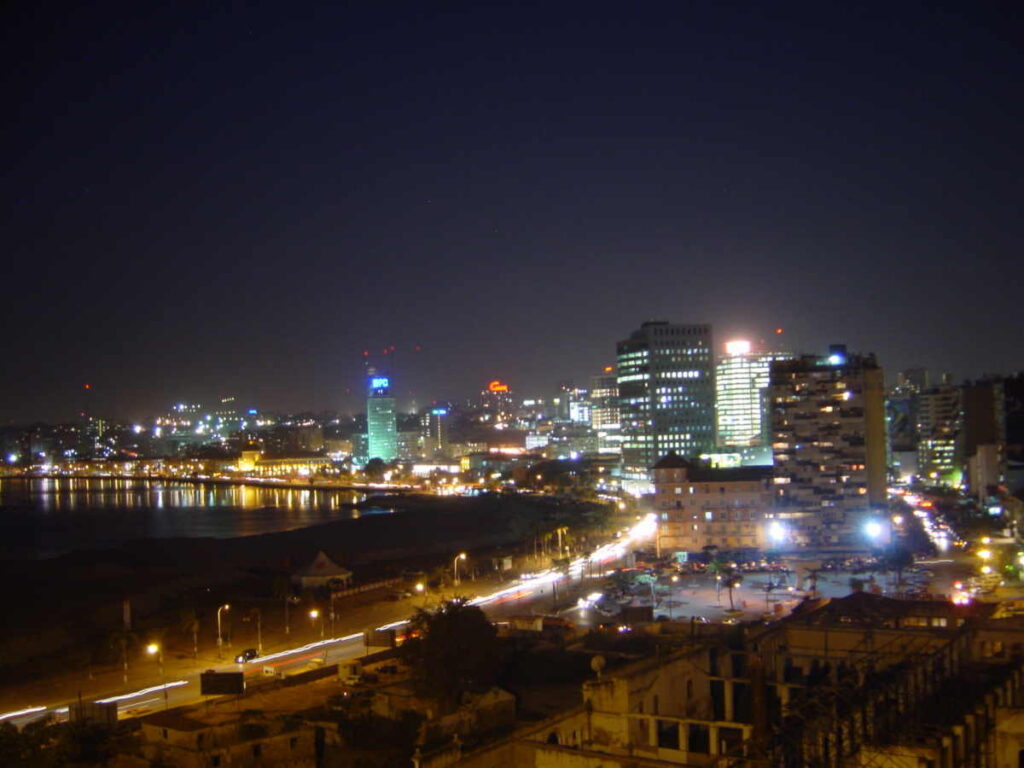
A good suggestion for dinner is to try a restaurant in the Island, which is right in the other side of the Bay.
There are several restaurants to choose from. So, options are various.
The restaurants located in the east side of the island offer this view (pictured here) of Luanda city.
“Driving is an headache !!!”
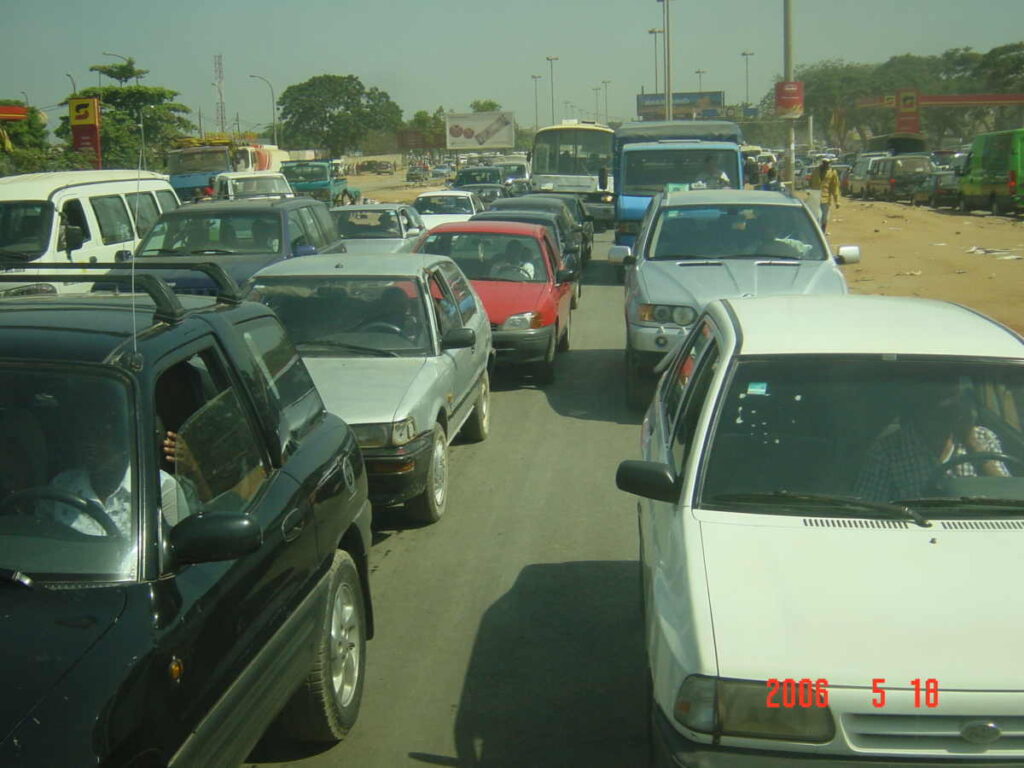
Driving in Luanda is an headache, despite being a major personal challenge as well :(
The goods news is, I feel driving in Luanda nowadays is not as bad as it used to be four years ago, in 2006, when I visited Luanda for the very first time.
O Cantinho dos Comandos
 O Cantinho dos Comandos
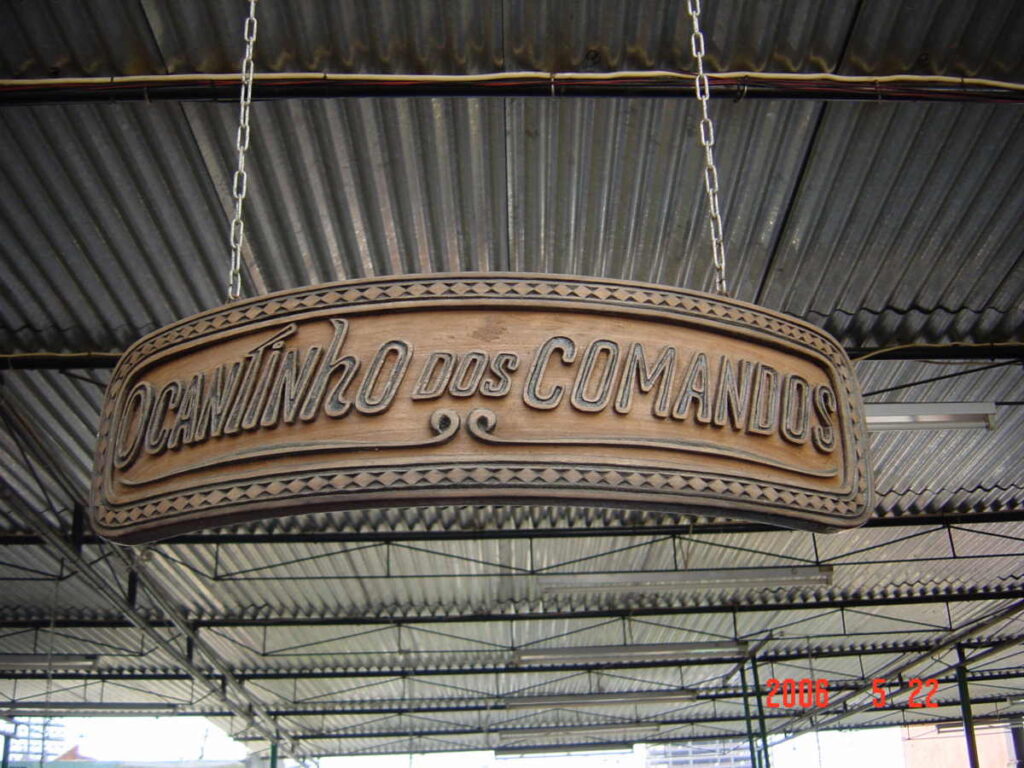
Comandos are the special troops of the Angolan army. Its Association is located in Cidade Alta, near the Palácio Presidencial, and the restaurant located on its premises is open to the general public.
Wireless Internet is available in the premises and, for football lovers, two big screens are set up whenever there’s any major tournament going on. It seems this is going to be a very popular venue to watch the games of the next FIFA World Cup
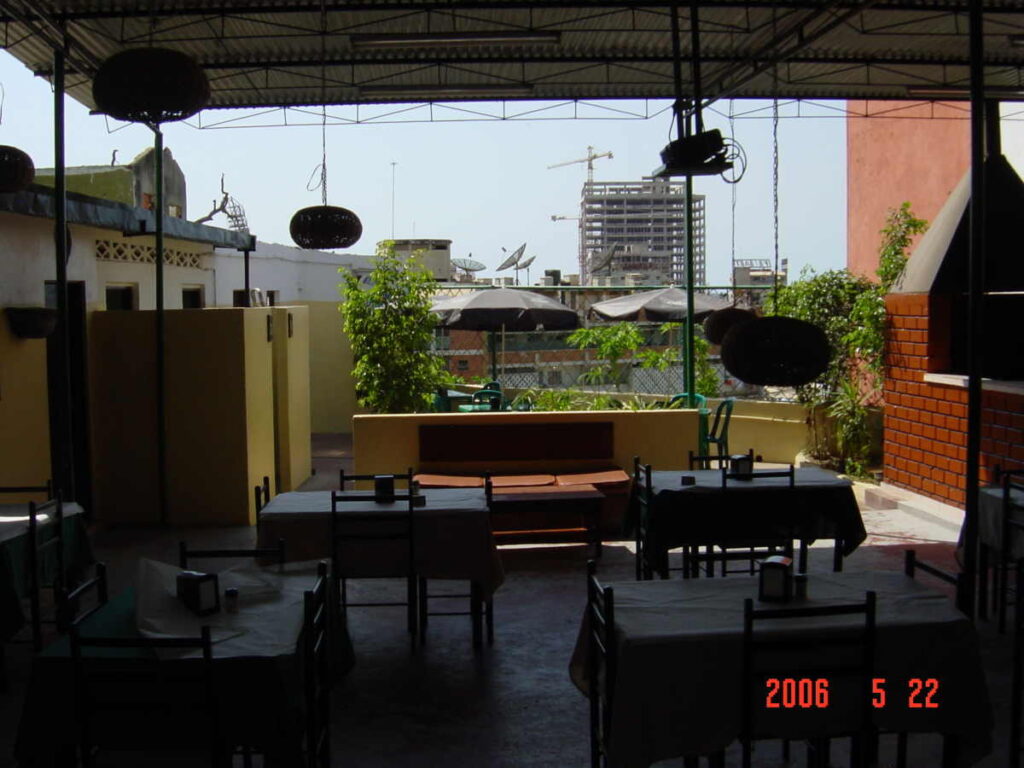
Food being served is either of typical Angolan or Portuguese cuisine and a whole meal would cost about 1,000 Kwanzas (=aprox. 10 Euros).
Panoramic view over Luanda’s bay.
 Panoramic view over Luanda’s bay.
Prices: US$180 and up » Currency Converter
Phone: (+244) 222-327-470
Address: Av. Comandante Gika; Luanda; Republic of Angola
Other Contact: geral@halvalade.mstecom.com
Hotel Continental Luanda: Panoramic view over Luanda’s bay.
Unique Qualities: .
Contacts:
(+244) 222-334-241
(+244) 222-334-242
(+244) 222-334-243
(+244) 222-334-244
(+244) 222-392-384
(+244) 222-395-725
Fax: (+244) 222-392-735 -or- (+244) 222-392-890
Leave a Comment
Theme: Hotel
Phone: (+244) 222-334-241/42/43/44
Address: Rua Rainha Ginga 18 / 20 – Cx. P. 5150; Luanda; Angola.
Website: Continental
Other Contact: email: reservas@hcontinental.com
Alvalade Hotel – The newest Hotel in town
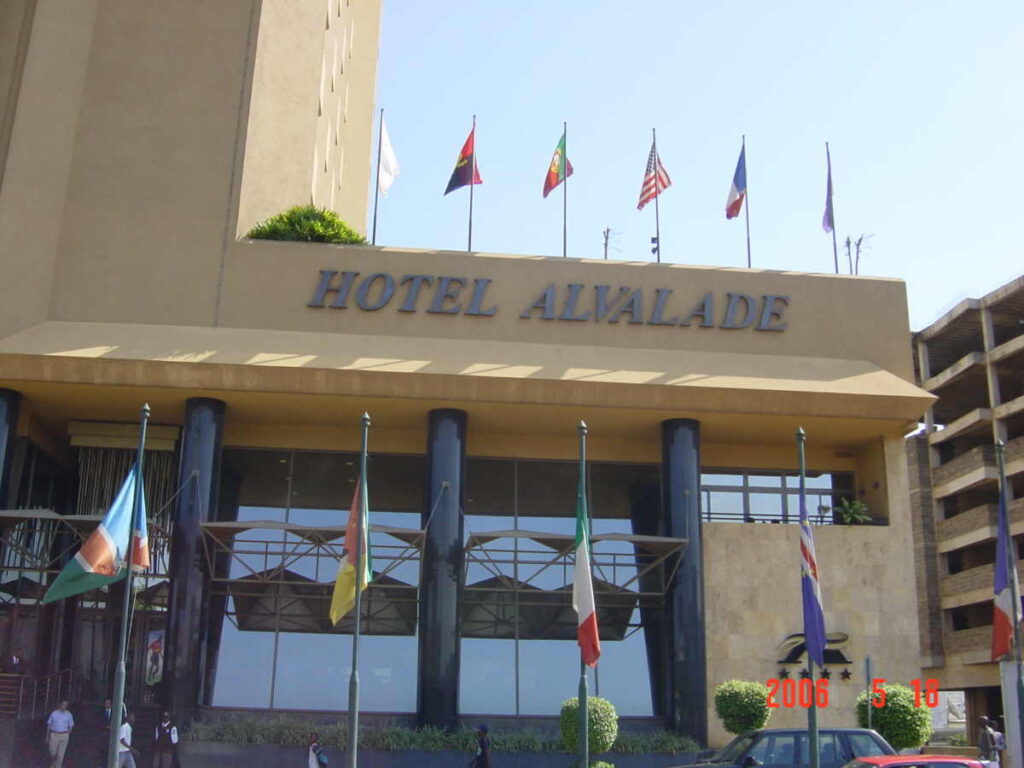
Built 3 years ago and located in Luanda, just a few miles from the airport, the Alvalade Hotel is the newest hotel in town.
It’s 4**** Star Hotel and has 202 rooms.
Decoration is mostly on the African style and amenities required by the international costumer are all available at this accommodation.
Rates start at $200 USD per night.
The odd thing is that this price is considered normal for an Hotel in Luanda !!!
[Luanda is expensive. Gosh!!]
Novo Hotel Mundial: Novo Hotel Mundial
Address: Rua Conselheiro Júlio Vilhena, nr 14.; Luanda; Angola.
Other Contact: Email: hotelmundial@snet.co.ao
Phone: Fax: (+244) 222390460/222390561
Where is the local handcrafted “Pau Preto” Art ?
Unlikely in Maputo, Mozambique’s capital, in Luanda I couldn’t find local people selling their wood handcrafted ART in the street !!! – This fact was very disappointing since I was traveling to Luanda expecting to buy quite a few of those Pau Preto (“black wood”) handcrafted art pieces.
Only in some particular shops, at the airport for instance, I did find those art pieces for sale. And those folk art pieces were quite expensive at those shops !!! – Prices were $20 USD or $50 USD and up !!! .. /…. very, very disappointing …./
Due to its flat and open area and also to its proximity to Luanda, Viana involved itself as Angola’s industrial city.
Street Sellers – The road to Viana (from Luanda)
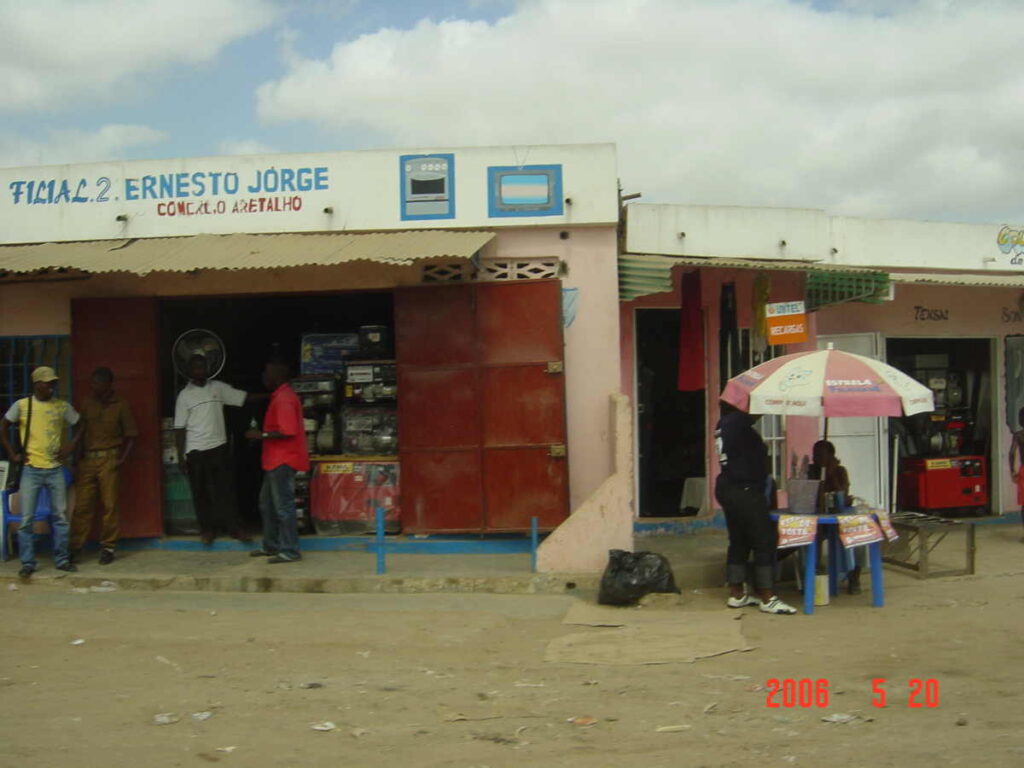
I’ve noticed that it’s terrible the traffic between Luanda and Viana. It looks like it is rush hour all day long !!!
Because cars are packed on the road and quite often traffic runs in low gear, street sellers take their chance. They walk on the road between cars and show off their various products trying to catch the interest of any potential buyer.
American Cola
Managed by Refriango – the same company of Blue Sodas, American Cola is produced in Angola under the license of the original American brand.
Blue Vans – private business for public service
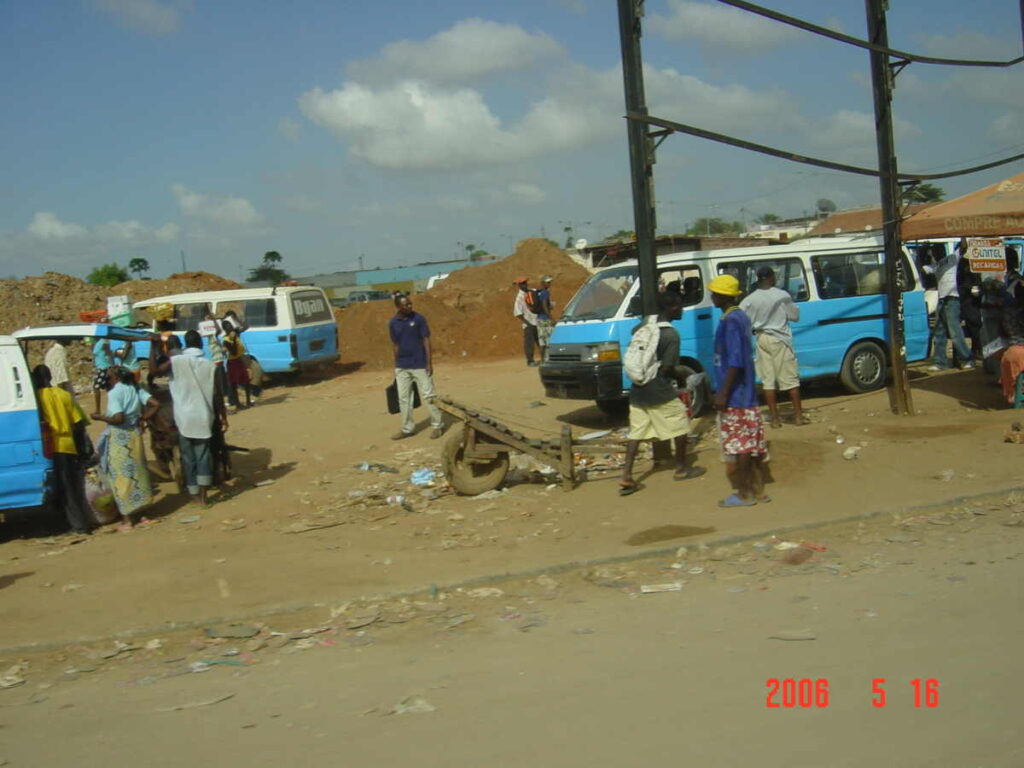
To move around Luanda, local people use these Blue Vans private service.
At sight all the times, these Vans should numbered by the thousands in the whole city.
Maximum capacity of each vehicle is unknown (I’m kidding here) since one never knows how many people may fit inside :-)
Each Van is managed by a 2-man team: the driver and the ticket-seller.
The deal goes likes this: at the end of each day the 2-man team is obliged to pay the Van’s owner the amount of $100 USD. So, since each ticket is 50 Kwanzas (approx $0.62 US cents), the Van needs to ride about 160 people just to even the payment deal with the owner. Anything behind that amount will make this 2-man their profit or salary.
This deal explains why those Vans are always rush driving and also why the ticket-seller really makes an effort calling customers trying to bring them in.
The 2-man team is responsible for washing the vehicle and also to pay for the Van’s minor reparations when needed.
This is the most inexpensive way to move around Luanda (50 Kwanzas per ride) and service pretty much reaches all areas.
However, my guess is visitors might find it unsafe and are likely to avoid its service.
If you want to easily publish your own experiences, after registering you may use the form below. It will be added after revision. You may use text, photos till 20Mb or video. For a more complex publication click here.
Publishing form
You need to be logged in to view this page
Your trip will be perfect with the help of our partners
For a great experience:
For your safety:
For your comfort:
For cheap flights:
For local displacements:
 English
 Português